PART 1Forty years disappeared from the church bulletin on the second Sunday of March. Every Sunday morning since the fall of 1985, I had sat on the padded oak bench at Grace Lutheran Church in Des Moines, Iowa.
I played through winter blizzards when only eight people showed up in boots, and I played through ninety-degree summer mornings before the fellowship hall ever got central air.
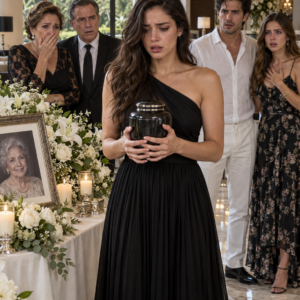
I played for wedding marches where nervous brides held my arm in the hallway, and I played soft hymns while families wept beside brass urns.
When the church ran short on choir funds in the nineties, I bought the sheet music out of my own pocket.
I never accepted a dollar for any of it.
Not once. Then Marcus Vance took over as the new music director. Marcus was thirty-one, wore trim navy blazers with no tie, and had spent the previous two years at an evangelical megachurch outside Kansas City.
He carried a tablet in a leather portfolio and talked constantly about production values.
During his first month, he replaced the choir risers with black metal stands and moved the altar microphone to make room for two electric guitars and an electronic drum kit surrounded by clear plexiglass. I did not complain.
Churches change, and people want different things.
But on that March morning, when I picked up the printed bulletin from the stack in the narthex, my eyes went straight to the music line. Usually it read: *Organ and Piano: Clara Hastings.*The line was gone.
In its place, under the heading “Contemporary Praise Worship,” were four names I barely knew, all listed under acoustic guitar, bass, synthesizer, and vocals. I thought it was a printing mistake.
Miss Clara Hastings had been in that bulletin longer than the senior pastor had been alive.
So I walked into the music ministry office behind the choir room. Marcus was sitting at the desk, tapping on his screen.”Marcus,” I said gently, holding the paper by the corner. “I think the secretary missed my name on the service layout.”Marcus looked up.
He did not look embarrassed.
He set his tablet flat on the desk, clasped his hands together, and gave me a practiced, apologetic smile.”It wasn’t a typo, Clara,” he said.
He spoke in that low, soothing voice people use when they think someone is about to make an unreasonable scene. “The pastoral committee gave me the mandate to modernize our Sunday experience.
We’re looking for a sound that appeals to younger families.”I stood there in my gray wool skirt and sensible heels. “Younger families,” I repeated.”It’s about energy,” he said, gesturing with an open palm.
“Acoustic loops, modern chord progressions, driving rhythm.
The traditional four-part hymn structure feels heavy to young parents.
We need to stay relevant, or these pews are going to be empty in ten years.””I have played here for forty years, Marcus.
I played for your pastor’s confirmation when he was twelve.””And the congregation is deeply grateful for your service,” he said, the words sliding out smooth as oil. “Truly.
But service means knowing when to hand the baton to the next generation.
We’d love for you to sit with the congregation and simply enjoy worshiping from the pews.
You’ve earned the rest.”He offered me the rest like it was a gift. I looked at his polished loafers, then at his neat desk, and then down at my own hands.
My knuckles were slightly swollen from arthritis, but my fingers were strong.
I practiced Bach two hours every single day at home.
I didn’t drag the tempo.
I didn’t miss notes.
The only thing wrong with me was that my hair was white and I didn’t bounce on my heels behind a synthesizer.I didn’t argue.
I didn’t raise my voice.
When someone tells you who you are to them, arguing only makes you look pathetic.I nodded once. “Understood,” I said.I walked out of his office, through the side door, and into the quiet sanctuary.
The morning sun was coming through the stained glass along the east wall, throwing ruby and amber patches across the polished floorboards. Sitting in the alcove near the pulpit was the seven-foot Steinway Model B grand piano.
Its dark mahogany case caught the light like glass. I walked over to it, set my black leather music folder on the bench, and ran my hand along the edge of the wood.
Then I gently pulled down the fallboard, lowered the lid, and turned the brass lock key.
I put the key in my purse, picked up my music folder, and walked down the center aisle.Pastor David caught up with me in the parking lot as I was unlocking my Buick.
He looked distressed, holding his coat collar against the chill wind.”Clara, please,” he said, his face flushed. “Marcus told me you spoke.
He probably could have phrased things with more grace, but surely you understand the vision we’re trying to build here.
The church has to grow.””He told me my sound was too old for younger families, David,” I said, looking him straight in the eyes.David shifted his weight. “We have the Easter concert coming up in three weeks.
It’s our biggest outreach of the spring.
Marcus booked guest vocalists from the university.
We really need this to be a unified front.
Will you at least attend?””I won’t cause a scene on Sunday mornings, David,” I answered quietly. “Thank you, Clara.
I knew you’d understand.”He thought that meant I was stepping aside quietly, tucking my hands in my lap, and accepting that forty years of my life could be erased with a polite dismissal. He didn’t ask about the key.
He didn’t ask about anything else.
He just watched me drive away toward Grand Avenue.When I got home, I didn’t cry.
Crying is for when you’re helpless.
Instead, I went upstairs to my spare bedroom, opened the green metal filing cabinet where my late husband, Arthur, had kept all our records, and pulled out the thick Manila folder marked *Grace Lutheran — 1991.*I sat at the kitchen table with a cup of black coffee and read through every single page.
Marcus Vance thought he had just told an old church lady to sit down and be quiet. He had no idea what was written on the papers in that folder.PART 2The paperwork in Arthur’s folder had yellowed around the edges, but the blue ink from 1991 was completely clear. Back in the fall of 1990, Grace Lutheran had suffered a small roof fire in the choir loft.
The old spinet piano they owned back then had been destroyed by smoke and water damage.
The church was struggling financially, carrying a heavy mortgage from the fellowship hall addition, and the insurance payout had barely covered repairing the rafters.
There was no money for an instrument.Arthur and I owned our home free and clear, and Arthur had just sold his share in a regional farm equipment dealership.
He knew how much that sanctuary meant to me.
He knew I had played piano since I was six years old on my grandmother’s upright in Ottumwa. So in January of 1991, Arthur wrote a cashier’s check for $34,500 to a piano dealer in Chicago. It was a 1988 Steinway Model B, seven feet of handcrafted ribbon-grain mahogany.
When the delivery truck backed up to the sanctuary doors, Arthur handed the church council a document drafted by our family lawyer. The agreement was simple, clean, and filed with the Polk County recorder’s office: *The instrument remains the sole personal property of Clara and Arthur Hastings.
It is placed at Grace Lutheran Church on open loan for sacred worship, provided that Clara Hastings remains its designated principal custodian.
Should the custodian no longer serve as principal musician, or should the church alter the terms of use without written consent, the instrument must be surrendered to the owner upon fourteen days written notice.*For thirty-five years, that paper had slept in the back of my cabinet.
Pastors had retired, council elders had passed away, and new generations of members had grown up assuming the church simply owned a magnificent grand piano that sounded richer than anything in Polk County.
Every two years, I paid Robert Lindquist, the finest piano technician in the state, $300 to regulate the action and voice the hammers.
I paid for the dehumidifier rod installed under the soundboard.
I paid for the custom velvet cover. Grace Lutheran hadn’t paid a penny for that piano since the day it was rolled through the doors.On Monday morning, nine days before Easter, I drove downtown to the office of Thomas Miller.
Tom had taken over his father’s estate practice, and his father had been Arthur’s closest friend. Tom read the contract twice, adjusting his reading glasses.
Then he pulled up the county registry on his monitor to verify the original recording stamp.”It’s ironclad, Clara,” Tom said, looking over the rim of his glasses. “The church doesn’t own this piano.
They never did.
There’s no gift letter, no tax deduction claimed for a charitable donation, and the custody clause is completely tied to your position.””Marcus Vance told me my service was no longer needed,” I said. “He informed me that the church was moving in a different direction for younger families.”Tom gave a dry, thin smile. “Well, Marcus Vance is an employee.
And he just triggered Section Four of an active property loan.””How much notice do they have?””Fourteen days from receipt of demand.
But if they refuse or try to block removal, it’s conversion of personal property.
Clara, are you sure you want to pull the pin on this right before their Easter program?””I gave them forty years, Tom,” I said, my voice steady. “They didn’t give me forty seconds before throwing me out.””All right,” Tom nodded, pulling a notepad across his desk. “I will draft the formal notice of reclamation today.
Certified mail to the council president, with a hand-delivered copy to Pastor David’s office by courier on Wednesday.””Do not send the courier on Wednesday,” I told him.Tom paused, his pen hovering. “When do you want it served?””Serve it on Friday afternoon at four o’clock,” I said. “The Easter concert is Sunday night.
I want them to have the letter in their hands when they come in for their dress rehearsal.”The rest of the week went by in absolute silence.
I didn’t call anyone from the congregation.
When Evelyn Miller called me on Tuesday asking why my name wasn’t on the rehearsal schedule for the anthem, I simply told her that Marcus had made other arrangements.
Word spread, of course.
People in church communities always whisper, but they whisper carefully when they don’t want to get involved.
A few older ladies brought me lemon bread and asked how my joints were feeling, assuming Marcus had sidelined me because I was frail. I thanked them, took the bread, and went back to my living room to practice.On Friday afternoon, at precisely four-fifteen, my phone rang. It was Pastor David.
The calm, pastoral tone he usually maintained was entirely gone. “Clara? Clara, I am looking at a letter from Thomas Miller’s office.” His breathing was loud in the receiver. “Is this some kind of misunderstanding?
The letter says you are demanding the return of the sanctuary Steinway.””It’s not a misunderstanding, David,” I said.”Clara, that piano has been on that chancel platform for decades! It is an integral part of this church! We have the Easter concert on Sunday evening! We have guest singers coming from the university! Marcus has entire arrangements built around the grand piano!””Marcus told me the church needed a modern sound that appeals to younger families,” I said, keeping my voice mild. “He said acoustic loops and synthesizers were the future.
Synthesizers have their own speakers, don’t they?””Clara, this is petty! This is vindictive! You cannot hold our Lord’s Easter service hostage over a wounded ego!””I’m not holding anything hostage,” I said. “The piano belongs to me.
Arthur bought it.
I maintained it.
Your church dismissed its custodian.
According to the contract your council signed in 1991, the loan has ended.””We will fight this in court,” David said, his voice rising.”Call Tom Miller,” I told him. “He has the original deed of sale, Arthur’s cancelled check, and the county filing number.
You don’t have fourteen days of legal delay, David.
The notice gives you until Monday morning to release the property to the movers, but as of this afternoon, the instrument is locked.””Locked?””I have the fallboard key.
If anyone touches that lock with a tool, I will file a police report for criminal damage to personal property before the opening hymn.”There was dead silence on the line. “Clara, please,” he whispered, all the anger suddenly draining out of him, replaced by genuine panic. “What do you want?””I want people to see the truth,” I said.
“I will see you on Sunday.”PART 3On Sunday evening, forty minutes before the concert was set to begin, the parking lot of Grace Lutheran was packed.
Cars were lined up along 42nd Street, parking on the dry spring grass by the elementary school across the avenue. Inside, the sanctuary was lit with soft amber uplighting.
Marcus had brought in two fog machines that sent thin trails of haze through the nave, catching the light in dramatic beams.
Over four hundred people filled the pews, rustling their printed programs. Marcus was standing near the front pew, wearing a crisp charcoal suit, shaking hands with visitors, glowing with the pride of a full house. Beside the stage stood the seven-foot Steinway. Its velvet cover was off, but the black lacquered fallboard remained firmly shut over the eighty-eight keys.
Tucked behind it on a folding metal stand was a cheap plastic keyboard with twenty-five keys plugged into a small amplifier. Marcus had spent all Saturday trying to find a locksmith who would touch a vintage Steinway lock without the owner’s written authorization, and every professional in Des Moines had refused the moment they saw the maker’s mark.
Then he had tried to rent an acoustic grand, only to discover that every concert-grade instrument within eighty miles was already booked for Easter weekend. He was stuck with an electric keyboard meant for a high school garage band.Ten minutes before the concert, the sanctuary lights dimmed. I opened the side door from the choir hallway and walked into the sanctuary.
I wasn’t wearing my choir robe.
I was wearing my best emerald wool dress, my mother’s pearls, and my hair had been freshly set that morning.
I did not slip into the back pew.
I walked down the center aisle, my heels clicking deliberately against the polished oak.Several people turned their heads.
Whispers broke out among the rows where the longtime members sat. Marcus saw me coming.
His smile vanished.
He stepped away from a young couple with a stroller and met me at the base of the chancel steps. “Clara,” he hissed under his breath, his eyes darting toward the pews. “You need to leave.
This isn’t the time or the place.””Good evening, Marcus,” I said clearly, not dropping my voice at all. “I came to hear the new sound.”Pastor David appeared from behind the communion rail.
His face was gray.
He had dark circles under his eyes, and when he looked at me, there was no fight left in him.
He had spent the weekend with the church council, and the council elders—men and women who remembered Arthur and knew the truth—had refused to back him.
They had told him bluntly that Clara Hastings held every card, legal and moral.David stepped down between Marcus and me. “Clara,” David said, his voice trembling slightly. “The council met this afternoon.
We reviewed the 1991 covenant.
We reviewed the receipts for thirty-five years of upkeep.”Marcus frowned, looking between us. “What covenant? Pastor, what is she doing here?””Quiet, Marcus,” David said sharply, without turning his head.
It was the first time I had ever heard David speak to his new director without deferential sweetness. David looked at me. “The council voted unanimously.
We offered Marcus two options: he could tender his resignation for breach of conduct toward church staff, or he could publicly apologize and cede all music direction back to the established committee.
He chose the latter.”Marcus went stiff. “David, you can’t be serious.
We have an agreement.
We’re modernizing this program!””We don’t own the piano, Marcus,” David said, turning on him with quiet fury. “We never did.
If Clara walks out that door tonight, two professional moving trucks are pulling up tomorrow at eight in the morning to roll this instrument into a private van.
And the entire city will know that Grace Lutheran lost its legacy because we treated forty years of devotion like garbage.”Marcus looked at the grand piano, then at David, and finally at me.
For the first time, he realized he wasn’t dealing with a fragile old woman who would cry in her car and fade into memory.
He was dealing with the person who held the foundation of the very room he was standing in.”Clara,” David said, stepping aside and gesturing toward the platform.
“The congregation is here.
The sanctuary is full.
Will you play for us tonight?”I looked at the platform. The sheet music on the plastic keyboard was Marcus’s modern pop arrangements, filled with repetitive four-chord loops and lyrics that repeated the same two lines twelve times. “I won’t play that,” I said.David swallowed hard. “What do you want to play?””The Easter Hallelujah from Handel,” I said. “And the traditional arrangement of ‘Christ the Lord Is Risen Today.’ The four-part harmony.
The one that was written for this room.””Whatever you want,” David said softly. “Just please… open the piano.”I reached into my handbag, pulled out the small brass key, and stepped past Marcus Vance without looking at him. I walked up the carpeted steps, unlocked the fallboard, and lifted it back.
The ivory keys gleamed under the warm sanctuary lights.
I sat down on the leather bench, placed my hands on the keys, and waited for the room to fall completely silent.ENDINGWhen my hands came down on the opening chords, the sound filled every corner of that seventy-year-old sanctuary. It wasn’t modern.
It wasn’t driving or looped.
It was deep, rich, and reverberated through the floorboards, straight into the soles of the shoes of every person sitting in those pews.
You couldn’t get that resonance from a plastic box plugged into a wall.
You could only get it from seven feet of seasoned spruce, heavy cast iron, and thirty-five years of patient care.When the choir stood to sing, their voices weren’t tentative anymore.
They leaned into the sound.
Even the young parents in the third row, the ones Marcus had been so terrified of losing, leaned forward, watching their children stare at the vibration of the heavy bass strings.Marcus Vance stood in the shadow of the choir loft the entire service.
He didn’t conduct.
He didn’t touch his tablet.
Two weeks later, he accepted an assistant music position at a non-denominational church outside Cedar Rapids.
Nobody threw him a farewell dinner. The church council drafted a new agreement that summer. They offered to pay me an annual stipend of $12,000 for serving as Director Emeritus of Music.
I declined the money, just like I had for forty years.
Instead, I had Tom Miller write a new clause into the trust: upon my passing, the Steinway will become the permanent property of Grace Lutheran Church, on one condition.
It must remain in the sanctuary, maintained and played for traditional worship, and if the church ever attempts to sell it or replace it with electronic equipment, ownership immediately transfers to the music department at the University of Iowa.Pastor David signed the document without a word of protest. Now, every Sunday morning when I walk into the narthex, I pick up the fresh bulletin from the wooden stand. My name is right where it has always been: *Organ and Piano: Clara Hastings.*I don’t play to prove a point anymore.
I don’t play out of spite.
At seventy-three, I know that spite is a heavy thing to carry, and it ruins the touch on the keys. Last Sunday, after the postlude finished and the sanctuary emptied out, a young mother walked up the chancel steps holding her four-year-old daughter by the hand.
The little girl had pigtails and shiny red shoes.
She stood on her tiptoes, staring at the polished mahogany case.”Can she touch it?” the mother asked timidly. “She watched you the entire service.”I slid over on the leather bench and patted the open space beside me. “She certainly can,” I said, taking the girl’s small hand and helping her press down middle C. “Sit right here.
This piano belongs to people who love it.”