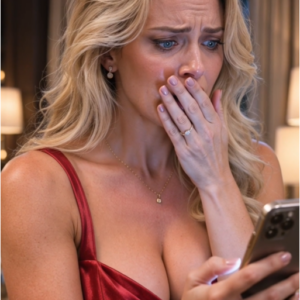
## THE BIRTHDAY WISH THAT BROKE US
## PART 1
“Maybe what I really need for my birthday is a new man!”
I laughed as I said it in front of all our friends.
Everyone laughed.
**Except my husband, Owen.**
For months, our marriage had been struggling. We barely talked anymore. Some nights, we went to bed without saying goodnight.
But I never thought making a joke about replacing my husband would matter.
Owen didn’t argue.
He helped clean up after the party, carried empty bottles into the kitchen, and politely thanked our guests as they left.
His silence annoyed me.
When the last guest finally walked out, I followed him into the kitchen.
Half my birthday cake was still on the dining table. Empty wine glasses sat beside the decorations.
Owen stood near the kitchen island, staring at his phone and car keys.
I put down my wine glass.
“I was joking, Owen. You really think that means I want someone else?”
He looked at me.
“No.”
I almost smiled.
Then he continued.
**“It means you turned our marriage into a joke, and I’m done living in one.”**
My smile disappeared.
“Everybody knew I was kidding!” I protested.
But Owen wasn’t arguing.
He didn’t raise his voice.
He didn’t accuse me of cheating.
He just stood there, strangely calm.
And that frightened me more than any argument we’d ever had.
For the first time, I realized he wasn’t upset about whether I actually wanted another man.
**He was upset about what I’d made our marriage become.**
Then his eyes dropped toward the phone and car keys on the counter.
Only for a second.
But I noticed.
And suddenly, I wasn’t worried about winning the argument anymore.
**I was terrified of what Owen was about to do.**
## PART 2
Owen picked up his keys.
“Where are you going?” I asked.
“I’m staying somewhere else tonight.”
I stared at him.
“Because of one stupid joke?”
He paused beside the kitchen island.
“No. Because of everything that made you think that joke was funny.”
I felt my face grow warm.
“That’s not fair.”
“Maybe not.”
He picked up his phone.
“But I’m not having this conversation while you’re still trying to convince me I shouldn’t be hurt.”
Something about his tone made my stomach tighten.
He wasn’t punishing me with silence.
He simply didn’t want to argue anymore.
And I had no idea what to do with that.
“Owen, seriously. It’s my birthday.”
He looked toward the dining room.
The decorations were still hanging above the table. Someone had left a colorful paper crown beside the cake.
“I know.”
“You’re really going to walk out on my birthday?”
He took a breath.
“I helped you celebrate it. I smiled for the pictures. I made sure everyone got home safely. I cleaned up afterward.”
His eyes met mine.
“I’ve spent the whole evening taking care of everyone else’s comfort. I need to take care of mine now.”
I folded my arms.
“You’re making this sound like I’ve been treating you terribly.”
He didn’t answer immediately.
Then he asked a question that I wasn’t prepared for.
“When was the last time you said something kind about me in front of other people?”
I opened my mouth.
Nothing came out.
“Think about it,” he said.
“Of course I say nice things about you.”
“When?”
I searched my memory.
Birthday dinners. Weekend gatherings. Holiday parties.
I remembered telling our friends that Owen was terrible at choosing restaurants.
I remembered joking that he needed written instructions to load the dishwasher properly.
I remembered complaining that he never planned anything romantic anymore.
Those comments had always gotten laughs.
But I couldn’t remember the last time I’d publicly thanked him for anything.
“That doesn’t mean I don’t appreciate you.”
“I know you think that.”
His words stung.
“What’s that supposed to mean?”
“It means I hear the complaints. I hear the jokes. I hear how disappointing I am whenever somebody asks about our marriage.”
He looked down briefly.
“But when we’re alone, I barely hear anything at all.”
For a moment, neither of us spoke.
The refrigerator hummed behind me.
Outside, a car passed slowly down our street.
I hated how ordinary everything sounded.
Our marriage was suddenly standing on an edge, and the world had the nerve to continue as usual.
“I didn’t know you felt that way,” I said.
Owen gave a tired smile.
“I’ve told you.”
“No, you haven’t.”
“Yes, I have.”
He set his keys down again.
“Remember dinner with Mark and Jessica three months ago?”
I remembered.
We’d gone to a restaurant to celebrate Jessica’s promotion.
Owen had arrived twenty minutes late because a meeting ran over.
I’d joked that the only appointment he was ever on time for was one involving his car.
Everyone laughed.
On the way home, he’d told me that bothered him.
I’d accused him of being too sensitive.
“Remember when your sister visited?” he continued.
I looked away.
“You told her I was emotionally unavailable because I spent Saturday fixing the garage door instead of taking you shopping.”
“That was just—”
“A joke?”
I stopped.
He nodded slowly.
“Right.”
I suddenly remembered how irritated he’d seemed that evening.
He’d tried to explain that the garage door had been sticking for weeks and needed attention.
I’d told him to stop making excuses.
Then I’d gone upstairs.
I hadn’t thought about it again.
Apparently, he had.
“Owen, those were little things.”
“They were little things to you.”
He picked up his keys.
“To me, they were the same message, over and over.”
“What message?”
“That being married to me is something you tolerate.”
I felt tears gathering in my eyes.
“That isn’t true.”
“Then why does everyone else hear it so often?”
I had no answer.
He walked toward the hallway.
I followed him.
“Please don’t leave like this.”
He stopped beside the front door.
“I’m not making a final decision tonight.”
The relief was immediate.
Then he added, “But I am leaving tonight.”
“Where will you go?”
“Somewhere quiet.”
“For how long?”
“I don’t know yet.”
I reached for his hand.
He didn’t pull away.
But he didn’t hold mine either.
That frightened me more than if he’d been angry.
“Owen, I love you.”
He looked at our hands.
“I’ve been trying to figure out what that means to you.”
Then he gently stepped back.
“I’ll call you tomorrow.”
He opened the door.
And he left.
No shouting.
No slammed door.
No dramatic goodbye.
Just the soft click of the lock.
I stood there for several minutes, waiting for the familiar sound of his car engine.
When it finally started, I moved toward the window.
His headlights swept across the driveway.
Then they disappeared.
I returned to the kitchen.
His birthday gift to me was still sitting beside the cake.
A small wrapped box.
I’d been so busy entertaining our friends that I hadn’t opened it.
I picked it up.
Inside was a simple silver bracelet.
There was a little card beneath it.
_For all the ordinary days that make a life together._
_Love, Owen._
I read it twice.
Then I sat down.
Because suddenly, all the ordinary days we’d spent together came rushing back.
The mornings he’d made coffee before I woke up.
The evenings he’d driven across town to pick me up when my car was being repaired.
The weekends he’d spent doing things around our house without being asked.
The way he’d quietly covered me with a blanket when I fell asleep on the couch.
I’d noticed those things.
I simply hadn’t told him.
At least, not often enough.
And somewhere along the way, I’d started treating his reliability as something boring instead of something precious.
I looked at the bracelet.
Then at the empty chair across from me.
And for the first time that night, I cried.
Not because my husband had ruined my birthday.
Because I was beginning to understand how I might have ruined something far more important.
The next morning, I woke on the couch.
My neck hurt.
My makeup had smudged onto a throw pillow.
The house smelled faintly of wine and leftover frosting.
I reached for my phone.
No messages from Owen.
I typed:
_I’m sorry. Please come home._
Then deleted it.
I tried again.
_I didn’t mean what I said._
Deleted that too.
Because I finally understood that telling him I hadn’t meant the joke wasn’t the same as acknowledging why it hurt him.
At , I sent a different message.
_I was wrong to embarrass you last night. I understand that it wasn’t just one joke. I’m sorry for the way I’ve spoken about you and our marriage. I know saying that doesn’t fix anything. I would like to listen whenever you’re ready._
He replied almost an hour later.
_Thank you. I need a little time. I’ll call tonight._
I stared at those words.
They were polite.
Careful.
The kind of message you’d send someone you didn’t want to hurt.
I had never imagined my own husband would speak to me that way.
Around noon, my friend Jessica called.
“Happy birthday again! Did you survive the cleanup?”
I looked around the room.
“Barely.”
She laughed.
“Last night was fun.”
I hesitated.
“Jessica, can I ask you something?”
“Sure.”
“Was my joke about getting a new man really that funny?”
Silence.
Then she said, “Do you want the friendly answer or the real one?”
My stomach sank.
“The real one.”
Jessica exhaled.
“I laughed because everyone else did.”
“But?”
“But Owen looked miserable.”
I closed my eyes.
“Did you notice?”
“Yes.”
“Why didn’t you say anything?”
“Because I didn’t think it was my place. And because every time anyone has questioned one of your jokes about Owen, you’ve insisted he doesn’t mind.”
I swallowed.
“Do I really do that so often?”
Jessica was quiet for a moment.
“You complain about him a lot.”
“That doesn’t mean I don’t love him.”
“I know.”
“Then why does everyone act like—”
“Because people can only go by what you show them.”
Her words stopped me.
Jessica continued gently.
“You’re my friend. I love you. But sometimes you make Owen sound like an inconvenience instead of your husband.”
I pressed my fingers against my forehead.
“He left last night.”
“Oh.”
“He said he needed space.”
Jessica didn’t immediately reassure me that he’d come back.
That frightened me.
“Do you think I’ve lost him?” I whispered.
“I don’t know.”
Another silence.
Then she said something I would remember for a long time.
“But if you want him back, you need to stop trying to prove you didn’t do anything wrong.”
After we hung up, I sat alone in the living room.
For months, I’d told myself our marriage was struggling because Owen wasn’t romantic enough.
Because he worked too much.
Because he didn’t communicate the way I wanted.
Some of those frustrations were real.
But instead of talking honestly about them, I’d turned them into entertainment.
I’d collected laughs where I should have been asking questions.
And now the person I most needed to talk to wasn’t there.
That evening, Owen finally called.
I answered before the second ring.
“Hi.”
“Hi.”
I waited.
“Are you okay?” he asked.
I almost laughed at the absurdity.
He was the one who had left.
And he was still asking whether I was okay.
“I’ve been better,” I admitted.
“Me too.”
“Are you coming home?”
A pause.
“Not tonight.”
I felt my chest tighten.
“Owen—”
“Can we meet tomorrow afternoon?”
“Of course.”
“At the coffee shop on Maple Street?”
“Yes.”
“Okay.”
I hesitated.
“Can I ask you something?”
“Sure.”
“Are you thinking about leaving me permanently?”
He didn’t answer right away.
Then he said, “I’m trying to figure out whether staying would change anything.”
I stared at the wall.
And suddenly, I understood that tomorrow wasn’t going to be an ordinary conversation.
It was going to be the first time my husband asked me to show him why our marriage was worth saving.
## PART 3
I arrived at the coffee shop twenty minutes early.
I hadn’t slept properly.
I’d changed clothes three times because I didn’t know what someone wore to a conversation that might end their marriage.
Eventually, I chose jeans and a plain sweater.
Owen arrived exactly on time.
He looked tired.
There were faint shadows beneath his eyes, and his hair was slightly messy.
But he smiled politely when he saw me.
That smile hurt.
He used to smile at me like coming home was the best part of his day.
Now he smiled like I was someone he needed to have a difficult conversation with.
“Hi,” he said.
“Hi.”
He sat across from me.
For several seconds, neither of us spoke.
Then I took a breath.
“I’ve been thinking about what you said.”
He nodded.
“I know I embarrassed you,” I continued. “And I know I’ve done it before.”
He looked at me carefully.
“I’m listening.”
I told him about my conversation with Jessica.
About the jokes I remembered.
About the birthday gift.
When I mentioned the bracelet, his expression softened.
“I wanted you to have something you could wear every day,” he said.
“It’s beautiful.”
“I’m glad you like it.”
I swallowed.
“Owen, I need to apologize without making excuses.”
He folded his hands on the table.
“I treated our marriage like something I could complain about for attention. And whenever you told me it hurt, I dismissed you.”
His eyes lowered.
“I told myself you were sensitive because admitting I was cruel would mean I had to change.”
He looked up again.
“That means a lot to hear.”
Hope flickered inside me.
Then he continued.
“But I need you to understand something.”
“Okay.”
“I’ve been unhappy for a long time too.”
“I know.”
“No,” he said gently. “I don’t think you do.”
I sat back.
“Then tell me.”
He looked out the window for a moment.
“Somewhere along the way, we stopped being partners.”
I wanted to interrupt.
I wanted to list everything I’d done for our home.
The groceries.
The bills.
The family birthdays I’d remembered.
The appointments I’d scheduled.
But I forced myself to listen.
“I started feeling like my job was to keep things running and stay out of your way,” he continued.
“You never said that.”
“I tried.”
He wasn’t accusing me.
That made his words harder to dismiss.
“Whenever I suggested we spend time together, you said we were too busy. Whenever I planned something, you found something wrong with it.”
I remembered a weekend he’d arranged at a small cabin the previous winter.
I’d complained that it was too far from town.
That the restaurant choices were limited.
That he should have asked me before booking it.
He’d canceled the trip.
I’d told everyone he didn’t know how to plan a romantic weekend.
I stared at my coffee.
“I remember.”
Owen nodded.
“I stopped planning things after that.”
“I thought you just lost interest.”
“I thought you didn’t want to spend time with me.”
The simplicity of that misunderstanding nearly broke my heart.
For months, I’d been angry because he stopped trying.
And he’d stopped trying because every effort seemed to disappoint me.
We sat quietly.
Then he said, “I wasn’t perfect either.”
I looked up.
“I shut down. I avoided conversations. I spent more time working because it was easier than wondering whether I’d say the wrong thing at home.”
I nodded slowly.
“We both stopped talking.”
“Yes.”
“But I made it worse.”
“I don’t think keeping score will help us.”
He leaned forward.
“What I need to know is whether we can actually change how we treat each other.”
I reached across the table.
“I’m willing to try.”
He looked at my hand.
Then he took it.
For one brief moment, I felt like we were still ourselves.
Then he said, “I think we should live separately for a little while.”
My hand went cold.
“What?”
“Not forever. I’m not making that decision today.”
“Then why?”
“Because I need to know we’re choosing each other, not just going back to what feels familiar.”
I pulled my hand away.
“So you want a separation?”
“A temporary one.”
“And what happens if you decide you like being alone?”
He looked genuinely sad.
“That’s part of what I’m afraid of.”
I blinked.
His honesty was more painful than reassurance would have been.
“You’re afraid you’ll be happier without me?”
“I’m afraid I already feel more peaceful than I have in months.”
Tears filled my eyes.
“Owen, please.”
He reached across the table.
“I’m not saying that to hurt you.”
“I know.”
“But I can’t pretend everything is fixed because we finally had one honest conversation.”
He was right.
And I hated that he was right.
We talked for almost two hours.
Not about blame.
Not about who had suffered more.
But about what had happened to us.
We agreed that he would stay elsewhere temporarily.
We agreed to begin marriage counseling if we could arrange it.
And we agreed that neither of us would use the separation as an excuse to punish the other.
When we stood to leave, I hugged him.
He hugged me back.
But when I whispered, “I love you,” he didn’t immediately answer.
After a moment, he said, “I love you too. I’m just not sure love is enough the way things are.”
I drove home crying.
Not because he’d been cruel.
Because he’d finally been completely honest.
The first week without Owen was miserable.
I kept expecting to hear his key in the door.
Every evening, I caught myself looking toward the driveway.
I still made too much coffee in the morning.
I bought his favorite cereal out of habit.
Then stood in the grocery store staring at the box, realizing I didn’t know whether he would ever eat breakfast at our kitchen table again.
But the hardest part wasn’t the loneliness.
It was beginning to see how much of our life I’d taken for granted.
I started noticing the things Owen usually handled.
The little repairs.
The household errands.
The bills he’d quietly organized.
I could manage them myself.
That wasn’t the problem.
The problem was that I’d rarely acknowledged the time and effort they required.
I’d treated ordinary acts of care as obligations.
And when he failed to meet one of my expectations, I’d talked about it for days.
During our first counseling session, the counselor asked us to describe what we missed about each other.
I went first.
“I miss coming home to him.”
Owen looked surprised.
“I miss the way he makes me coffee,” I continued. “I miss having someone who knows when I’m tired without me explaining it. I miss hearing him laugh at something on television.”
My throat tightened.
“I miss feeling like we’re on the same team.”
The counselor nodded.
“Owen?”
He thought for a moment.
“I miss how she used to ask about my day.”
I turned toward him.
He gave a small, sad smile.
“She used to be genuinely interested. We’d sit at the kitchen table and talk for an hour.”
I remembered those evenings.
We’d been younger.
Less comfortable financially.
More hopeful.
There had been nights when we ate cheap takeout on the living room floor and laughed until midnight.
“What changed?” the counselor asked.
Neither of us answered immediately.
Finally, Owen said, “We got comfortable.”
I nodded.
“Too comfortable.”
The counselor shook her head gently.
“Comfort isn’t necessarily the problem. Sometimes people become careless because they assume the relationship will survive whatever they stop giving it.”
I looked at Owen.
He looked back.
For the first time, I understood that marriage wasn’t protected by how long we’d already been together.
It was sustained by how we treated each other now.
Three weeks into our separation, we went to dinner.
Not as husband and wife pretending everything was normal.
As two people trying to remember how to enjoy each other’s company.
I arrived nervous.
Owen was already seated.
He stood when he saw me.
“You look nice.”
I smiled.
“Thank you.”
For the first twenty minutes, we avoided talking about our marriage.
We discussed work.
A movie we’d both wanted to see.
A restaurant that had opened nearby.
It felt strangely like dating again.
Then I noticed something.
Owen was laughing.
Really laughing.
At something I’d said.
I hadn’t heard that sound in months.
And I realized how much I’d missed it.
After dinner, we walked toward the parking lot.
“Can I ask you something?” I said.
“Sure.”
“Are you happier without me?”
He stopped walking.
“I’ve had more quiet.”
I nodded.
“That’s not the same as being happier.”
I looked at him.
“Then what is it?”
He thought carefully.
“I don’t miss feeling like I have to defend myself all the time.”
The words hurt.
But I understood.
“Do you miss me?”
“Yes.”
My eyes filled.
He continued.
“I miss you a lot.”
“Then why aren’t you coming home?”
He looked toward the restaurant.
“Because missing you doesn’t mean we know how to live together differently.”
I wiped my cheek.
“I’ve been working on it.”
“I know.”
“Isn’t that enough?”
“It’s a start.”
I stared at him.
There was a time when I would have accused him of moving the goalposts.
Of punishing me.
Of refusing to appreciate my effort.
But that night, I heard the fear beneath his answer.
He wasn’t demanding perfection.
He was afraid of returning to the same pain.
So I nodded.
“Okay.”
He looked surprised.
“Okay?”
“I don’t want you to come home because you’re tired of saying no.”
His expression changed.
“I want you to come home when you believe we can make it better.”
He reached for my hand.
“Thank you.”
We stood there for a long moment.
Then he kissed my forehead.
It was such a familiar gesture that I almost cried again.
But I didn’t ask him to stay.
I let him go.
And for the first time, that felt less like losing him and more like respecting him.
The next month brought small changes.
We continued counseling.
We had dinner together once a week.
Sometimes Owen came by to help me sort through things we’d neglected around the house.
Sometimes I met him for coffee.
We weren’t rushing.
And we weren’t pretending.
One evening, Jessica invited us both to a small gathering.
I hesitated before telling Owen.
“I know you’ve been uncomfortable around our friends,” I said. “We don’t have to go.”
He considered it.
“Would you like to?”
“Yes. But only if you want to.”
He smiled.
“Let’s try.”
The gathering was at Mark and Jessica’s house.
Nothing fancy.
A few friends.
Dinner.
Conversation.
At one point, Jessica asked how things were going between us.
Before Owen could answer, I said, “We’re working on our marriage.”
She nodded.
“I’m glad.”
Then Mark made a joking comment about how husbands never know what their wives want.
Normally, I would have joined in immediately.
I had a dozen complaints ready.
Instead, I smiled.
“Sometimes we don’t make it easy for them to know.”
Everyone laughed.
But this time, I looked at Owen.
He was looking at me too.
Later, while Jessica and I cleared dishes, she touched my shoulder.
“You seem different.”
I smiled faintly.
“I’m trying to be.”
She studied me.
“Are things getting better?”
“I hope so.”
Then I added, “But I don’t get to decide that for both of us.”
Jessica nodded.
“That sounds healthier.”
When Owen drove me home that evening, the car was quiet.
But it wasn’t an uncomfortable silence.
He parked in the driveway.
I reached for my seat belt.
Then he said, “I noticed something tonight.”
I turned toward him.
“What?”
“You didn’t make me the punchline.”
I felt my face grow warm.
“I know.”
He looked down at his hands.
“I didn’t realize how much I’d been bracing myself for it.”
My chest tightened.
“I’m sorry.”
“I know you are.”
He looked up.
“And I believe you’re trying.”
I smiled through tears.
“That means a lot.”
He nodded.
Then he asked, “Can we talk about what happens next?”
My heart began pounding.
Because those words sounded very much like the conversation I’d been waiting for.
But I had learned something important during our separation.
I couldn’t control his answer.
I could only listen to it.
## ENDING
We went inside and sat at the kitchen table.
The same table where we’d eaten breakfast together for years.
The same table where I’d complained about his work schedule, criticized his plans, and sometimes ignored him completely while scrolling through my phone.
Now it felt like a place where something new might begin.
Owen looked around.
“The house feels different.”
I smiled.
“I moved a few things.”
“I noticed.”
He pointed toward the shelf near the window.
“Where did that old picture go?”
I knew which one he meant.
A framed photograph from our wedding.
For weeks after he left, I couldn’t bear to look at it.
I’d put it away.
“It’s in the bedroom,” I said.
He nodded.
“I wasn’t sure if you still wanted it out.”
I looked at him.
“Owen, I still want our marriage.”
He studied my face.
“I know.”
“But I don’t want the marriage we had for the last few months.”
“Neither do I.”
We sat quietly.
Then he took a breath.
“I want to come home.”
For a second, I couldn’t speak.
“What?”
“I want to try living together again.”
Tears filled my eyes.
“Really?”
“Yes.”
I reached across the table.
He took my hand.
“But I need us to keep doing the work,” he said.
“Of course.”
“No pretending things are fine when they aren’t.”
“I agree.”
“No making each other look foolish in front of other people.”
I nodded.
“And no using silence as a way to avoid difficult conversations,” I added.
He smiled.
“That’s fair.”
We talked for another hour.
About boundaries.
About time together.
About how we’d handle disagreements without turning them into public entertainment.
We agreed to continue counseling.
We agreed to protect one evening each week for ourselves.
And we agreed that when something hurt, we’d say so before resentment had time to grow.
There were no dramatic promises.
No speeches about never making mistakes again.
Just two tired people deciding that if they wanted their marriage to survive, they needed to treat it with care.
Before he left, Owen stood beside the kitchen counter.
“I’ll bring my things back this weekend.”
I smiled.
“I’ll be here.”
He looked at me for a moment.
Then he stepped closer and kissed me.
It wasn’t the kind of kiss you see in movies.
It was gentle.
A little uncertain.
But it was real.
And after weeks of wondering whether I’d ever feel his arms around me again, real was more than enough.
The first few weeks after Owen returned weren’t perfect.
We still disagreed.
We still had moments when old habits appeared.
One Saturday morning, I snapped at him because he’d forgotten something we’d discussed.
He went quiet.
I immediately felt the familiar urge to complain.
To make a sarcastic comment.
To turn my irritation into a joke.
Instead, I stopped.
“I’m frustrated,” I said. “But I shouldn’t have spoken to you that way.”
He looked at me.
“Thank you.”
Then he explained what had happened.
It wasn’t an excuse.
It was simply a conversation.
And we resolved it in less than ten minutes.
A year earlier, the same disagreement might have ruined our entire weekend.
That day, we made breakfast afterward.
A month later, Owen made a joke about my terrible sense of direction while we were driving.
I laughed.
Then he glanced at me.
“Was that okay?”
I smiled.
“Yes.”
He grinned.
“Good. Because I was a little worried.”
I reached over and squeezed his hand.
“I don’t want us to stop laughing.”
“Neither do I.”
“I just want us to remember we’re supposed to be laughing together.”
He nodded.
“Exactly.”
That became one of our quiet rules.
A joke could be funny without humiliating someone.
A complaint could be honest without becoming cruel.
And love didn’t have to be proved through grand gestures.
Sometimes it was simply choosing not to wound the person sitting beside you.
Several months later, Jessica invited us to another birthday dinner.
This time, it was hers.
The restaurant was crowded.
Our friends were talking loudly, laughing over memories and teasing one another about getting older.
At one point, Mark raised his glass.
“To another year of marriage, mortgages, and figuring out what we want for our birthdays!”
Everyone laughed.
Jessica looked at me.
“Speaking of birthdays, do you remember what you said at yours?”
The table grew quieter.
I felt Owen’s hand beside mine.
I knew exactly what she meant.
For a moment, I considered laughing it off.
Pretending the whole thing had been harmless.
But then I looked at my husband.
He wasn’t angry.
He wasn’t warning me.
He was simply waiting.
So I answered honestly.
“I remember.”
Jessica’s smile faded slightly.
“I didn’t mean—”
“It’s okay,” I said.
I looked around the table.
“I made a joke about needing a new man. And it wasn’t funny.”
Nobody spoke.
“I embarrassed my husband in front of all of you.”
Owen shifted beside me.
I continued.
“Then I spent the rest of that night trying to convince him he shouldn’t be hurt.”
I took a breath.
“I was wrong.”
Mark lowered his glass.
Jessica reached across the table and squeezed my hand.
Then Owen spoke.
“We’ve worked through a lot since then.”
I turned toward him.
He smiled.
“And I’m glad we did.”
I felt tears gathering in my eyes.
But this time, they weren’t tears of fear.
They were relief.
Because the man beside me wasn’t pretending anymore.
He was choosing to be there.
And I was choosing him too.
On my next birthday, we didn’t throw a big party.
No crowded room.
No elaborate decorations.
No performance for our friends.
Just dinner at home.
Owen cooked my favorite meal.
I set the table.
We opened a bottle of wine and spent the evening talking.
After dinner, he brought out a small cake.
One candle stood in the center.
I laughed.
“Just one?”
He smiled.
“I’m being generous.”
I shook my head.
“Very generous.”
He sat beside me.
“Make a wish.”
I looked at the candle.
A year earlier, I’d stood in front of our friends and joked that what I needed most was another man.
I thought about that night.
About the silence afterward.
About the empty driveway.
About how close I’d come to losing the person who had spent years standing beside me.
Then I looked at Owen.
“I already have what I want.”
He smiled.
“That’s a dangerous thing to say. I haven’t given you your present yet.”
I laughed.
Then I leaned over and kissed him.
“I’m serious.”
“I know.”
I took his hand.
For a moment, neither of us said anything.
Then I blew out the candle.
Later that night, while Owen washed the dishes, I stood beside him drying them.
It was such an ordinary moment.
Warm water.
Clean plates.
A quiet kitchen.
The same kitchen where, one year earlier, my husband had picked up his car keys and told me he was leaving.
I looked at him.
“Owen?”
“Yeah?”
“Thank you for coming home.”
He turned off the water.
Then he looked at me.
“Thank you for making it feel like home again.”
I wrapped my arms around him.
And he held me.
We were not the couple we’d been when we first fell in love.
We had both made mistakes.
We had hurt each other.
We had almost allowed resentment to destroy the life we’d built.
But we’d also learned how to listen.
How to apologize without excuses.
How to forgive without pretending nothing happened.
And how to protect the ordinary moments that make a marriage worth having.
I used to think a strong marriage was one where neither person ever considered leaving.
Now I understood something different.
A strong marriage wasn’t one that never struggled.
It was one where two people were willing to face what was wrong, take responsibility for their part, and build something better—provided both still wanted to.
Owen had not returned simply because I cried or begged.
He returned because, over time, our actions gave us both reason to believe things could change.
And I had learned that making someone laugh was never worth making the person I loved feel small.
That night, as we turned off the kitchen lights, Owen reached for my hand.
“Ready for bed?”
I smiled.
“Yeah.”
We walked down the hallway together.
And for the first time in a very long time, neither of us went to sleep without saying goodnight.
**THE END.**