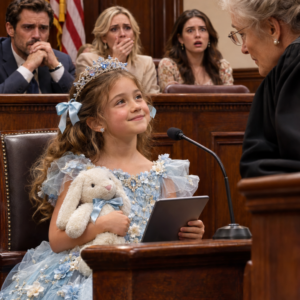
## **CHAPTER 3 — MY DEAD SISTER HAD RECORDED VANESSA AND ROB THREE WEEKS BEFORE THEY ABANDONED US**
****
For several seconds, nobody in my kitchen moved.
Michael stood beside me holding the printed email.
Sophie still had her phone clutched in both hands.
Vanessa’s face was wet with tears from the school video.
Rob looked like someone had slowly removed all the air from the room.
And in the doorway behind us stood six more of my children, relatives, neighbors, and Sophie’s school friends, all wondering why a birthday barbecue had suddenly turned into something none of us could understand.
I looked again at the email.
> Once he signs the papers, the house will belong to us.
Three weeks before Vanessa left.
My sister Catherine’s name appeared in the archived folder Michael had found.
I stared at Vanessa.
“What papers?”
Rob stepped forward.
“David, don’t do this in front of the children.”
I looked at him.
Ten years earlier, Rob Langford had been my best friend.
He lived two houses away.
We grilled together.
Watched football.
He helped me repair a fence after a windstorm.
He held my youngest daughter when she was six months old and joked that having seven children made me either brave or stupid.
Then he slept with my wife.
And disappeared with her.
I had spent ten years thinking that was the entire betrayal.
Apparently I had been optimistic.
“I asked Vanessa a question.”
Rob’s jaw tightened.
“This is ancient history.”
Michael laughed without humor.
“Funny.”
My oldest son was twenty-four now.
Tall.
Broad shouldered.
Old enough to remember almost everything.
“You didn’t think it was ancient history when you showed up with a bike and a tablet trying to buy Sophie’s attention.”
“Michael.”
Vanessa whispered.
He turned toward her.
“You don’t get to use my name like you’re still my mother.”
The sentence hit Vanessa physically.
Her shoulders folded.
I hated watching it.
Not because she didn’t deserve anger.
Because Michael had been fourteen when she left.
For years he had tried to become the second adult in a house that should never have needed one.
I said:
“Michael.”
He looked at me.
I didn’t tell him to apologize.
I simply shook my head.
Not here.
Not in front of Sophie’s classmates.
His anger was his.
But my daughter’s birthday was not going to become a public trial.
I turned toward the guests.
“I’m sorry.”
My sister-in-law understood immediately.
“Kids, why don’t we move the cake outside?”
Sophie hesitated.
I crouched slightly.
“You can stay.”
She looked at Vanessa.
Then Rob.
“No.”
Her voice shook.
“I want cake.”
That may have been the bravest sentence anyone said all day.
She walked outside with her friends.
One by one, the guests followed.
My older children stayed.
Michael.
Ava, twenty-two.
Ben, twenty.
Lily, eighteen.
Noah, sixteen.
Grace, fourteen.
Seven children.
All of them old enough now to understand what abandonment meant in different ways.
I looked at Michael.
“Where did you find this?”
He held up the printout.
“Dad, remember the old desktop from the den?”
“The black one?”
“Yeah.”
“I was trying to pull family pictures for Sophie’s project.”
“The hard drive still worked.”
“There were old email backups.”
My chest tightened.
“That computer was from before your mother left.”
“I know.”
Michael glanced at Vanessa.
“There was a folder inside the mail archive called **CATHERINE**.”
Rob said:
“You had no right to go through private emails.”
Michael turned slowly.
“You were sleeping with my mother in my father’s house.”
Rob shut up.
Michael continued.
“Aunt Catherine had emailed Dad several times.”
I frowned.
“I never saw them.”
“I know.”
“There are replies from your account too.”
My pulse changed.
“What replies?”
Michael opened another page.
I recognized the email address.
An old family account Rob had actually helped me create years earlier because I was hopeless with computers.
Michael handed me a printout.
Catherine’s message:
> David, please call me before you sign anything Rob brings you.
>
>
> I mean it.
>
>
> The refinancing packet is not what he says it is.
A response from my account:
> Stop interfering. Vanessa and I have this handled.
I stared.
“I never wrote that.”
Michael nodded.
“There are more.”
Catherine:
> I need to speak with you alone.
My account:
> I don’t want you creating drama. Leave Vanessa out of this.
My hands began trembling.
Rob stepped backward.
I looked at him.
“You had access to that account.”
He said nothing.
Before everyone carried smartphones like another organ, Rob had been the man I called whenever the computer froze.
He set up our router.
Our family email.
Remote backups.
I trusted him enough to give him passwords.
Why wouldn’t I?
He was my best friend.
“What did you do?”
Vanessa looked at Rob too.
For the first time, she seemed genuinely confused.
“What emails?”
He snapped:
“Vanessa, don’t.”
“No.”
She turned.
“What emails?”
His face hardened.
“You knew Catherine was snooping.”
“I knew she confronted us.”
“Not this.”
Something changed in the room.
Vanessa had known part of it.
Not all.
Michael reached into his backpack.
“There’s a video.”
My heart stopped.
“What?”
“It’s only thirty-seven seconds.”
“Why?”
“Aunt Catherine attached it to one of the emails.”
“Dad, Sophie already saw it.”
I looked toward the backyard.
“Why?”
“It was in the project folder.”
He looked ashamed.
“She wanted old family photos.”
“I didn’t realize what the file was until it played.”
Vanessa whispered:
“What video?”
Michael looked at me.
Not her.
My choice.
I thought about Sophie.
This had already exploded into her birthday.
But Catherine had been dead eight years.
Whatever she had left mattered.
“Play it.”
Michael turned his phone around.
The screen showed Catherine.
My sister.
Alive.
Forty-one years old.
Short brown hair.
The same silver earrings she wore to every family event because she claimed choosing jewelry was a waste of intellectual effort.
She was standing inside our old den.
Behind her—
Vanessa.
Rob.
The video had been recorded secretly, probably with Catherine’s phone resting against something.
The sound was rough.
But clear enough.
Rob’s voice:
> Once David signs the refinancing authorization, the deed moves into the property company.
My blood turned cold.
Vanessa:
> And he won’t know?
Rob:
> Not until after the new loan closes.
Vanessa:
> What about the kids?
Rob laughed.
I had heard that laugh a thousand times.
Barbecues.
Baseball games.
My dining room.
> They stay with him.
> That’s the point.
Vanessa’s voice lowered.
> I don’t want them losing the house.
Rob answered:
> They aren’t losing anything immediately.
> We get control first.
Then Catherine’s voice.
Sharp.
**“No. You don’t.”**
The camera moved.
Catherine stepped into view.
Vanessa gasped.
Rob swore.
Catherine continued:
> I’ve copied everything.
> If either of you puts one more document in front of my brother without telling him exactly what it does, I go to the bank, the title company, and the police.
The video ended.
No one spoke.
My ears rang.
I looked at Vanessa.
Ten years earlier she had not simply planned to leave.
She had been willing to help Rob put my house into a company they controlled first.
Our house.
The one where seven children slept.
The one I almost lost anyway during the years after she left because I was working three jobs to keep the mortgage current.
Vanessa backed toward the counter.
“I didn’t understand.”
Michael laughed bitterly.
“You said, ‘And he won’t know?’”
“I know what I said.”
Vanessa cried.
“But Rob told me it was a temporary structure.”
“A temporary structure?”
I could barely speak.
“He said we’d refinance, pull out equity, then transfer the house back to you.”
“Why?”
“To fund…”
She stopped.
I stared.
“Fund what?”
Rob said:
“Don’t answer.”
Vanessa turned toward him.
For the second time that afternoon, something in her expression cracked.
“You told me it was for our new house.”
Rob’s face went white.
There it was.
Vanessa looked at me.
“He said we needed cash to start over.”
“I knew it was wrong.”
“I knew you didn’t understand the papers.”
“But I thought…”
She started crying.
“I thought you would still keep this house.”
I stared at her.
“You were willing to steal equity from the home where your seven children lived.”
She covered her face.
“Yes.”
No excuse.
Good.
At least not in that second.
Then Michael said:
“That’s not the worst part.”
Rob swore under his breath.
I looked at my son.
“What else?”
He handed me another document.
A trust summary.
**THE CATHERINE MERCER SEVEN LANTERN TRUST.**
Date created:
Eight years and seven months earlier.
Months before Catherine died.
Beneficiaries:
Michael.
Ava.
Benjamin.
Lily.
Noah.
Grace.
Sophia.
All seven of my children.
My knees almost gave out.
“What is this?”
Michael’s eyes filled.
“Aunt Catherine left us money.”
“How much?”
“I don’t know.”
“Why didn’t anyone tell me?”
“There are emails.”
Of course there were.
The trustee had contacted our old family email repeatedly after Catherine’s death.
Annual notices.
Requests for updated addresses.
Confirmation that distributions would remain restricted until the youngest child reached twelve.
Sophie’s age.
Today.
Her birthday.
I looked toward the backyard.
Catherine had designed the trust to mature on **Sophie’s twelfth birthday.**
That was why Michael found it now.
He had been preparing Sophie’s video and digging through old records at exactly the moment Catherine’s plan became relevant.
But the notices had received replies.
From my account.
> Family circumstances remain unstable.
> Please maintain the restricted schedule.
Another:
> Do not contact the children directly.
Another:
> David requests that all correspondence remain electronic.
I stared at Rob.
“You.”
He shook his head.
Vanessa did something unexpected.
She slapped him.
The sound cracked through the kitchen.
Everyone froze.
Rob grabbed his cheek.
“Are you insane?”
Vanessa backed away from him.
“You knew about Catherine’s trust?”
He said nothing.
Her face drained.
“You knew?”
“Vanessa—”
“All these years?”
He stepped toward her.
She stepped back.
“Don’t touch me.”
Rob’s tone changed.
Soft.
Controlled.
The voice of a man trying to regain a room.
“This isn’t what you think.”
Vanessa started laughing.
A broken sound.
“Oh, my God.”
She looked at Michael’s papers.
“That’s why.”
Rob’s face hardened.
“Why what?”
Vanessa’s breathing quickened.
“Why you insisted we come today.”
My skin went cold.
I looked at her.
“What do you mean _insisted_?”
Vanessa turned toward me.
“I didn’t know about the trust until four days ago.”
Rob shouted:
“Stop talking.”
She ignored him.
“He told me Catherine had left money for the children.”
“He said Sophie’s portion became accessible at twelve.”
“He said…”
She stopped.
I waited.
“He said if I re-established a relationship with Sophie, maybe I could be recognized as a parent for financial decisions.”
Sophie.
The bike.
The tablet.
**Now we can finally be together. Look at all the gifts I brought you.**
My stomach turned.
Rob had not brought Vanessa back because she missed the children.
He had brought her because Catherine’s trust had matured.
I looked at my former best friend.
“You came for my daughter’s money.”
“No.”
His voice rose.
“It’s family money.”
Those words.
I had heard versions of them before.
Every thief thinks a relationship is an account number if he waits long enough.
Vanessa whispered:
“You told me the trust was new.”
Rob looked at her.
“What difference does it make?”
Her knees buckled.
Literally.
She grabbed the kitchen counter but missed.
Ava caught her before she hit the floor.
For one strange second, my daughter was holding the mother who had not held her through ten years of birthdays, illnesses, graduations, and heartbreaks.
Vanessa stared at Rob from the floor.
“You’ve known for eight years.”
He said nothing.
Then Sophie appeared in the doorway.
I hadn’t heard her come inside.
She held her phone.
“Mom?”
Vanessa looked at her.
Sophie swallowed.
Then opened another file.
“I didn’t show you the last part.”
Michael’s face changed.
“Sophie.”
She shook her head.
“This is my birthday.”
Her voice trembled.
“I want to know.”
She pressed play.
Catherine appeared again.
This recording was different.
Cleaner.
She sat at a desk.
Pale.
Thin.
Already sick.
She looked straight into the camera.
> Sophie, if you are watching this on or after your twelfth birthday, then you’re old enough to ask why I left money in a trust instead of simply giving it to your dad.
Vanessa covered her mouth.
Catherine continued:
> The answer is not because I didn’t trust your father.
> **I trusted him more than anyone.**
My eyes filled.
> I was afraid that if your mother or Rob ever learned the children had protected assets, they might return for the wrong reason.
The room went completely silent.
Sophie looked at Vanessa.
Catherine’s voice continued:
> Vanessa, if you’re watching this too, I hope I was wrong.
Vanessa began sobbing.
> You are their mother.
> You can still become someone they choose to know.
> But gifts are not ten years.
> Money is not presence.
> And biology does not give you ownership over what I left the children.
Then Catherine leaned closer to the camera.
> Rob—
His face changed.
> **If you are watching, that means you got closer to this trust than I ever wanted.**
Rob stepped backward.
Catherine smiled sadly.
> Which is why the trustee has copies of every document I collected before you left.
Rob turned toward the door.
Michael moved instinctively.
I grabbed my son’s arm.
“No.”
He looked at me.
“Let him go.”
Rob stared.
I continued:
“We are not touching him.”
My voice was calm.
“Not today.”
“Not in front of Sophie.”
He left.
Vanessa remained on the floor.
Sophie stopped the video.
Then looked at her mother.
No triumph.
No cruelty.
Just a twelve-year-old girl whose birthday had become the day adults finally stopped deciding what she was allowed to know.
Vanessa whispered:
“Sophie.”
My daughter answered quietly:
**“I don’t want the bike.”**
Then walked back outside to her cake.
## **CHAPTER 4 — CATHERINE LEFT EACH CHILD A SHARE OF HER ESTATE, BUT THE MOST VALUABLE THING IN THE TRUST WASN’T MONEY**
The next morning, I called the number listed on Catherine’s trust documents.
An attorney answered.
**Evelyn Marsh.**
The moment I said my name, she went silent.
“Mr. Mercer.”
“Yes.”
“Oh, thank God.”
That was not what I expected from a lawyer.
Within three hours, Michael and I were sitting in Evelyn’s office.
I wanted all the children there.
Evelyn advised against it.
Not secrecy.
Age.
Sophie was twelve.
Grace fourteen.
Some information involved financial crimes and their mother’s behavior.
We agreed to give each child age-appropriate truth without forcing them to become witnesses to adult misconduct.
Another lesson learned.
Evelyn was sixty-three, sharp-eyed, dressed in dark green.
She had been Catherine’s estate attorney.
She had also been her friend.
“I tried to reach you.”
she said immediately.
“I believe you.”
She turned a monitor toward me.
Emails.
The replies sent from my account.
Then technical records from the trustee’s portal.
Several replies came from an internet connection associated years ago with Rob’s consulting company.
Not enough alone to prove who sat at the keyboard.
But enough to explain why Evelyn had grown suspicious.
“Why didn’t you call me?”
“I did.”
My chest tightened.
“What number?”
She read it.
My old landline.
Disconnected nine years earlier.
“We mailed certified letters.”
“To where?”
The house.
I stared.
“I never got them.”
She opened another record.
After Catherine died, a postal change-of-address had redirected certain correspondence tied to the family surname to a commercial mailbox.
Authorized request:
**D. Mercer.**
Signature not mine.
Evelyn said:
“We did not know that then.”
“Why didn’t the trust bank escalate it?”
“Because distributions were not due.”
“And Catherine gave very unusual instructions.”
I frowned.
“What instructions?”
Evelyn opened Catherine’s memorandum.
My sister knew Vanessa and Rob had attempted to manipulate the house transfer.
She knew they had left.
She also knew my life was chaos.
Seven children.
Mortgage.
Three jobs.
She did not want trust money being pulled into emergency household expenses or becoming a target in any custody fight if Vanessa suddenly returned.
So she created a spendthrift trust.
Each child had an equal beneficial share.
Education.
Medical expenses.
Emergency needs.
Then, beginning when Sophie turned twelve, the trustee had authority to begin individualized planning with me and the older children.
At twenty-five, each child could receive part of his or her share outright.
At thirty, the rest.
Unless they chose to keep it protected longer.
“How much?”
I asked.
Evelyn looked at Michael.
He shook his head.
“I want Dad to hear it.”
She gave us the current figure.
**$2.31 million.**
I stared.
Michael whispered:
“What?”
Evelyn nodded.
“Invested over eight years.”
“Catherine’s original contribution was approximately $1.4 million.”
I could barely process it.
My sister had been successful.
No children.
Owned a paid-off condo.
Retirement savings.
A substantial life-insurance policy.
I knew she was comfortable.
I had not known this.
“Why all seven?”
Evelyn looked surprised.
“Because she loved all seven.”
My eyes burned.
Then she said:
“And because she knew what you were doing.”
“What?”
“Three jobs.”
“Missing sleep.”
“Selling your tools.”
“Canceling your own health insurance for six months.”
Michael turned toward me.
“You did what?”
I gave him a look.
“Not now.”
Evelyn smiled faintly.
“Catherine wanted to help.”
“She offered you money twice.”
I remembered.
I had refused.
Pride.
I didn’t want the children thinking their aunt was rescuing us because their mother had left.
“Catherine knew you would refuse direct support.”
“So she built something you couldn’t refuse?”
“No.”
Evelyn shook her head.
“She specifically prohibited using the trust to reimburse you for raising them.”
I laughed.
“That sounds like Catherine.”
“She said you would hate it.”
“Correct.”
“Instead she wanted the children to have options when they became adults.”
College.
Training.
First homes.
Business startups.
Health care.
Not luxury.
Not instant wealth.
Options.
I looked at Michael.
For ten years, he’d worried about student loans.
Worked nights.
Turned down an out-of-state graduate program because he didn’t want more debt.
My chest hurt.
“Could the trust have helped Michael earlier?”
“Yes.”
Evelyn’s expression tightened.
“Education distributions were permitted before Sophie turned twelve.”
I froze.
“Then why didn’t they happen?”
“Because every year we received responses saying the children had no qualifying requests and that family contact should remain limited.”
Rob.
Eight years.
I gripped the table.
“My son gave up opportunities because a man who had already taken his mother was hiding money his aunt left him.”
Michael put his hand over mine.
“Dad.”
“No.”
My voice cracked.
“I should’ve known.”
“How?”
“I should’ve—”
“How?”
He repeated.
“You didn’t even know the trust existed.”
I looked away.
Parents become talented at taking responsibility for crimes committed outside their knowledge.
Maybe because blame feels easier when it comes with the illusion that we could have prevented everything.
Evelyn said:
“Michael is right.”
I nodded.
Not because I believed it emotionally yet.
Because I wanted to.
Then:
“What evidence did Catherine leave?”
Evelyn opened a locked cabinet.
A large binder.
The attempted refinancing packet.
Emails between Rob and Vanessa.
Bank correspondence.
A draft property deed.
And an affidavit Catherine signed shortly before her death.
“Did she report them?”
I asked.
“She reported concerns to the lender and title company.”
“That’s why the transfer never completed?”
“Yes.”
Rob had prepared a structure where I would supposedly refinance the home through a company that promised a lower rate.
Buried inside the documents was an authorization transferring title temporarily into an LLC.
The LLC was controlled by Rob.
Vanessa was to receive an ownership interest after closing.
I had never signed the final documents.
Why?
Catherine.
The night before Rob planned to bring them over, she called the lender’s compliance department.
The closing was frozen.
Questions followed.
Rob abruptly abandoned the plan.
Three weeks later—
Vanessa and Rob left.
I looked at Michael.
“Your aunt saved our house.”
Evelyn shook her head.
“She prevented one transfer.”
“David, you saved the house afterward.”
“You made the mortgage payments.”
“You kept it through years when selling would have been easier.”
That mattered.
Catherine stopped a theft.
I raised the children inside what remained.
Both true.
Then Michael asked:
“Why didn’t Aunt Catherine tell Dad before she died?”
Evelyn looked toward me.
“She tried.”
My heart tightened.
“Those emails.”
“Yes.”
“And she came to your house once.”
I remembered.
Catherine stopped by eight years ago.
A month before she died.
I had been exhausted.
Grace had the flu.
Sophie had broken a lamp.
Ben needed help with homework.
I told Catherine I couldn’t talk.
She said:
“David, I need fifteen minutes.”
I answered:
“Not tonight.”
My chest collapsed.
“She was going to tell me.”
Evelyn nodded gently.
“She told me afterward she couldn’t bring herself to add another burden that night.”
I closed my eyes.
No villains in that moment.
Just bad timing.
Then illness progressed.
Catherine was hospitalized.
I visited.
We talked about childhood.
Our parents.
The kids.
She never mentioned the trust.
Why?
Because she believed the legal notice would reach me after her death.
It didn’t.
Rob made sure of that.
I whispered:
“What was Rob trying to hide?”
“The evidence?”
“Partly.”
Evelyn’s expression changed.
“But there is something else.”
Of course there was.
She opened another file.
A bank statement.
Payments.
Every year after Catherine’s death, **Rob Langford had transferred money into an account belonging to a company called CML Consulting.**
“Who owns it?”
I asked.
Evelyn looked at me.
“It was Catherine’s old company.”
I frowned.
“She died.”
“Yes.”
“The company was dissolved.”
“Eventually.”
“For nearly two years after her death, someone kept depositing money.”
My skin went cold.
“How much?”
“Approximately $186,000.”
Michael stared.
“Why would Rob pay Aunt Catherine after she died?”
Evelyn answered:
**“He wasn’t paying Catherine.”**
“Then who?”
She slid a signature card toward me.
Authorized recipient:
**Vanessa Mercer.**
My breath disappeared.
My wife had continued receiving money connected to my dead sister’s company after abandoning seven children.
And judging from the look on Vanessa’s face when I confronted her that evening—
she had no idea the account existed.
## **CHAPTER 5 — VANESSA THOUGHT ROB HAD MADE HER RICH. THEN SHE LEARNED HE HAD BEEN HIDING MONEY IN HER NAME FOR TEN YEARS**
Vanessa came to my house alone.
No Rob.
No gifts.
No expensive clothes.
She stood on the porch in jeans and a plain sweater.
For a second she looked like the woman I married.
That was dangerous.
Memory is not evidence of change.
“Can I come in?”
she asked.
I thought.
Then:
“No.”
Her face fell.
Not cruelly.
Boundary.
We sat on the porch instead.
The children were elsewhere.
Michael took Sophie and Grace for ice cream.
Ava stayed inside in case I needed her.
Not because I feared Vanessa physically.
Because I no longer conducted life-changing conversations alone simply to prove I could.
I placed the CML account statement on the small table.
“What’s this?”
Vanessa frowned.
Then read her name.
Her face went blank.
“I’ve never seen this.”
“Your signature is on the account.”
She looked closer.
“That isn’t my signature.”
I believed her.
Almost immediately.
Maybe because after ten years of marriage I knew her handwriting.
Maybe because of the terror on her face.
“Did Rob ever ask you to sign blank business forms?”
Her expression changed.
“Yes.”
“When?”
“Years ago.”
“How many?”
“I don’t know.”
“Why?”
“He managed our investments.”
I almost laughed.
The irony would have been funny in someone else’s family.
Vanessa whispered:
“What is CML?”
“Catherine Mercer Lane.”
My sister’s full name.
Vanessa covered her mouth.
“No.”
“Rob paid one hundred eighty-six thousand dollars through the account after Catherine died.”
Her eyes widened.
“Why?”
“We don’t know.”
Then something happened.
Vanessa began shaking.
Not theatrical crying.
Fear.
“David.”
“What?”
“Rob told me Catherine took money from him.”
I frowned.
“What money?”
The week before Vanessa left, Catherine confronted them.
Afterward, according to Vanessa, Rob said Catherine had demanded payment to keep quiet.
“How much?”
“One hundred fifty thousand.”
“Did you see her ask?”
“No.”
“Did you see her receive it?”
“No.”
“Then why did you believe him?”
Vanessa laughed bitterly.
“Because I was already lying to myself about everything else.”
That was an unexpectedly honest answer.
Rob told Vanessa Catherine had accepted a private settlement.
He claimed the money bought her silence about the attempted house transfer and affair.
Vanessa had spent ten years believing Catherine was a hypocrite.
That my sister accepted money and let them go.
But Catherine’s trust records showed no such payment.
Instead, after Catherine died, Rob created transactions through her former company.
Money went in.
Then out.
Some to the account bearing Vanessa’s name.
Some to offshore investment accounts later used by Rob.
Evelyn’s financial team had only recently discovered it because the trust investigation reopened Catherine’s business records.
“What does it mean?”
Vanessa asked.
I answered:
“Rob may have used Catherine’s old company name to hide his own money.”
“And mine.”
“Possibly.”
Her face went white.
“Why put my name on it?”
I already suspected.
Evelyn had explained one possibility.
If regulators or tax authorities questioned the payments someday, Rob could say Vanessa controlled the account.
The woman who had already walked away from her family for him.
The woman with a documented role in the attempted house transfer.
A convenient future explanation.
Vanessa whispered:
“He did to me what we tried to do to you.”
I looked at her.
“Not exactly.”
She flinched.
“You participated in what happened to me.”
“I know.”
“Don’t turn yourself into my replacement.”
“No.”
Tears ran down her face.
“You’re right.”
Good.
Then:
“Why did you stay with him?”
The question surprised both of us.
Vanessa looked toward the street.
“At first?”
“Because I thought I loved him.”
“And because he was rich.”
“Yes.”
No defense.
“He took me places.”
“Bought things.”
“Made me feel like I had escaped a life where every dollar had a purpose before I touched it.”
I felt anger rise.
Seven children.
Mortgage.
Of course every dollar had a purpose.
She saw it.
“I know how that sounds.”
“It sounds like seven children needed shoes.”
“Yes.”
She cried.
“I was selfish.”
Then:
“After a few years, it wasn’t like that anymore.”
“What happened?”
Rob controlled the money.
The houses were his.
Credit cards in his companies’ names.
Cars leased through businesses.
Vanessa had no meaningful assets of her own.
When she talked about leaving, he reminded her she had abandoned seven children and helped attempt a fraudulent property transfer.
“He said if I left, he’d tell you everything.”
I stared.
“I would’ve preferred that.”
“I know.”
“He told me you’d make sure the children hated me.”
I laughed.
“They didn’t need me for that.”
Vanessa closed her eyes.
“No.”
Then she whispered:
“I tried contacting Michael four years ago.”
I froze.
“What?”
“I emailed him.”
Michael never said.
“What did you say?”
“I asked if he’d meet me.”
“Did he respond?”
“No.”
“Are you sure he got it?”
Vanessa stared.
Then we both thought of the same thing.
Rob.
Accounts.
Access.
Interception.
“Show me.”
She pulled out her phone.
Old sent mail synced to cloud storage.
There it was.
Four years earlier:
> Michael,
>
>
> I don’t know if you want to hear from me.
>
>
> I have no right to ask.
>
>
> I would like to apologize without asking you to forgive me.
>
>
> If you don’t answer, I will understand.
No response.
Then another email a year later.
To Ava.
Another.
To me.
I had never seen any of them.
My stomach tightened.
“Rob had your passwords?”
“For everything.”
Not anymore, apparently.
Vanessa had changed them the night before.
Again, her hidden emails did not absolve her.
She had ten years.
Telephones.
Addresses.
Friends.
She could have done more.
I said so.
She nodded.
“I know.”
“I let unanswered messages become another excuse.”
Good.
She was beginning to sound less like the woman who arrived with gifts.
Then:
“Why did you come this year?”
Vanessa looked down.
“Rob told me about the trust.”
“I know.”
“But that’s not all.”
I waited.
“Three weeks ago I found a file on his desk.”
“What file?”
“A financial profile on all seven children.”
My skin went cold.
“Explain.”
Ages.
Schools.
Whether they had jobs.
Social-media summaries.
Estimated relationship with me.
Potential “influence level.”
Sophie was marked:
**HIGH ACCESS POSSIBILITY — MATERNAL RECONNECTION**
I stood.
“Where is that file?”
Vanessa pulled a flash drive from her pocket.
“I copied it.”
I stared.
“I was going to pretend I didn’t see it.”
“Then why didn’t you?”
She cried.
“Because Sophie’s name was on it.”
I laughed bitterly.
“Seven names were on it.”
“Yes.”
Her face crumpled.
“But Sophie was two when I left.”
The horror of that arrived ten years late.
Not enough.
But real.
“Rob said we should visit for her birthday.”
“He told me the trust was recent.”
“He said if I rebuilt a relationship, maybe later I could help manage her money.”
“Did you agree?”
Vanessa closed her eyes.
“Yes.”
The answer hurt even though I already knew.
Then:
“I told myself it could be both.”
“What?”
“That I could see her because I missed her and also help.”
“You brought a tablet.”
“I know.”
“A bicycle.”
“I know.”
“And when she showed you a school project describing the father who stayed, you called her a brat.”
Vanessa began sobbing.
“I know.”
I stood at the porch railing.
For ten years I had occasionally imagined Vanessa returning.
In the fantasy, she apologized perfectly.
The children ran to her.
I remained noble.
Reality was uglier.
She returned partly because Rob wanted access to trust money.
Then became enraged when her twelve-year-old daughter refused to play grateful.
I said:
“You don’t get to ask Sophie for forgiveness right now.”
Vanessa nodded.
“I know.”
“You don’t get to send gifts without asking.”
“Yes.”
“You don’t get to show up.”
“Yes.”
“If any of the kids want contact, it happens at their speed.”
“Yes.”
I looked at her.
“And if none of them do?”
She cried.
“Then I live with it.”
That was the first answer that made me believe she might eventually be capable of becoming something other than the woman who left.
Not a mother restored.
A person finally willing to accept consequences.
Then I pointed at the flash drive.
“What are you going to do about Rob?”
Her expression changed.
Fear.
“I’m leaving him.”
“Then don’t come here.”
She looked startled.
“What?”
“If he has used your identity for financial accounts, if he has monitored the children, if he has intercepted communications, you need a lawyer and a safe plan.”
I heard myself.
Ten years ago, she left me for him.
Now I was telling her how not to become vulnerable when leaving him.
Life is strange.
She whispered:
“Why are you helping me?”
“I’m not.”
I looked toward the house.
**“I’m protecting the mother of my children from making another reckless decision that spills into their lives.”**
The difference mattered.
She nodded.
Then got into her car.
Before leaving, she turned.
“David?”
“Yes?”
“I did love you.”
I felt nothing comforting.
“I know.”
“I was just worse at loving than I was at wanting.”
That sentence stayed with me.
She drove away.
Ava stepped onto the porch.
“You heard?”
“Some.”
“Do you hate her?”
I thought.
“No.”
“You love her?”
“No.”
Another thought.
“I remember loving her.”
Ava nodded.
“That’s probably enough for one night.”
Smart child.
I raised seven of them.
Somehow they turned into people who occasionally raised me back.
## **CHAPTER 6 — ROB HADN’T COME BACK FOR SOPHIE’S MONEY ALONE. HE NEEDED THE TRUST TO DESTROY THE LAST EVIDENCE CATHERINE LEFT**
Three days after Vanessa left Rob, his attorney contacted Evelyn Marsh.
Not me.
Good.
He denied unauthorized access.
Denied manipulating trust communications.
Denied forging account documents.
Denied monitoring the children.
He claimed Vanessa had become “emotionally unstable” after being confronted at the birthday party.
I read that phrase twice.
Then looked at Evelyn.
“Interesting how women become unstable immediately after discovering men’s financial records.”
She smiled.
“You’re learning legal cynicism.”
“Catherine would be proud.”
Then investigators reviewing the trust archive found the reason Rob had panicked.
Catherine’s evidence was not all in Evelyn’s office.
The trust owned a **safe-deposit repository** containing original business records Catherine had collected.
Access would become available to the adult beneficiaries once Sophie’s twelfth birthday triggered the trust’s next phase.
Rob knew that.
For eight years, his replies from my compromised email kept the trustee from initiating deeper family contact.
But he could not stop the trigger forever.
Sophie turning twelve meant Michael and Ava, both adults, could request the full beneficiary memorandum.
Including the repository index.
Rob had not returned simply to influence Sophie’s share.
He wanted to know whether Catherine had preserved one particular document.
“What document?”
I asked.
Evelyn looked at Vanessa, who had joined us with her own attorney.
Vanessa whispered:
“The original property agreement.”
I frowned.
“We already have a draft.”
“No.”
She shook her head.
“A different one.”
Ten years earlier, the attempted house transfer was only part of Rob’s plan.
He had also created a **partnership agreement** involving my small home-renovation business.
Back then I worked as a construction supervisor during the day and took private renovation jobs on weekends.
Nothing huge.
But profitable enough.
Rob proposed helping me “formalize” the side business.
I remembered.
I had almost signed.
Then Sophie got sick.
Ava had a school emergency.
Life happened.
The papers sat in a drawer.
Rob later told me the opportunity expired.
Apparently another version existed.
Under the agreement, Rob’s company would acquire a controlling interest in my future contracts and use the family home as collateral for a credit line.
My signature appeared.
Not mine.
Vanessa’s was there as witness.
I turned toward her.
She looked sick.
“You witnessed a forged signature?”
“I didn’t know it was forged when I signed.”
I stared.
She continued quickly.
“Rob told me you’d already signed.”
“Did you see me sign?”
“No.”
“You’ve used that answer a lot lately.”
“I know.”
The original agreement had never been activated because Catherine discovered it before Rob filed the financing.
But if Catherine preserved the signed original, Rob had a problem.
Why?
Because years later he had used a similar document structure in other investments.
Different partners.
Different houses.
Different shell companies.
Catherine had suspected the scheme went beyond me.
The repository contained correspondence showing she had contacted two former Rob business partners.
One claimed his property had temporarily transferred into an LLC during refinancing and never fully returned.
Another settled privately.
Rob’s wealth suddenly looked different.
Not all stolen.
Not fictional.
But partly built on aggressive financial arrangements that preyed on people who trusted him.
The same thing he attempted with me.
Vanessa sat completely still.
“How much did he tell you he was worth?”
her attorney asked.
She swallowed.
“About sixteen million.”
The records suggested liabilities nearly matched his assets.
His lifestyle had been financed through leverage, investor money, and company-controlled property.
The Maldives.
Cars.
Homes.
Everything Vanessa had left seven children to obtain—
**mostly belonged to banks, companies, or other people’s capital.**
When I told Michael, he laughed.
Not happily.
“Mom left because we were poor for a guy who was basically renting being rich?”
I winced.
“Michael.”
“Sorry.”
Then:
“Actually, no.”
Fair.
The flash drive Vanessa copied from Rob’s office became important.
So did the old email-account records.
So did Catherine’s repository.
Evelyn advised us not to turn the family into investigators.
Professionals handled it.
Police and financial authorities received what was appropriate.
Civil attorneys examined what could still be addressed after ten years.
I refused to promise the children Rob would go to prison.
That is not how reality works.
Some conduct was old.
Some difficult to prove.
Some civil.
Some recent.
But the ongoing unauthorized account access and financial activities tied to Vanessa’s identity were current enough to matter.
Rob’s companies went into litigation.
Several investors sued.
One lender accelerated obligations.
His carefully built image cracked.
Not overnight.
Month by month.
Vanessa gave statements.
Produced records.
Admitted her own role in the attempted property scheme.
Her lawyer did not let her turn cooperation into innocence.
Good.
At one point Vanessa called me.
“I may be charged too.”
I sat silently.
“Okay.”
She sounded surprised.
“You don’t have anything else to say?”
“What do you want?”
“I don’t know.”
“Comfort?”
She cried.
“Maybe.”
I thought.
“I hope the truth is treated accurately.”
That was all I could give.
She whispered:
“Fair.”
No rescue.
No cruelty.
Then came Catherine’s repository.
Michael and Ava asked me to go with them.
The other children did not.
Their choice.
Inside were several sealed boxes.
Financial records.
Photos.
Letters.
Then one marked:
**FOR DAVID — ONLY IF VANESSA RETURNS**
I laughed bitterly.
“Your aunt really planned for everything.”
Michael smiled.
“She knew Mom.”
The box contained a video.
Catherine again.
Sicker this time.
Wrapped in a blanket.
Her voice weak.
> David, if Vanessa never comes back, you may never need this.
I sat.
> If she does, please don’t assume returning proves remorse.
> And please don’t assume it proves greed either.
I frowned.
Catherine continued:
> People come back for complicated reasons.
> Let her actions tell you which ones matter.
My sister always was irritatingly sensible.
Then:
> There is something I did not tell you while I was alive.
I braced myself.
> After Vanessa and Rob left, Vanessa called me once.
My heart stopped.
“What?”
Michael paused the recording.
“Dad?”
“Keep going.”
Catherine:
> She called from a hotel in Nevada.
> She was crying.
> She said she wanted to come home.
I stared.
Ten years earlier.
Only five days after Vanessa left.
> I told her to call you.
> She said Rob was beside her and she was afraid.
> I asked whether he had hurt her.
> She said no.
> Then she said something I did not understand at the time.
Catherine looked into the camera.
> **“I already signed too much. If I go back, he says David will lose the house.”**
My hands tightened.
Catherine continued:
> I told her the house transfer had been stopped.
> Vanessa went quiet.
> Then Rob took the phone.
> He told me to stay out of their lives.
I covered my mouth.
Vanessa had known enough to be guilty.
But five days after leaving, she’d considered coming back.
Rob convinced her she couldn’t.
Catherine:
> David, I am not telling you this so you will excuse her.
> She still left.
> She still chose Rob.
> She still allowed fear and money to matter more than seven children.
> But I don’t want Rob rewriting her history either.
My eyes filled.
> If those children ever decide whether to know their mother again, they deserve the whole truth.
Then Catherine smiled faintly.
> And if you are furious that I kept this from you, join the line.
I laughed through tears.
Michael did too.
Then the video ended with:
> One more thing.
> You are going to think you failed because the children grew up tired, because Michael helped too much, because Ava learned to cook at eleven, because there were years you forgot what rest felt like.
> **Stop it.**
I broke.
Catherine’s voice continued:
> You stayed.
> Staying did not make you perfect.
> It made you available.
> Children can survive a surprising amount when at least one adult remains available to tell them the truth and come home.
I covered my face.
For ten years people called me a hero.
Single father.
Seven kids.
Three jobs.
I hated it.
Heroes are supposed to look strong.
I had cried in grocery-store parking lots.
Forgot permission slips.
Burned dinners.
Once sent Grace to school wearing two different shoes because neither of us noticed.
Michael missed things because I needed him.
Ava learned responsibility too young.
No inspirational sentence erased those costs.
But Catherine was right.
I had stayed.
Not perfectly.
Just consistently.
Sometimes that is what children remember most.
Michael paused the screen.
Then said:
“Dad.”
“What?”
“You know that school project Sophie made?”
“Yes.”
“She asked all of us for one sentence about you.”
I smiled.
“Did she?”
“Mine was supposed to be in the video.”
“What happened?”
“She cut it because she said it was too long.”
That sounded like Sophie.
“What was it?”
Michael looked at me.
**“Dad never made us feel like helping raise each other meant we owed him for staying.”**
I couldn’t speak.
Michael continued.
“I helped because we were a family.”
“You asked too much sometimes.”
“Yes.”
“But you also apologized.”
“You told me to go play soccer when you found out I skipped practice to watch Sophie.”
“You were fourteen.”
“You should have gone.”
“I know.”
He smiled.
“That’s why I did the next week.”
We sat beside Catherine’s boxes and cried.
Not because the trust was worth $2.31 million.
Because a dead woman had preserved the parts of our story that other people kept trying to edit.
## **CHAPTER 7 — VANESSA ASKED SOPHIE FOR ONE HOUR. MY DAUGHTER SAID, “NO GIFTS. NO ROB. AND DAD STAYS.”**
Vanessa did not see Sophie for six months.
Not because I banned her.
Because Sophie said no.
I respected it.
Vanessa sent one letter.
Not directly.
Through a family counselor.
Sophie chose not to read it.
Two months later, she read it.
Then put it in a drawer.
No response.
At month six, she came to me.
“Dad?”
“Yes?”
“I want to meet Mom.”
Every protective instinct in my body screamed.
I kept my voice neutral.
“Okay.”
“But I have rules.”
I almost smiled.
“Let’s hear them.”
“No Rob.”
“Easy.”
“No presents.”
“Good.”
“No fancy restaurant.”
“Okay.”
“And you stay.”
I hesitated.
“This is your meeting.”
“I know.”
“But I want you there.”
Choice.
“Yes.”
We arranged it through Vanessa’s counselor.
A quiet family-therapy office.
Neutral.
No surprise appearances.
Vanessa arrived first.
Plain blouse.
No jewelry except a small pair of earrings.
She had moved into a one-bedroom apartment and taken an administrative job at a dental office while the litigation around Rob’s finances continued.
For the first time since I had known her, she was supporting herself entirely.
Sophie sat beside me.
Vanessa looked at her.
“Hi.”
Sophie answered:
“Hi.”
Silence.
Then Vanessa said:
“Happy belated birthday.”
Sophie frowned.
“Which one?”
Vanessa started crying.
Good question.
All ten.
She nodded.
“All of them.”
Sophie folded her arms.
“Why did you call me a brat?”
Vanessa swallowed.
“Because you showed me something true and I felt ashamed.”
“That’s not my fault.”
“No.”
“Did Dad tell me to make the video?”
“No.”
“Did Michael?”
“No.”
“Why did you think they did?”
“Because it was easier than believing you felt that way by yourself.”
Sophie considered that.
Then:
“Do you love me?”
I looked away.
That question did not belong to me.
Vanessa’s voice broke.
“Yes.”
“Then why did you leave?”
No philosophical answer could survive a twelve-year-old asking that directly.
Vanessa cried.
“Because I was selfish.”
Sophie watched.
“I wanted a life that felt exciting.”
“I was tired of bills and noise and feeling like every day was cooking, driving, cleaning, and worrying.”
“I met Rob.”
“He made me feel wanted in a way that was about me instead of what everyone needed.”
Sophie whispered:
“So we were too much?”
Vanessa shook her head desperately.
“No.”
Sophie stared.
Vanessa stopped herself.
Then corrected:
**“I treated you like you were too much.”**
Better.
“The problem was me.”
“I should have asked for help.”
“I should have gotten counseling.”
“I should have told your dad I was unhappy.”
“I should have done a hundred things before walking away.”
Sophie looked at me.
Then her.
“Did you miss me?”
“Yes.”
“How often?”
Vanessa started to say _every day._
Stopped.
Good.
“Not every day.”
The answer startled all of us.
She continued.
“There were days I was selfish enough to enjoy my new life.”
“Then I’d see a little girl your age.”
“Or a family.”
“Or somebody buying seven ice creams.”
She laughed through tears.
“And I would think about all of you.”
“I missed you more as the years went on.”
“Then I became ashamed.”
“And shame became another reason not to come back.”
Sophie looked at the floor.
“That’s stupid.”
“Yes.”
Vanessa laughed sadly.
“Very.”
Then:
“Did you come back because of my money?”
There it was.
Vanessa did not look at me.
She looked at Sophie.
“Partly.”
My daughter flinched.
Vanessa cried harder.
“Rob told me about the trust.”
“He pushed me to come.”
“I told myself I wanted to see you anyway.”
“That was true.”
“But if I say the money had nothing to do with the timing, I’d be lying again.”
Sophie nodded slowly.
I watched something in her relax.
Not forgiveness.
Trust beginning at the smallest possible level:
an ugly answer spoken accurately.
Then Sophie said:
“I don’t want you controlling my trust.”
“I won’t.”
“You legally can’t.”
“I know.”
“Good.”
For the first time, my daughter smiled slightly.
Then:
“Do you want another meeting?”
Vanessa’s face lit with hope.
She caught herself.
“I do.”
“But you decide.”
Sophie looked at me.
I said nothing.
Then:
“Maybe.”
Vanessa nodded.
“Maybe is okay.”
Another beginning.
The older children made different decisions.
Michael said no contact.
At least for now.
Ava agreed to one meeting and spent most of it angry.
Ben met Vanessa twice, then stopped.
Lily wrote letters but did not meet.
Noah refused to discuss her.
Grace wanted to know everything.
Seven children.
Seven separate relationships.
I did not demand sibling unity.
Vanessa had abandoned them individually.
She would have to accept individual outcomes.
The trust helped them in practical ways.
Michael used a distribution to pay off graduate-school debt and entered a master’s program he’d previously postponed.
Ava kept her share invested.
Ben used a small amount for trade certification and later opened a repair business.
Lily’s college tuition came directly from the trust.
Noah refused to touch his portion.
Grace asked whether she could use some for a school trip.
Sophie wanted a new tablet.
I nearly laughed.
The same model Vanessa brought.
Sophie noticed.
“What?”
“Nothing.”
“Dad.”
“Buy it if the trustee approves.”
She did.
With money Aunt Catherine left her.
Not a mother’s apology wrapped in electronics.
Her own choice.
Rob’s legal problems took almost two years to resolve.
I won’t turn it into a fantasy of instant punishment.
Some allegations were dismissed.
Some old conduct could not be pursued.
But recent financial misrepresentations, unauthorized access, and transactions tied to multiple investors created serious consequences.
Civil judgments stripped away much of what he controlled.
Several companies were dissolved or restructured.
The expensive house was sold.
Cars disappeared.
One criminal case involving recent financial documents resulted in a plea.
He served time.
Not enough to compensate anyone who trusted him.
No number would.
Vanessa cooperated.
She also faced consequences for the decade-old attempted property scheme and for financial documents she had signed.
Because of age, timing, cooperation, and complicated evidence, her outcome was not the same as Rob’s.
She paid penalties.
Entered a settlement.
Lost access to certain funds.
And spent years rebuilding credit and a life she actually owned.
I did not track every detail.
That was important.
Rob had consumed enough of my story.
I did not need his downfall to become my hobby.
Three years after the birthday party, Vanessa asked me to meet for coffee.
Without the children.
I agreed.
She was forty-nine.
I was fifty-one.
We looked older than the two people in Catherine’s hidden video.
Good.
We should.
Vanessa said:
“I owe you an apology I haven’t given correctly.”
I almost smiled.
“You’ve given several.”
“Most of them were about leaving.”
“Yes.”
“This one is about before.”
I waited.
She folded her hands.
“I helped Rob convince you I was happy while I was planning an affair and a financial escape.”
“I let you believe our marriage was normal.”
“I allowed you to make decisions about work and money without knowing I had already emotionally left.”
“That matters.”
It did.
“I also let you become the villain in my story because it made leaving easier.”
My chest tightened.
“What villain?”
“The husband who couldn’t provide.”
She looked ashamed.
“You provided.”
“Not luxury.”
“But everything else.”
“I needed to believe you failed me because otherwise I had to admit I failed you.”
Silence.
Then:
“I am sorry.”
I nodded.
Not absolution.
Acknowledgment.
“Thank you.”
She looked surprised.
“That’s it?”
“What do you want?”
“I don’t know.”
I smiled sadly.
“That’s something we’ve both learned not to let other people answer for us.”
She laughed.
Then:
“Are you happy?”
I thought.
“Yes.”
“Are you seeing anyone?”
That surprised me.
“No.”
“Never?”
“I had seven children.”
She almost laughed.
“Fair.”
Then:
“You could now.”
I looked at her.
“I know.”
That was the difference.
For years I had behaved as though devotion to my children required putting myself permanently outside adult companionship.
Maybe because I feared the kids would think a new woman replaced their mother.
Maybe because I feared betrayal.
But the children were growing.
Michael had his own apartment.
Ava had moved out.
The house was becoming quieter.
I said:
“Maybe someday.”
Vanessa nodded.
She did not offer herself.
Good.
That door was closed.
Not angrily.
Properly.
That summer, Sophie came home from Vanessa’s apartment carrying a small cardboard box.
I frowned.
“What’s that?”
“Mom gave it to me.”
My protective instinct rose.
“Gift?”
“No.”
She opened it.
Inside were photographs.
Seven hospital bracelets.
A little knitted hat.
School drawings.
Birthday cards Vanessa had bought over the years but never mailed.
I stared.
Sophie said:
“She kept stuff.”
“Apparently.”
“Does that mean she wasn’t bad?”
I sat beside her.
“No.”
“Does it mean she was good?”
“No.”
She frowned.
“Then what?”
“It means people can love someone and still fail them badly.”
Sophie thought.
“That sounds annoying.”
“It is.”
She picked up one birthday card.
Never sent.
Age six.
> Sophie,
>
>
> I saw a pink bicycle today and thought of you.
My daughter laughed.
“She finally brought the bike six years late.”
I laughed too.
Then Sophie became serious.
“I think I want Mom in my life.”
I nodded.
“Okay.”
“Does that hurt you?”
Honest question.
I gave an honest answer.
“A little.”
Her face fell.
I continued quickly.
“But that’s mine to manage.”
“You don’t have to reduce your relationship with her to protect me.”
Sophie looked at me.
“That sounds like something Aunt Catherine would say.”
I smiled.
“Unfortunately.”
Then she hugged me.
At twelve, she’d shown her mother a family tree with an empty space.
At fifteen, she drew another.
This one had seven children.
Me.
And Vanessa on the side.
Not in the original position.
Not erased.
Connected by a dotted line.
I asked:
“What’s the dotted line?”
Sophie shrugged.
“Complicated.”
Perfect.
## **CHAPTER 8 — ON SOPHIE’S EIGHTEENTH BIRTHDAY, VANESSA RETURNED TO THE SAME BACKYARD WITH NO GIFTS—AND ASKED PERMISSION BEFORE SHE WALKED THROUGH THE DOOR**
Six years passed after the birthday when everything came apart.
Sophie turned eighteen.
The house was quieter now.
Much quieter.
You spend years dreaming about silence when you have seven children.
Then you get it.
And discover silence is overrated.
Michael was thirty.
Married.
One baby.
The first time he placed my grandson in my arms, I cried so hard he said:
“Dad, you’re making this weird.”
I told him he owed me fourteen years of emotional inconvenience.
Ava was twenty-eight and working in physical therapy.
Ben’s repair company employed six people.
Lily had become a teacher.
Noah was finishing engineering school.
Grace was in college.
And Sophie—
my baby—
was graduating high school.
Catherine’s trust still existed.
The children had not blown it on sports cars.
A miracle.
Most left substantial portions invested.
Michael once told me:
“Aunt Catherine gave us options.”
Exactly what she intended.
Nobody called it an inheritance from a rich aunt.
They called it:
**Catherine’s safety net.**
The name fit.
For Sophie’s eighteenth birthday, she wanted a backyard barbecue.
Of course.
Same backyard.
I asked:
“Are you sure?”
She smiled.
“Dad, it’s a yard.”
Wise.
The old patio had been replaced.
The fence repaired three times.
Catherine’s oak tree had grown huge.
The house had survived all of us.
Guests arrived.
Children.
Grandchildren now.
Friends.
Evelyn Marsh came, officially retired but apparently unable to escape our family.
Even Vanessa was invited.
By Sophie.
Not me.
That mattered.
At three in the afternoon, someone knocked.
I was carrying a tray of burgers.
For one second, six years disappeared.
Then Sophie said:
“I’ll get it.”
I watched from the kitchen.
Vanessa stood outside.
Fifty-five.
Gray beginning near her temples.
No Rob.
No giant gift bags.
No bicycle.
Nothing in her hands but a small envelope.
She did not step inside.
Sophie opened the door.
Vanessa smiled nervously.
“Happy birthday.”
“Thank you.”
Then Vanessa asked:
**“May I come in?”**
I nearly cried.
Sophie glanced toward me.
Not for permission.
Just checking.
Then:
“Yes.”
Vanessa stepped inside.
Six years earlier she had marched through the house as though motherhood remained a permanent access code.
Now she waited.
Small difference.
Enormous meaning.
Michael was there.
He still had almost no relationship with her.
Vanessa saw him.
Stopped.
“Michael.”
He nodded.
“Vanessa.”
Not Mom.
She accepted it.
Ava hugged her briefly.
Ben waved.
Lily talked politely.
Noah kept his distance.
Grace immediately asked whether she wanted lemonade.
Seven responses.
All valid.
No one forced harmony for the birthday photograph.
That was family too.
Later, Sophie opened the envelope.
Inside was not money.
A letter.
One page.
Vanessa said:
“You can read it later.”
Sophie shook her head.
“I’ll read it now.”
My stomach tightened.
Old habit.
Sophie opened it.
> Sophie,
>
>
> on your twelfth birthday, I came to your home with expensive things because I thought I needed something big enough to cover ten years.
Sophie glanced up.
Vanessa looked terrified.
She continued.
> There is no gift that can do that.
>
>
> I also came because Rob wanted access to Catherine’s trust.
>
>
> I have apologized for that before, but I am putting it in writing because I never want the story to become softer simply because enough time passed.
I looked toward Vanessa.
Good.
> I loved you then.
>
>
> I also used your birthday for a selfish purpose.
>
>
> Both are true.
>
>
> I am sorry.
Then:
> You are eighteen now.
>
>
> You owe me no relationship because I gave birth to you.
>
>
> Whatever we have from this day forward should exist only because we both choose it.
Sophie stopped.
Her eyes filled.
Then the final paragraph:
> The only gift I am giving you today is the password to a digital archive containing every photograph, letter, and record I kept during the years I was gone.
>
>
> Keep it.
>
>
> Delete it.
>
>
> Read it.
>
>
> Don’t.
>
>
> **For once, the choice is yours before I know what you will choose.**
Sophie began crying.
She stood.
Then hugged Vanessa.
I looked away.
Not because it hurt too much.
Because the moment belonged to them.
At sunset, Michael sat beside me.
“Dad.”
“Yes?”
“You okay?”
“Yes.”
“You’re crying.”
“I have allergies.”
“It’s November.”
“Very aggressive pollen.”
He laughed.
Then:
“I think I’m ready to talk to her.”
I looked at him.
“Vanessa?”
He nodded.
“Not call her Mom.”
“You don’t have to.”
“Not forgive everything.”
“You don’t have to.”
“Just talk.”
I smiled.
“Then talk.”
He looked nervous.
“I don’t know what to say.”
“Start with hi.”
He rolled his eyes.
“Thirty years of parenting and that’s your advice?”
“Most of parenting is stating the obvious repeatedly until children are old enough to discover I was right.”
He laughed.
Then crossed the yard.
Vanessa saw him coming.
Her face went still.
I couldn’t hear the first words.
Good.
They weren’t mine.
I watched my oldest son sit beside the mother who left him at fourteen.
No hug.
No dramatic collapse.
Conversation.
Maybe five minutes.
Maybe twenty.
Enough.
Sophie found me later.
“Dad?”
“Yes?”
“Come with me.”
She led me into the den.
The old family computer was long gone.
In its place stood a new desk.
On the wall, Sophie had mounted two framed pictures.
One was her original school family tree.
The one with the blank space marked:
**Mother.**
I frowned.
“You kept that?”
“Yes.”
Beside it hung a new family tree.
This one was enormous.
Michael and his wife.
Their son.
Ava.
Ben.
Lily.
Noah.
Grace.
Sophie.
Me.
Vanessa.
Catherine.
Even Evelyn got a tiny joking note in the corner:
**LAWYER WHO KNOWS TOO MUCH.**
I laughed.
Then I noticed Rob wasn’t there.
I said nothing.
Sophie saw.
“He’s part of the story.”
she said.
“But not my family.”
Her choice.
Then she pointed at Catherine.
“She gets a gold star.”
“Your aunt would’ve hated that.”
“I know.”
We laughed.
Then Sophie became serious.
“You know what I remember most about my twelfth birthday?”
I braced myself.
“The video?”
“No.”
“Mom yelling?”
“No.”
“The trust?”
“No.”
“What?”
She looked at me.
“You didn’t make me forgive her.”
My throat closed.
“I thought you would.”
“Why?”
“Because adults always tell kids, ‘That’s still your mother.’”
I looked at her.
“She is.”
“I know.”
“But you never said it like it was a command.”
My eyes burned.
Sophie hugged me.
“That mattered.”
I held her.
For ten years after Vanessa left, I thought raising seven children meant providing.
Food.
Shoes.
Mortgage.
School.
Safety.
I know now there was another job.
**Not turning my pain into instructions for theirs.**
I did not always succeed.
But apparently I succeeded enough.
A year later, I finally went on a date.
My children treated it as a national emergency.
Her name was **Laura Bennett**.
A librarian.
Divorced.
Two grown daughters.
We met at the grocery store because I dropped a jar of pasta sauce and she laughed before helping me clean it.
Romantic sophistication apparently never arrived.
On our third date, I told her the entire Vanessa story.
She stared.
“Seven children?”
“Yes.”
“You raised seven?”
“Yes.”
“All alive?”
“So far.”
She laughed.
Then:
“Are you sure you’re looking for a relationship and not an eighth dependent?”
I almost married her immediately.
I didn’t.
I had learned something about rushing.
Two years later we were still together.
My children liked her.
Vanessa met her once at Sophie’s college send-off.
Awkward.
Polite.
No jealousy scene.
Vanessa had her own life.
She never remarried.
She built a bookkeeping business.
Small.
Hers.
She told Sophie once:
“I wanted luxury because I thought luxury meant freedom.”
“Turns out owning your own checking account feels more like freedom than the Maldives.”
Sophie told me.
I laughed.
Then felt sad.
Some lessons arrive incredibly late.
Late is still different from never.
Catherine’s trust eventually helped fund something none of us anticipated.
When Michael’s first child was born prematurely, medical bills mounted despite insurance.
The trust covered expenses immediately.
No panic.
No second job.
No selling tools.
Michael sat beside me in the NICU and cried.
“Aunt Catherine did this.”
“Yes.”
“She knew we’d need it?”
“No.”
I smiled.
“She knew life happens.”
His baby recovered.
Healthy.
When we brought him home, Michael placed a tiny framed photograph of Catherine in the nursery.
Not because money made her important.
Because Catherine had spent her last years thinking about children she would not live to see grow up.
That was heritage.
On the tenth anniversary of Catherine’s death, the seven kids made a decision.
They used a small portion of the trust’s charitable authority to establish an emergency fund for single parents facing sudden abandonment.
Not huge.
Not publicity.
Temporary childcare.
Rent emergencies.
Legal consultations.
Things I had desperately needed when Vanessa left.
They named it:
**THE STAYING HAND FUND.**
I hated the name.
Everyone else loved it.
I lost the vote.
At the opening meeting, Sophie spoke.
She was twenty now.
She said:
“My dad gets embarrassed when people call him a hero.”
The room laughed.
I glared.
“So we’re not naming it after him.”
More laughter.
Then:
“What he taught us wasn’t that one parent should destroy themselves trying to do everything.”
I stopped.
“He taught us that staying means asking for help too.”
That hit me.
Because ten years earlier, I had been proud of working three jobs.
Too proud.
There were nights I should have asked more from family.
Friends.
Community.
I had confused endurance with responsibility.
Sophie continued:
“Aunt Catherine left us money because she knew love doesn’t pay the electric bill by itself.”
“Dad stayed because he knew money doesn’t raise children by itself.”
“People need both practical help and someone who keeps showing up.”
I wiped my eyes.
Laura squeezed my hand.
Across the room, Vanessa was sitting quietly in the back.
Invited by Sophie.
She did not move forward.
Did not claim credit.
She clapped.
That was all.
Enough.
Years after that disastrous twelfth birthday, Sophie asked Vanessa whether she regretted leaving.
Vanessa answered:
“Yes.”
Sophie asked:
“Would you change it?”
“Yes.”
Then Sophie asked:
“If you changed it, would I still be me?”
Vanessa didn’t know.
Neither did I.
Lives branch.
Pain shapes people.
So does love.
That does not mean pain was necessary.
I refuse that sentimental lie.
Vanessa abandoning us did not “make my children stronger” in some way that justified her departure.
They became strong **despite** what happened.
Sometimes because they had to.
I wish they hadn’t needed to.
But I also refuse to spend the rest of my life imagining a perfect alternate family where nothing went wrong.
That family never existed.
This one does.
Seven adult children.
A grandson.
A sister remembered.
A trust that gave my children options.
A former wife who became, slowly and imperfectly, a person some of them chose to know again.
A woman named Laura who entered my life without asking me to forget anyone.
And me.
Older.
Tired in new ways.
Still grilling too much food because fourteen years of feeding seven children permanently destroyed my ability to understand portion sizes.
One summer evening, all seven children came home.
No special occasion.
That was my favorite kind.
Michael brought his family.
Ava brought dessert.
Ben arrived late.
Lily corrected everyone’s grammar.
Noah argued with Sophie over music.
Grace brought a dog without warning.
Laura sat beside me.
Vanessa was not there.
Not every gathering needed every person.
That was another thing we’d learned.
Sophie found the old birthday video on her phone.
“Dad.”
“No.”
“I haven’t even asked.”
“No.”
She played it anyway.
Twelve-year-old Sophie’s voice came through the speakers:
> My daddy works hard so we can have everything we need.
Everyone groaned.
I covered my face.
Then the image of me asleep on the couch appeared.
Seven children piled around me.
> Some people think heroes have money.
> My hero has tired hands and always comes home.
I looked around the room.
Those children were adults now.
My hands were still tired.
Different reasons.
The video reached the family tree.
Empty space:
**Mother.**
Silence.
Then adult Sophie paused it.
She looked at all of us.
“I used to think that empty space was about Mom.”
“What do you think now?”
Laura asked.
Sophie smiled.
“It was about me trying to understand why somebody missing could still take up so much room.”
No one spoke.
Then:
“I don’t draw empty spaces anymore.”
She switched the screen.
Her newer family tree.
Complicated lines.
Dotted relationships.
Dead relatives.
Partners.
Children.
Choices.
No empty slot demanding somebody fill a predetermined role.
Sophie looked at me.
“Better.”
“Yes.”
Much.
That night, after everyone left, I walked outside.
The backyard smelled like charcoal and cut grass.
Same place as Sophie’s twelfth birthday.
Same place where Vanessa returned carrying gifts.
Same place where Catherine’s voice came back from the dead and told us:
**Money is not presence.**
I understood that line differently now.
Money mattered.
Catherine’s trust mattered enormously.
It paid tuition.
Medical bills.
Training.
Opportunities.
It gave the kids breathing room I could not have provided alone.
But Catherine never intended the money to replace me.
Or Vanessa.
Or anyone.
It was a tool.
Love was something else.
Love was Michael helping but being allowed to leave for soccer.
Love was Ava cooking dinner and me apologizing when I relied on her too much.
Love was Sophie being free to say no to her mother.
Then later yes.
Love was Vanessa accepting that some of her children might never call her Mom again.
Love was Catherine building a trust while dying and refusing to use it to control what the children eventually chose.
Love was Laura entering a complicated family without asking for a simpler version.
And sometimes love was nothing poetic at all.
It was just coming home.
Again.
And again.
And again.
Until children stopped checking the window to see whether you would.
My phone buzzed.
Sophie.
She had left ten minutes earlier.
**Dad, I forgot my jacket.**
I smiled.
**Door’s unlocked.**
Then I reconsidered.
I typed:
**Actually, knock. I might be naked.**
Three dots appeared immediately.
**DELETE THIS MESSAGE FROM MY BRAIN.**
I laughed so loudly Laura came outside.
“What?”
“Parenting.”
She looked at me.
“Your youngest is twenty.”
“Apparently there’s no expiration date.”
A knock came.
Sophie opened the door before I reached it anyway.
“Why did you tell me to knock?”
“I was establishing boundaries.”
“You failed.”
She grabbed her jacket.
Then stopped.
“Dad?”
“Yes?”
“Mom asked me something.”
I waited.
“She wants to know if she can come to Thanksgiving this year.”
I looked at Sophie.
“What do you want?”
“I want her there.”
“Then invite her.”
“You’re okay?”
I thought.
“Yes.”
Not because the past vanished.
Not because I loved Vanessa again.
Not because Catherine’s evidence had somehow transformed abandonment into an understandable mistake.
Because my home was no longer the place where Vanessa’s leaving defined us.
It was strong enough to contain her returning without becoming hers again.
“Yes.”
I repeated.
Sophie smiled.
Then hugged me.
“Love you.”
“Love you too.”
She left.
Laura leaned against the doorway.
“You really okay?”
I looked around.
The house Rob had once tried to take.
The kitchen Vanessa once walked out of.
The backyard where Sophie confronted her.
The family Catherine protected.
My home.
Still here.
“Yes.”
I smiled.
“I am.”
That Thanksgiving, Vanessa knocked.
She waited.
I opened the door.
She held a pie.
No diamonds.
No tablet.
No expensive gift.
Just pie.
“Store-bought.”
she admitted.
“Good.”
I said.
“Your cooking was always terrible.”
She laughed.
Then her eyes filled.
“May I come in?”
I stepped aside.
“Yes.”
She entered.
Not as my wife.
Not as the woman who had returned to reclaim anything.
As Vanessa.
Mother to seven children who each got to decide what that word meant now.
Laura greeted her.
Awkwardly.
Michael nodded.
Ava hugged her.
Ben shook her hand.
Lily asked about work.
Noah said hello and went back to football.
Grace took the pie.
Sophie pulled out a chair.
No one announced reconciliation.
No one gave speeches.
Nobody had to.
We ate.
At one point my grandson knocked over cranberry sauce.
Everyone shouted.
For one beautiful second, the loudest problem in the room was a red stain on a tablecloth.
I looked around.
Catherine’s photograph sat on the shelf.
Seven children.
Partners.
Grandchildren beginning.
My former wife.
The woman I loved now.
The family that had survived without becoming simple.
And I thought about what Catherine had said in her final recording:
**Staying did not make you perfect. It made you available.**
For years I thought Vanessa’s leaving was the defining act of our family.
It wasn’t.
The defining act was what happened afterward.
Breakfast made.
Shoes tied.
Bills paid.
Apologies given.
Truth uncovered.
Doors opened carefully.
Boundaries respected.
People allowed to leave.
People allowed to return.
And children allowed to decide for themselves who belonged in what part of their lives.
When dinner ended, Vanessa helped carry plates into the kitchen.
She stopped beside me.
“David.”
“Yes?”
“Thank you.”
“For what?”
“For letting me be here.”
I shook my head.
“I didn’t.”
She looked confused.
“Sophie did.”
Then she smiled.
“Right.”
Progress.
She walked away.
I turned toward the window.
Outside, the porch light glowed over the steps where she had stood years earlier with Rob and a bicycle expensive enough to make twelve-year-old Sophie gasp.
That bicycle was long gone.
The tablet too.
Rob was gone from our lives.
The trust remained.
But even the money would eventually be spent, invested, transferred, or passed forward.
What remained longer was simpler.
My daughter had learned that a mother’s return did not require instant forgiveness.
My son had learned that helping his family did not mean sacrificing his whole youth.
I had learned that staying for your children did not mean freezing yourself in the role of abandoned husband forever.
And Vanessa had finally learned that **coming home is not the same thing as being let back in.**
You knock.
You ask.
You wait.
And if someone opens the door—
you remember it was their choice.
Later that night, after the house emptied, I walked onto the porch with Laura.
She slipped her hand into mine.
“Good Thanksgiving?”
I looked inside.
Catherine’s photograph.
The long table.
A forgotten sweater Sophie would undoubtedly make me deliver tomorrow despite owning a car.
I smiled.
“Yeah.”
Then I thought of ten years earlier.
Vanessa telling me she deserved a better life.
At the time, I believed she had taken the better life with her.
Money.
Travel.
Freedom.
Luxury.
I know better now.
The better life was never the Maldives.
It wasn’t Rob’s money.
It wasn’t Catherine’s trust.
It wasn’t even the house.
**The better life was the one in which nobody had to be lied to in order to keep it together.**
The one where seven children knew who stayed.
Who left.
Who changed.
Who didn’t.
And that none of those truths had to be hidden to make the family look whole.
I squeezed Laura’s hand.
Inside the house, the porch clock struck eleven.
For once, no child needed a ride.
No lunch boxes waited.
No second job started at midnight.
I was not alone.
I was not trapped in the past.
And I no longer measured my life by the woman who walked away from it.
The family she left behind had grown beyond the shape of her absence.
**We were not seven abandoned children and one exhausted father anymore.**
We were simply a family.
Complicated.
Loud.
Imperfect.
Still choosing one another.
And finally—
**no empty space on anyone’s family tree needed to be filled by a lie.**
## **THE END**