She Called 911 Over My Boat At My Own Dock Then Learned I Was The Port Police Captain…
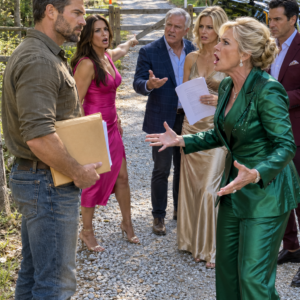
“GET YOUR HANDS OFF THAT BOAT!
YOU’RE TRESPASSING ON HOA PROPERTY!”
Vanessa Vance screamed those words while standing on my private dock, with two security guards behind her and a towboat waiting to steal my $240,000 cabin cruiser.
Then she called 911.
She told the dispatcher I was armed, dangerous, and had stolen a vessel from the community marina.
There was just one problem.
I owned the boat.
I owned the dock.
And I was the captain of the very Port Authority police unit she had just summoned.
But what happened when those officers arrived was nothing compared to the $1.8 million fraud hiding behind her HOA’s waterfront expansion.
She thought she was having me arrested.
Instead, she was about to destroy everything she’d spent three years stealing.
PART 1: The HOA President Tried Stealing My Dock Without Knowing My Identity
“YOU HAVE THREE MINUTES TO GET YOUR BOAT OFF MY MARINA, OR I’LL HAVE YOU ARRESTED!”
Vanessa Vance pointed one perfectly manicured finger at my chest.
I looked at her.
Then at my boat.
Then at the four-bedroom house sitting seventy feet behind us.
“Your marina?” I asked.
“That’s what I said.”
“Interesting.
Because I distinctly remember paying for this dock.”
She gave me the kind of smile people usually reserve for waiters who’ve brought the wrong wine.
“Sweetheart, ownership doesn’t exempt you from community regulations.”
I glanced at the fresh metal sign bolted to my dock.
SEABROOK POINT HOA MARINA.
AUTHORIZED VESSELS ONLY.
“Well,” I said, “that certainly sounds official.”
She smiled wider.
Until I picked up my cordless drill.
And removed it.
My name is Caroline Whitmore.
I’m forty-one years old, divorced, and living in Grey Haven, North Carolina, a coastal town where everybody knows your truck before they learn your name.
I own a weather-beaten waterfront house with blue shutters, a wooden front porch, and a driveway that floods whenever a hurricane gets ambitious.
The house isn’t fancy.
The boat is.
An American-built, thirty-eight-foot cabin cruiser named Second Chance.
I’d worked twenty-two years to afford that boat.
And I’d spent almost as long working in maritime law enforcement.
But Vanessa didn’t know that last part.
I preferred it that way.
Three years earlier, I’d become captain of the Grey Haven Port Authority Police Department.
The job involved cargo theft, harbor security, marine accidents, and occasionally explaining to drunk tourists why operating a Jet Ski through a restricted shipping channel was a terrible idea.
On weekends, I wore jeans, old sneakers, and a faded Navy sweatshirt.
No uniform.
No badge hanging around my neck.
Just another woman trying to enjoy her Saturday.
That morning, I’d taken Second Chance across the bay for an engine inspection.
I returned around eight.
The coffee in my travel mug was cold.
My stomach was growling.
I’d planned to make scrambled eggs, clean the kitchen, and watch the college football game I’d recorded.
Then I spotted the sign.
At first, I assumed someone had installed it on the wrong dock.
Seabrook Point was a gated neighborhood farther down the shoreline.
Its residents had a shared marina, a clubhouse, and an HOA famous for sending angry letters about trash cans.
My property was older than the development.
I’d bought it eight years earlier.
My recorded deed included the waterfront parcel and documented access rights.
The dock itself had been privately permitted long before Seabrook Point was built.
My only relationship with the association was a limited agreement to share maintenance costs for the access road.
Nothing about that agreement gave the HOA my pier.
Which made Vanessa’s behavior particularly entertaining.
She pulled a document from a leather folder.
“Unauthorized docking,” she announced. “Fifteen hundred dollars.”
I stared at the citation.
“You printed me a parking ticket for my own boat?”
“It’s a civil assessment.”
“It’s a joke.”
“You’re being disrespectful.”
“You’re standing on my property threatening to steal my boat.
I think we’re past manners.”
Behind her stood Grant Sutter, the HOA’s head of private security.
Big guy.
Former Army, according to the patch on his jacket.
Two other guards hovered near their SUVs.
Grant looked uncomfortable.
Vanessa looked delighted.
I held out my hand.
“Show me the deed transferring this dock to your association.”
She blinked.
“What?”
“The deed.
Recorded easement.
Court order.
Anything that gives you legal authority here.”
She pulled herself upright.
“The board passed a waterfront harmonization resolution.”
I almost choked on my coffee.
“A what?”
“A waterfront harmonization resolution.
All docks within the Seabrook Basin are now regulated community assets.”
“Did you buy them?”
“That’s irrelevant.”
“Did the owners sign them over?”
“We don’t need individual permission.”
“Did your lawyer actually tell you that?”
Her expression changed.
Just slightly.
Enough.
“Our attorney has reviewed the resolution.”
“Great.
What’s the recording number?”
She stared at me.
I waited.
A seagull landed on the railing and started pecking at a forgotten piece of bait.
Vanessa finally snapped her folder closed.
“You people always think you can challenge authority.”
“You people?”
“Entitled waterfront owners.”
I looked at my faded sweatshirt.
Apparently, I wasn’t dressed like somebody who understood property law.
“Vanessa, I’m going to ask you once.
Take your security team and leave.”
She laughed.
Actually laughed.
“Or what?
You’ll call the police?”
“That’s one option.”
“Go ahead.
I know people in the department.”
That almost made me smile.
Almost.
Instead, I took out my phone.
I photographed her citation.
The sign.
The guards.
The security vehicles.
And the position of the towboat waiting farther down the channel.
Vanessa tilted her head.
“Taking pictures won’t intimidate me.”
“They aren’t for you.”
She stepped closer.
“By this afternoon, that boat will belong to the association.”
“No,” I said. “By this afternoon, somebody’s going to have an expensive problem.”
She turned to Grant.
“Prepare the removal order.”
Then she marched toward the access road.
Her heels sank into the gravel.
One came loose.
She cursed loudly enough for the neighbors to hear.
I’d be lying if I said I didn’t enjoy that part.
But the amusement disappeared when I looked more closely at the citation.
There was a dock identification number printed near the bottom.
SP-0174.
My private dock had an HOA identification number.
Which meant someone had entered my property into the association’s system before that morning.
I went inside.
Spread my deed, original survey, and waterfront permit across the kitchen counter.
The house smelled like coffee grounds and last night’s pepperoni pizza.
My dog, Ranger, dropped a tennis ball beside my foot.
“Not now, buddy.”
I opened the HOA’s digital planning map.
And stopped.
A new boundary line cut straight across my private pier.
Seventy feet.
That’s how far the association had moved the boundary compared with my recorded survey.
Not seven inches.
Seventy feet.
It wasn’t remotely subtle.
I called Owen Blackwell, the town’s harbor master.
Owen had managed waterfront records for thirty-six years and still preferred paper files to software.
“Caroline?” he answered. “Everything okay?”
“Depends.
Have you seen Seabrook Point’s new marina map?”
A pause.
“Why?”
“Because somebody drew their property line through my dock.”
He exhaled.
“You’re not the first person to ask.”
My hand stopped moving.
“How many?”
“Eleven private docks are marked as HOA controlled.
Maybe more.”
“Eleven?”
“And there’s something else.”
I pulled out a chair.
Owen lowered his voice.
“Six weeks ago, their association sent that same map to a commercial dredging contractor.
They’re planning a major marina expansion.”
“Using whose waterfront?”
“That’s what I was hoping you could tell me.”
Through the kitchen window, I spotted my elderly neighbor, Audrey Pike, walking toward my back porch.
She looked frightened.
Audrey was seventy-three.
Her husband had died four years earlier.
She lived alone on Social Security and a small teacher’s pension.
When I opened the door, she held out a folded letter.
“Caroline,” she whispered, “I think they’ve already taken mine.”
I unfolded it.
An HOA management agreement.
Her signature at the bottom.
And one sentence that made my stomach turn.
The association could rent, manage, and collect revenue from her private dock.
“Did you agree to this?”
Audrey shook her head.
“Vanessa said she’d fine me six hundred dollars every week and put a lien on my house if I didn’t sign.”
“Did she?”
“She said I’d lose everything.”
I looked down at the paper.
Then back toward the marina.
This wasn’t a ridiculous HOA president enforcing imaginary rules.
This was an organized property grab.
And judging by the sound of the diesel engine approaching my dock, Vanessa had decided to make me her next victim.
Because right outside my kitchen window, a commercial towing vessel was pulling alongside Second Chance.
And somebody was already reaching for the ropes.
PART 2: A Towing Crew Arrived, And Vanessa Crossed Another Dangerous Line
“HOOK THAT BOAT UP!
I DON’T CARE WHAT SHE SAYS!”
Vanessa was back.
This time, she had brought reinforcements.
A commercial towboat floated beside my cruiser, its operator holding a thick yellow towing line.
I walked down the dock.
“Don’t attach that to my boat.”
The operator looked at Vanessa.
“Ma’am, she says it’s hers.”
“She’s trespassing,” Vanessa snapped.
I handed him my registration and pointed toward my house.
“I’m the registered owner.
This is my private pier.
Nobody has permission to tow anything.”
The operator read the paperwork.
Then examined his work order.
“Abandoned vessel?” he asked Vanessa. “You said this boat was abandoned.”
“Administratively abandoned.”
He looked at me.
I looked at him.
He started laughing.
“Lady, that’s not a thing I’m getting sued over.”
He pulled his line back aboard.
Vanessa’s face went red.
“You’re violating your contract!”
“Take me to court,” he replied.
Then he backed away.
I thought she’d finally reconsider.
Instead, she climbed aboard my cruiser.
Without permission.
Her heels scraped against the fiberglass.
“Get off my boat,” I said.
She raised her phone.
“Look at this aggressive homeowner threatening me!”
I took two steps backward.
“Vanessa, I’m asking you to leave.
My hands are visible.
Nobody is threatening you.”
She shoved her camera closer.
“Touch me.
Go ahead.”
“No, thanks.”
Grant reached for her elbow.
“Ma’am, we should stop.”
She jerked away.
“You’re fired if you contradict me again.”
Then she ordered a security skiff into the narrow channel.
Two guards moved their SUVs across the driveway access.
I couldn’t drive my truck out.
And I couldn’t take my boat out without navigating around their skiff.
A complete blockade.
That changed the situation.
“Grant,” I said, “you need to clear that channel.
Right now.”
He hesitated.
Vanessa folded her arms.
“Nobody leaves until she surrenders the boat.”
I checked that my phone was recording.
“Vanessa, you’re obstructing access to a navigable waterway.
I’m telling you to stop.”
She pulled out her phone.
“Fine.
I’ll have the police drag you off.”
“Be accurate when you call.”
She dialed 911.
Put it on speaker.
And began performing.
“There’s an aggressive woman trespassing in our private marina.
She’s refusing to surrender a stolen boat.”
The dispatcher asked whether anybody was armed.
Vanessa glanced at the concealed holster beneath my jacket.
She couldn’t have known I was legally carrying my department-issued firearm.
But she saw her opportunity.
“Yes,” she announced. “She has a gun.
I’m afraid she’s going to shoot somebody.”
Grant stared at her.
“Vanessa, she hasn’t threatened anyone.”
“SHUT UP!”
The dispatcher told everybody to stay separated.
Vanessa smiled at me.
“You’re finished.”
I didn’t answer.
I simply checked my recording.
Because she’d just made a report that could bring armed officers rushing toward a completely unnecessary confrontation.
And every word of it was now sitting in a recorded emergency call.
PART 3: The Police Recognized Me, But My Biggest Surprise Came Later
“OFFICER!
ARREST THAT WOMAN BEFORE SHE HURTS SOMEBODY!”
Vanessa practically sprinted toward the first patrol SUV.
Blue lights flashed against the water.
Officer Mason Keane stepped out, followed by another officer.
He looked at Vanessa.
Then at me.
His shoulders straightened.
“Captain Whitmore.”
Vanessa stopped talking.
Mason approached carefully.
“Ma’am, are you injured?
Is anybody hurt?”
“No,” I answered. “I’m fine.”
“Captain, Lieutenant Danner is responding.
She’ll handle the call.”
Vanessa’s mouth opened.
“Captain?”
I took out my identification.
“Caroline Whitmore.
Grey Haven Port Authority Police.”
She stared at the badge.
Then my face.
Then the badge again.
“You’re a police captain?”
“Yes.”
“Why didn’t you say something?”
“You never asked.”
She turned toward Mason.
“This is completely inappropriate!
She’s using her position to threaten me!”
I raised one hand.
“Mason, I’m an involved property owner.
I won’t direct this investigation, review your report, or make enforcement decisions.”
“Understood, Captain.”
Vanessa’s expression changed.
Not because I had power.
Because I wasn’t using it the way she would have.
Lieutenant Brooke Danner arrived six minutes later.
She spoke with the dispatcher, assessed the scene, and separated the witnesses.
Grant went first.
I watched him remove his sunglasses.
He looked exhausted.
He confirmed that Vanessa had been told repeatedly that the property was private.
He confirmed the tow operator had refused the job.
He confirmed she’d ordered the channel blocked.
And he confirmed something I hadn’t expected.
“She told us the captain was dangerous before she ever called 911,” he said.
Vanessa shouted from across the dock.
“GRANT!”
Brooke turned.
“Ma’am, please stop interrupting.”
“But he’s lying!”
“Then you’ll have an opportunity to give your account.”
Audrey came down the path carrying her paperwork.
Two more waterfront owners followed her.
One was Frank Delaney, a retired electrician who’d paid the HOA $9,400 in disputed penalties.
The other was Susan Bell, who’d stopped using her dock because Vanessa had threatened to confiscate her boat.
Their stories were nearly identical.
Brooke examined their documents.
Then requested preservation of the emergency recording and associated dispatch records.
She asked the guards to identify the source of the HOA’s ownership claim.
Nobody could produce a recorded deed.
Nobody had an easement.
Nobody could explain the altered boundary.
I handed her copies of my original survey and the new map.
“Seventy feet,” I said.
She compared them.
“That’s a pretty significant difference.”
“Owen Blackwell can verify the harbor records.”
Brooke nodded.
Then Grant stepped forward again.
“Lieutenant, there’s something on the company email server you should see.”
Vanessa’s eyes widened.
“Grant, that’s confidential!”
He ignored her.
“It’s about why we were ordered to take these docks.”
Brooke looked up.
“What exactly are you saying?”
Grant swallowed.
“Mrs.
Vance told us the homeowners would eventually surrender if we made fighting expensive enough.”
Then he reached for his phone.
And opened an email Vanessa had sent three months earlier.
PART 4: One Hidden Email Exposed The Scheme Behind Eleven Stolen Docks
“THESE PEOPLE DON’T HAVE THE MONEY TO FIGHT US.
KEEP PRESSURING THEM.”
That was Vanessa’s email.
Not a rumor.
Not somebody’s interpretation.
Her words.
Grant displayed the message to Brooke, who arranged to preserve the relevant records through the investigation.
The email had been sent to the HOA security contractor and copied to the community property manager.
It included an attachment.
A spreadsheet.
Eleven private docks.
Eleven property owners.
And a column titled Compliance Strategy.
Beside Audrey’s name was a particularly ugly note.
Widowed.
Fixed income.
High probability of agreement.
I read that line later in my attorney’s office.
I remember putting my coffee down very carefully.
Audrey wasn’t a corporation.
She wasn’t a land developer.
She was an elderly woman who made pumpkin bread for the church fundraiser every Thanksgiving.
Vanessa had studied her financial vulnerability and turned it into a business opportunity.
My attorney, Janelle Price, had handled waterfront property disputes for twenty years.
She was a fifty-year-old woman with reading glasses attached to a chain and absolutely no patience for nonsense.
When I showed her the management agreement, she tapped one paragraph.
“This is the problem.”
“What?”
“They’re not claiming ownership outright.
They’re coercing owners into signing away practical control.”
“Can they do that?”
“Not lawfully through fraudulent threats.
But signed contracts still have to be challenged.
That’s why Vanessa targeted people who couldn’t afford litigation.”
Janelle requested my purchase documents, title insurance records, road maintenance agreement, and the original dock permit.
Then she reviewed the HOA map.
“Who prepared this?”
“Vanessa’s office, apparently.”
“Get the electronic original preserved.”
Already underway.
Brooke had referred the financial allegations to investigators outside my department.
I wasn’t going to participate in a criminal investigation involving my own property.
That distinction mattered.
Vanessa was already telling people I’d ordered her arrested.
I hadn’t.
In fact, I hadn’t arrested anyone.
But I had three cameras on my property.
One covered the driveway.
One recorded the porch and shoreline access.
The third overlooked the dock.
All three had recorded the confrontation.
Including Vanessa stepping onto my boat.
Including Grant telling her to stop.
Including her ordering the channel blockade.
And including the exact moment she knowingly described me as a boat thief.
Janelle watched the footage twice.
Then opened another document.
“Caroline, look at this.”
It was a promotional brochure for a new Seabrook Point luxury marina.
Private slips.
Expanded clubhouse.
Waterfront dining.
Twenty additional berths.
And a proposed financing package worth $1.8 million.
My dock appeared prominently in the development map.
Not as neighboring private property.
As part of the project’s controlled marina frontage.
Janelle pointed at the rendering.
“They’re trying to finance a development using rights they don’t have.”
I looked at the water beyond her office window.
Vanessa hadn’t simply wanted to control my boat.
My pier stood at the entrance to the proposed expansion.
Without it, the development couldn’t be presented as planned.
And now I understood why she’d been willing to call 911.
I was the one homeowner she couldn’t afford to have say no.
PART 5: The Board Discovered Their President Had Been Secretly Selling Our Property
“VANESSA, WHERE DID THE MARINA MONEY GO?”
Russell Creed asked that question in front of forty-three homeowners.
It was Sunday evening.
The Seabrook Point clubhouse was packed.
Metal folding chairs lined the walls.
Someone had brought a tray of grocery-store cookies.
Nobody touched them.
Vanessa stood behind the boardroom microphone wearing a cream-colored blazer and a diamond bracelet.
She looked like she’d arrived for a charity luncheon.
Not an emergency hearing about financial misconduct.
“This is a coordinated attack against my leadership,” she announced.
Russell didn’t sit down.
“Answer the question.”
“The money was used for approved community improvements.”
“Then why isn’t it in the operating budget?”
“Because you don’t understand development finance.”
Russell held up a bank statement.
“Then explain this account.”
I sat near the back with Audrey and Janelle.
The statement showed a separate account labeled Waterfront Development Services.
It had received docking permit payments and deposits from prospective marina customers.
The board’s regular quarterly financial statements hadn’t separately disclosed those transactions.
Another director, Patricia Moore, stood.
“We never voted to open that account.”
Vanessa snapped.
“You approved the waterfront program.”
“We approved a feasibility study,” Patricia replied. “Not renting somebody else’s boat slips.”
A few people clapped.
Vanessa slammed her palm against the podium.
“Without my leadership, this community would be nothing!”
Russell raised another sheet.
“The proposed financing agreement represents that we control twenty additional slips.”
“We will.”
“You represented them as available now.”
“That’s a technical distinction.”
“No,” Janelle whispered beside me. “That’s a potentially very expensive misrepresentation.”
The board’s counsel asked Vanessa whether she had informed the prospective financing partners that eleven listed docks were privately controlled.
Vanessa refused to answer.
Then a man near the exit stood up.
It was Martin Ellis, a regional representative for the development financing group.
He was carrying a brown envelope.
“Our firm received this ownership certification,” he said. “It was signed by Mrs.
Vance.”
Russell took it.
Read the first page.
Then looked at Vanessa.
“You certified that the association had secured the rights necessary for this expansion.”
“We had management authority!”
“Over Caroline Whitmore’s dock?”
Vanessa glared at me.
“She manipulated the police into interfering.”
I didn’t move.
Russell continued.
“Did you have a signed agreement from Captain Whitmore?”
No answer.
“Did you have her permission?”
Nothing.
“Then why did you certify control of her property?”
Vanessa reached for her purse.
“I’m not answering any more questions without my attorney.”
The board suspended her presidency that evening, subject to its governing procedures.
They authorized an independent financial audit.
And revoked her authority to approve development expenditures.
As we left, Russell approached me.
“Caroline, the auditors already found transfers to a company nobody recognizes.”
“What company?”
He glanced toward Vanessa.
“Harborfront Consulting LLC.”
Janelle stopped walking.
“Who owns it?”
Russell lowered his voice.
“According to the state business registry, Vanessa’s husband.”
For the first time, I realized the scheme had another person making money from it.
And he lived in the million-dollar waterfront house right beside the clubhouse.
PART 6: The Financial Investigation Revealed Who Was Really Getting Rich
“YOUR HUSBAND RECEIVED $86,400 FOR SERVICES NOBODY CAN PROVE EXISTED.”
That was the question an investigator eventually put to Vanessa during a formal interview.
Her answer was predictable.
“Scott is an independent consultant.”
The investigator placed copies of several invoices on the table.
“Independent from whom?”
Vanessa said nothing.
Over the following weeks, investigators obtained financial records through legal process.
The separate marina account had received hundreds of small payments.
Daily docking permits.
Seasonal reservations.
Administrative fees.
So-called violation settlements.
Some homeowners had even been charged for using their own piers.
The records also showed payments from prospective marina customers who had been promised access to slips the HOA didn’t control.
The biggest surprise involved an advance of $280,000 tied to the proposed development financing.
Vanessa had represented that the necessary waterfront rights were already secured.
They weren’t.
And nearly a third of that advance had gone to her husband’s consulting business.
His invoices listed services like waterfront acquisition coordination and community compliance implementation.
Translated into ordinary English?
They were charging people to help take control of property that belonged to somebody else.
The investigators also recovered internal communications after obtaining the necessary authorization.
One exchange between Vanessa and Scott was especially revealing.
Scott had written:
Whitmore’s dock is the entrance.
Without that one, the layout doesn’t work.
Vanessa replied:
She’s just another homeowner.
Increase the pressure.
Scott responded:
Don’t leave anything we can’t explain.
I read those messages weeks later when Janelle reviewed documents produced in our civil case.
She looked up.
“Well, that answers whether they knew your dock mattered.”
I leaned back.
“And whether this was an accident.”
Janelle nodded.
Meanwhile, Vanessa had begun calling neighbors.
She told them I was abusing my police authority.
She claimed Audrey had been manipulated.
She even accused Grant of stealing confidential documents.
Unfortunately for her, Grant’s company had preserved its assignment records and original communications.
The HOA’s security cameras had preserved footage, too.
Then Audrey called me.
“Caroline, I found something.”
“What?”
“A voicemail Vanessa left before I signed that agreement.”
Audrey played it.
Vanessa’s voice was unmistakable.
If you refuse to cooperate, Audrey, we’ll pursue every assessment and lien remedy available.
You can’t afford to make this difficult.
Audrey looked down at her old phone.
“I thought I had to do what she said.”
“You don’t anymore.”
Janelle helped the affected homeowners organize their records and seek appropriate legal relief.
After a hearing, the court entered temporary orders limiting the HOA’s enforcement of the disputed dock-management arrangements while the ownership issues were litigated.
Vanessa tried to blame me again.
But that afternoon, investigators uncovered another document.
A signed certification attached to the financing application.
Vanessa’s signature was at the bottom.
Directly beneath it was Scott’s.
They hadn’t merely discussed the deception.
They had both put their names on it.
PART 7: Vanessa Faced The Judge Who Finally Saw Through Everything
“YOU CALLED 911 TO HAVE THE OWNER REMOVED FROM HER OWN PROPERTY?”
The prosecutor asked Vanessa that question during a court hearing months later.
Her attorney shifted beside her.
Vanessa stared straight ahead.
“That wasn’t my understanding at the time.”
The prosecutor displayed my boat registration.
Then my recorded deed.
Then the original dock survey.
All predating her so-called harmonization program.
He asked whether anyone had provided her with a transfer of ownership.
“No.”
“Did Captain Whitmore explain that the boat belonged to her?”
“She made certain claims.”
“Did she show you the registration?”
Vanessa swallowed.
“Yes.”
“Did you call that boat stolen anyway?”
Her attorney stood.
After a brief exchange with the judge, the questioning continued within the permitted limits.
I sat behind Janelle, watching Vanessa study the table.
The woman who’d screamed at me on my dock now seemed fascinated by a scratch in the courtroom furniture.
But the emergency call wasn’t the biggest problem she faced.
The financial records were.
The audit had documented unauthorized marina income, transfers to Harborfront Consulting, and misleading representations connected to the expansion financing.
Other homeowners had come forward.
The development company had demanded repayment of its advance and initiated its own legal action.
Scott’s employer placed him on leave after learning that his private consulting company was involved.
Two months later, he resigned.
His marriage wasn’t doing much better.
Audrey called me one afternoon with the latest small-town news.
“Scott moved out.”
“How do you know?”
“I watched the moving truck.”
“Audrey.”
“What?
I was watering my roses.”
I laughed for the first time in days.
Eventually, Vanessa accepted a negotiated resolution to the criminal charges rather than proceed through a full trial.
She pleaded guilty to offenses arising from the fraudulent collection of money and the knowingly false emergency report.
The court imposed a custodial sentence and ordered restitution as part of the judgment.
Scott resolved separate allegations tied to his consulting company’s role, with financial penalties and repayment obligations.
The civil claims continued until the affected homeowners, HOA, and other parties reached court-approved settlements.
Money recovered through the audits, repayments, insurance claims where coverage applied, and settlements went toward reimbursing victims.
Audrey’s management agreement was released.
Frank received compensation for the improper assessments he’d paid.
Susan regained control of her unused pier.
And the association was forced to correct its marina records.
At the next annual meeting, the board announced that the expansion project was canceled.
The $1.8 million financing arrangement was terminated.
The glossy promotional renderings disappeared from the clubhouse.
Vanessa’s photograph was removed from the president’s wall.
Her name remained only in the audit reports and court filings.
I received a letter from her attorney proposing that we each release any remaining personal claims.
Janelle reviewed it.
We negotiated the necessary terms without another shouting match.
When the final paperwork was signed, I put it in my property file.
Beside my original deed.
The same deed Vanessa had laughed at the morning this started.
PART 8: After Losing Everything, She Finally Understood What My Silence Meant
“CAROLINE, LOOK!
NOBODY CAN TELL ME WHERE TO PARK MY OWN BOAT ANYMORE!”
Audrey shouted that from the end of her dock.
It was a Saturday in late spring.
Almost a year after Vanessa had called 911.
Audrey had invited six neighbors over for grilled hamburgers, potato salad, and lemonade.
Paper lanterns hung from her railing.
A small American flag fluttered beside her porch.
Frank brought a cooler full of sodas.
Susan brought brownies.
And I brought Ranger, who immediately stole a hamburger bun from an unattended plate.
“Your dog has criminal tendencies,” Audrey announced.
“I know.
It’s embarrassing for the department.”
Everyone laughed.
It felt good hearing that sound along the waterfront again.
For months, the neighborhood had been consumed by lawyers, financial records, insurance claims, and arguments over who’d signed what.
Now people were talking about fishing.
Weather.
Boat repairs.
Ordinary things.
Audrey stood beside me while Frank struggled with the charcoal grill.
“Do you know what bothered me most?” she asked.
“What?”
“I started believing Vanessa really had the right to tell me what to do.”
I looked at her dock.
New cleats.
Fresh paint.
Her late husband’s little fishing boat tied securely alongside it.
“She worked hard to make you believe that.”
Audrey nodded.
“I kept thinking I’d lose my house.”
“You didn’t.”
“No,” she said. “And I finally stopped being afraid of the mailbox.”
That was the detail that stayed with me.
Not the courtroom.
Not Vanessa’s expensive attorney.
Not the headlines in the local paper.
An elderly woman who’d spent months dreading another official-looking envelope could finally walk to her mailbox without wondering whether she’d lose everything.
That was worth more than watching Vanessa get escorted from a courtroom.
A few weeks later, I received the final financial accounting from the homeowners’ settlement.
The reimbursement process had been completed for the approved claims, including my documented legal expenses.
My private dock was no longer listed anywhere in Seabrook Point’s marina inventory.
The HOA adopted new financial controls, independent reviews, and clearer procedures for addressing property disputes.
Grant took a different security position across the county.
He stopped by once to apologize.
“I should’ve stood up to her sooner,” he admitted.
“Probably.”
He nodded.
“Fair.”
We shook hands.
No speech.
No drama.
Just two adults acknowledging something that should have happened months earlier.
Vanessa never came back to apologize.
I didn’t expect her to.
According to public court records and reports from neighbors, she lost her presidency, her position in the community, much of her financial security, and eventually her marriage.
Her waterfront house was sold while the financial consequences of the case were being resolved.
I saw the real estate listing one evening.
Five bedrooms.
Marble kitchen.
Private pool.
Waterfront views.
The description mentioned exceptional community amenities.
I nearly spilled my coffee laughing.
Apparently, real estate agents are immune to irony.
The following morning, I walked down to my dock carrying a small metal sign and my cordless drill.
The same drill I’d used to remove Vanessa’s ridiculous HOA sign.
Owen Blackwell happened to be walking along the shoreline.
“What’ve you got there, Captain?”
“Home improvement.”
He came closer.
I positioned the new sign on the piling.
Four words.
PRIVATE DOCK.
DEED RECORDED.
Owen read it.
Then laughed.
“That’s considerably cheaper than a lawyer.”
“Tell me about it.”
I tightened the last screw.
Checked the ropes.
And stepped aboard Second Chance.
Ranger settled into his usual spot near the cabin door.
The engine started on the first turn.
Across the water, the Seabrook Point clubhouse stood quiet.
No security skiffs.
No towboats.
No angry woman waving a citation in my face.
Just a clear channel and the morning sun catching the ripples along the harbor.
I backed away from my dock.
Owen raised one hand.
I waved.
Then I eased the throttle forward.
Vanessa had thought the moment the police recognized me was the moment she’d lost.
She was wrong.
She’d already lost when she falsified the first map.
When she threatened Audrey.
When she charged people to use property she didn’t own.
When she treated a signed document like permission to do anything she wanted.
My badge hadn’t made the deed legitimate.
It had been legitimate eight years before that morning.
My uniform hadn’t given Audrey her rights back.
The records, witnesses, attorneys, and courts had done that.
And Vanessa’s biggest mistake wasn’t failing to recognize a police captain.
It was believing that a quiet woman standing on her own property would surrender everything just because somebody louder told her to.
I checked the open water ahead.
No obstacles.
No flashing lights.
Nobody blocking the channel.
I pushed the throttle forward and watched my dock disappear behind me.
My phone vibrated in the cupholder.
A text from Audrey.
Don’t forget, barbecue at my place next Saturday.
I smiled.
Then turned my phone facedown.
I had an entire coastline to enjoy.
And for the first time in a year, nobody was trying to charge me fifteen hundred dollars for it.
THE END