**THE SUITCASE FROM BARBADOS**
**PART 1**
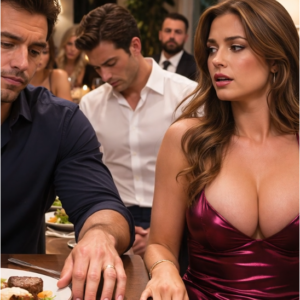
My wife came home from a girls’ trip to Barbados with an STD—and immediately accused me of cheating.
“You gave me this, Michael!” Vanessa screamed, waving her medical report in our kitchen outside Columbus, Ohio. “Admit it!”
“I haven’t been with anyone else.”
She laughed. “That’s exactly what a guilty husband would say.”
I didn’t argue. I placed my phone on the counter and turned on the speaker.
A man’s voice filled the room.
“We checked the hotel’s security footage. Your wife wasn’t with her friends that night. And the man who entered her room is someone we’ve been searching for.”
Vanessa stopped breathing for a moment.
“Who the hell is that?”
The man ignored her question.
“Mrs. Carter, do you remember a gentleman who approached you near the hotel pool?”
“There were hundreds of people there!”
“I’m asking about one particular gentleman.”
“I don’t know what you’re talking about.”
“Then perhaps you can explain why you told the front desk he was your husband.”
I stared at Vanessa.
“You told them WHAT?”
“Michael, he’s lying!”
But her hands were trembling.
Earlier that afternoon, this stranger had called me about Vanessa’s resort stay. I’d assumed it was a scam until he mentioned her exact room number—and something she had never told me.
Now he sounded more concerned about the mysterious man than about my marriage.
“Mr. Carter,” he continued, “we’re trying to establish what happened after that gentleman entered your wife’s room.”
Vanessa gripped the kitchen chair.
“Michael, please hang up.”
“Why? What happened in Barbados?”
She wouldn’t answer.
Then the caller asked one final question.
“Did your wife bring anything home from Barbados that didn’t belong to her?”
Vanessa suddenly moved toward the hallway.
She stopped directly in front of the closet where she’d hidden her suitcase.
And for the first time, I wondered whether my wife’s betrayal was even the worst thing she’d brought home.
PART 2
THE MAN ON THE PHONE
Vanessa stood with her back against the hallway closet.
I had seen that expression on her face before.
Not often.
But enough times to recognize it.
It was the look she got when she had done something she regretted and was desperately trying to figure out how much I already knew.
“Vanessa,” I said quietly. “Move away from the closet.”
She shook her head.
“Michael, please. Just hang up.”
The voice on the phone spoke again.
“Mrs. Carter, nobody is asking you to make an accusation. We need to know whether you have any property belonging to another guest.”
I stared at the phone.
“Who exactly are you?”
“My name is Adrian Bell. I’m the director of security at the resort where your wife stayed.”
“And why are you calling me instead of the police?”
“We’ve already reported the matter to the Royal Barbados Police Force. Your number was listed as the emergency contact on the reservation, and we haven’t been able to obtain a meaningful response from Mrs. Carter.”
Vanessa closed her eyes.
“Because I told you there was nothing to discuss!”
Bell paused.
“Mrs. Carter, we have a guest reporting a valuable item missing. We have footage of a man believed to be connected with that disappearance entering your room.”
My pulse quickened.
“What item?”
“I’d prefer to discuss the details with the investigating authorities. But it is a piece of jewelry with considerable personal value.”
I turned toward Vanessa.
“What did he give you?”
“Nothing.”
She answered too quickly.
Bell continued.
“Mr. Carter, I understand this is uncomfortable. Please don’t confront anyone or dispose of anything. If there is an item in your possession, it needs to be preserved.”
Then he gave me the hotel’s main number, his extension, and a case reference.
“Please verify my position through the resort’s publicly listed contact information before discussing anything further.”
I thanked him and ended the call.
For several seconds, the kitchen was silent.
Then Vanessa spoke.
“You’re really going to believe some stranger over your own wife?”
I looked toward the closet.
“I haven’t decided what to believe.”
“Then why are you looking at my suitcase?”
“Because you moved in front of it the second he asked about something you brought home.”
She opened her mouth.
Closed it.
Then whispered, “It’s not what you think.”
I felt something cold settle inside my chest.
“Vanessa, you don’t know what I think.”
She looked away.
I walked past her without touching her and opened the closet.
Her large navy suitcase stood against the wall.
The same suitcase I’d helped her carry to the airport eight days earlier.
She reached for my arm.
“Michael, don’t.”
I turned.
“Is there something inside?”
She didn’t answer.
“Is there something inside that belongs to somebody else?”
A tear slid down her cheek.
Finally, she nodded.
I stepped away from the suitcase.
“Then you need to tell me exactly what happened.”
She sat down on the hallway bench.
And for the first time since returning from Barbados, my wife stopped accusing me.
Instead, she began confessing.
THE MAN NAMED JULIAN
“His name was Julian,” she whispered.
I remained standing.
“Julian who?”
“He told me his name was Julian Hayes.”
“Where did you meet him?”
“At the pool.”
I waited.
Vanessa wiped her cheeks.
“It was the second day. Lauren and the others had gone on a snorkeling excursion. I didn’t feel like going.”
“You told me you went snorkeling that day.”
“I know.”
I stared at her.
She continued.
“I was sitting alone by the pool. He asked whether the chair beside me was taken.”
“And?”
“We started talking.”
Her voice grew softer.
“He said he worked in event planning. That he traveled constantly. He was funny, Michael. He made me laugh.”
I didn’t respond.
“He bought me a drink. We talked for hours.”
“And then?”
She looked at the floor.
“He asked whether I wanted to have dinner.”
“With him.”
“Yes.”
“Alone.”
“Yes.”
I remembered that evening.
Vanessa had sent me a photograph of a beautiful Caribbean sunset.
Underneath, she’d written:
Wish you were here, baby.
I had replied:
Next time, we’ll come together.
Now I wondered where Julian had been when she took that photograph.
“What happened after dinner?” I asked.
Vanessa covered her face.
“Michael…”
“Tell me.”
She began crying harder.
“We went back to my room.”
There it was.
Not a suspicion.
Not a misunderstanding.
Not something I could explain away because I loved her.
My wife had invited another man into her hotel room.
I looked at the wedding photograph hanging near the hallway.
We’d been married for eleven years.
Eleven birthdays.
Eleven Christmases.
Countless ordinary evenings watching television, planning vacations, talking about retirement, and deciding what color to paint the kitchen.
And all it had taken to put those memories under a shadow was one handsome stranger beside a swimming pool.
“Did you sleep with him?”
Vanessa nodded.
I felt my chest tighten.
“Once?”
She hesitated.
And that hesitation hurt almost as much as the admission.
“Vanessa.”
“Twice,” she whispered.
I looked away.
She reached for my hand.
“Michael, please understand—”
“Don’t.”
She pulled back.
“Please don’t tell me it didn’t mean anything.”
Her mouth trembled.
“Because it meant enough for you to lie to me about it.”
She lowered her head.
For a while, neither of us spoke.
Then I remembered the phone call.
“The front desk.”
She looked up.
“Why did you tell them he was your husband?”
Her expression changed.
“Because he wasn’t registered at the hotel.”
I waited.
“He said the staff wouldn’t let him go upstairs without being registered as a visitor. So when they questioned us, I told them he was staying with me.”
“As your husband?”
She nodded.
“He asked me to say that.”
“Why?”
“He said it would save us an argument.”
I stared at her.
“So you stood in front of strangers and called another man your husband.”
She began crying again.
“Michael, I know how it sounds.”
“No. I don’t think you do.”
I walked back into the kitchen.
My coffee was still on the counter.
Cold now.
I looked at the mug for a moment.
Then I asked the question that mattered most.
“What did Julian put in your suitcase?”
THE GREEN VELVET POUCH
Vanessa followed me into the kitchen.
“He didn’t put anything in my suitcase.”
I turned.
“Then explain.”
“He gave me a little pouch.”
“When?”
“The morning before he left.”
“Why?”
“He said it belonged to his mother.”
I stared at her.
She continued quickly.
“He told me he was traveling to another island for work. He said he didn’t want to lose it while moving between hotels.”
“And he asked you to bring it to Ohio?”
“Yes.”
“Why?”
“He said he had a friend in the States who could pick it up.”
I waited.
“He was going to send me an address.”
“Did he?”
She shook her head.
“Did you open it?”
“No.”
I studied her face.
“Vanessa, you’ve lied to me repeatedly today. I’m going to ask again. Did you open it?”
She swallowed.
“I looked inside when I got home.”
“What did you see?”
“A bracelet.”
“What kind?”
“Gold. With stones.”
I slowly sat down.
“You brought an expensive bracelet into the country for a man you met at a hotel?”
“I didn’t know it was stolen!”
“Then why did you hide it?”
Her mouth opened.
No answer came.
Finally, she whispered, “Because I was scared you’d find it and ask where it came from.”
I looked toward the hallway.
The suitcase stood exactly where she’d left it.
For eleven years, that house had been the place where Vanessa and I brought our problems to solve together.
Now it contained a secret she’d carried across an ocean.
And I had no idea how much trouble that secret might cause.
I picked up my phone.
“What are you doing?” she asked.
“Calling the hotel back through its official number.”
“Michael, please. We can just send it back.”
“No. We’re not mailing anything to an address supplied by a stranger.”
She stared at me.
“Then what?”
“We’re going to find out what that bracelet is. And you’re going to tell the truth.”
She began crying.
“I don’t want to lose you.”
I looked at her for a long moment.
“Vanessa, you should have thought about that before Barbados.”
She covered her mouth.
And I made the call.
PART 3
THE WOMAN WHO LOST THE BRACELET
The hotel confirmed that Adrian Bell was its security director.
When I was transferred to him, I explained what Vanessa had admitted.
Bell listened without interrupting.
Then he asked whether the bracelet was still inside its pouch.
Vanessa nodded.
I repeated her answer.
“Please leave it as it is,” he said. “I’ll arrange for the investigating officer to contact you about documenting and returning it.”
I asked whether the man named Julian Hayes was being sought for questioning.
“Yes,” Bell replied. “But we haven’t confirmed that’s his real name.”
Vanessa made a small sound beside me.
“What do you mean?”
Bell was careful with his answer.
“A description matching that individual has appeared in other complaints about missing property at resorts. We’re trying to establish whether those incidents are connected.”
He didn’t accuse Vanessa of stealing anything.
He didn’t claim the man was guilty of every reported disappearance.
But he explained that a guest at the resort had reported a distinctive bracelet missing from her room.
It belonged to an elderly woman visiting Barbados with her daughter.
The bracelet had been a gift from her late husband.
She’d worn it for more than forty years.
Vanessa stared at the floor as I repeated what Bell had told me.
Finally, Bell said something that stayed with me.
“The owner isn’t primarily concerned about its resale value. She wants it back because of what it means to her.”
I looked at my wife.
She was crying silently.
I thanked Bell and asked how we should proceed.
He explained that the local investigation would need to determine whether the bracelet was the missing piece, and that any return should be coordinated through the authorities rather than handled privately.
After the call, I wrote down everything we had been told.
Vanessa sat across from me.
Neither of us spoke.
Then she whispered, “I thought he liked me.”
I looked up.
“What?”
“Julian.”
She wiped her eyes.
“He made me feel special.”
I stared at her.
“Do you hear yourself?”
“I know how terrible it sounds.”
“You’re sitting in our kitchen, after admitting you cheated on me and brought home something that might be stolen, and you’re telling me you’re hurt because that man might have been using you?”
She looked ashamed.
“I didn’t mean it like that.”
“Then what did you mean?”
She stared at her hands.
“I mean I was stupid enough to believe everything he told me.”
I considered that.
Then I said quietly, “You believed him because you wanted to.”
Her eyes filled again.
I continued.
“You didn’t have to invite him to dinner. You didn’t have to take him upstairs. You didn’t have to call him your husband.”
She said nothing.
“And you certainly didn’t have to come home and accuse me of giving you an infection.”
Her face crumpled.
That was when I finally felt the anger I’d been holding back.
Not because she’d found another man attractive.
Not even because she’d slept with him.
It was the way she’d tried to make me responsible for the consequences.
She’d returned from Barbados with a medical report and immediately turned me into the villain.
All while knowing exactly what she’d done.
“Why did you accuse me?” I asked.
She whispered, “I was scared.”
“Of what?”
“That you’d find out.”
“So you decided to blame me first?”
She nodded.
I leaned back.
For a long moment, I couldn’t speak.
Then I said, “I think you need to stay somewhere else tonight.”
She looked up sharply.
“Michael, please.”
“I need space.”
“This is our home.”
“I know.”
I stood.
“And right now, I can’t look at you without hearing you scream that I cheated.”
She began crying again.
But I didn’t change my mind.
THE MEDICAL REPORT
Before Vanessa left, I asked her one more thing.
“When did you first see the doctor?”
“Yesterday.”
“And when did you start feeling something was wrong?”
“A couple of days after I got home.”
I nodded.
I had no intention of playing detective with her diagnosis.
A medical report couldn’t tell me, by itself, exactly when or from whom an infection had been acquired.
But I knew what she had admitted about Barbados.
And I knew what she’d accused me of.
“I’ll make an appointment to be tested,” I told her. “You need to follow your doctor’s instructions, too.”
She looked down.
“I should never have blamed you.”
“No,” I said. “You shouldn’t have.”
Then I went upstairs.
When I returned, Vanessa was standing beside her suitcase.
She had taken the green velvet pouch from an interior pocket.
“Here,” she whispered.
I didn’t take it.
“Put it down on the counter.”
She did.
It was smaller than I’d expected.
Dark green velvet, with a thin gold cord around the opening.
The kind of pouch somebody might use to store jewelry.
Vanessa stepped away.
“I didn’t know,” she repeated.
I looked at her.
“You knew enough to hide it.”
She didn’t argue.
For once, she simply nodded.
I kept the pouch untouched while we waited for instructions from the investigating authorities.
Vanessa packed a small overnight bag.
She called her sister and arranged to stay there.
At the front door, she turned.
“Michael?”
I looked at her.
“Do you think we’ll be okay?”
I wanted to give her an answer.
I wanted to tell her that we’d been married long enough to survive anything.
That people made mistakes.
That love could fix whatever had gone wrong.
But none of those words felt true.
So I said the only thing I could.
“I don’t know.”
She nodded slowly.
Then she left.
I stood in the doorway until her car disappeared.
When I closed the door, the house seemed enormous.
I went into the living room.
Turned on the television.
Turned it off again.
Then I sat alone in the dark.
For the first time in eleven years, I wasn’t waiting for my wife to come home.
THE THINGS SHE HADN’T TOLD ME
The next morning, Vanessa called at .
I almost ignored it.
Then I answered.
“Michael?”
“Yes.”
“I need to tell you something else.”
I closed my eyes.
“Go ahead.”
“Julian contacted me after I got home.”
I sat up.
“When?”
“Monday.”
It was Thursday.
“What did he want?”
“He asked whether I still had the pouch.”
“And?”
“I told him yes.”
“What did he say?”
“He said he’d send somebody to collect it.”
My stomach tightened.
“Did he give you a name?”
“No.”
“An address?”
“No.”
“Did you agree to meet anyone?”
She hesitated.
“Vanessa.”
“No. I didn’t agree. I told him I needed more information.”
I looked toward the kitchen.
The pouch was still where she’d placed it.
“Why didn’t you tell Bell this yesterday?”
“I was scared.”
I exhaled slowly.
“Are you still in contact with Julian?”
“No. He stopped replying after I asked why he couldn’t arrange to have the bracelet shipped through the hotel.”
I rubbed my forehead.
“Did he threaten you?”
“No.”
“Did he tell you to keep this secret?”
“He told me it was personal and that he trusted me.”
I stared at the wall.
Another version of trust.
Another secret.
Another decision she’d made without considering the consequences.
“Save those messages,” I said. “Don’t delete anything. The investigators need to know.”
She began crying.
“Michael, I’m sorry.”
I didn’t answer.
“I know that doesn’t fix anything.”
“No,” I said. “It doesn’t.”
A few minutes later, she sent me screenshots of the messages.
There was no romantic language in them.
No declaration of love.
Just a series of increasingly impatient requests about the pouch.
One stood out.
Make sure nobody else sees it. I’ll explain everything when we meet.
I read it three times.
Then forwarded the information through the contact channel provided by the investigating authorities.
I didn’t respond to Julian.
I didn’t attempt to find him.
I didn’t want to turn a painful marriage crisis into a confrontation with a man whose identity we couldn’t even verify.
By Friday afternoon, we’d been given instructions for documenting the bracelet and arranging its transfer through the proper authorities.
An investigator took a formal account of Vanessa’s involvement.
She cooperated.
I gave an account of the phone calls and explained how the item had come to be in our home.
It was an uncomfortable process.
There were questions neither of us could answer.
And questions Vanessa answered with tears.
But for the first time since she’d returned, she stopped trying to make the truth sound less damaging than it was.
THE BRACELET’S REAL OWNER
Several weeks passed before Bell contacted me again.
By then, the bracelet had been identified as the missing item.
He told me the authorities were continuing their inquiry into the man who had used the name Julian Hayes.
There was still no confirmed outcome concerning his identity or responsibility for the other reported incidents.
But the bracelet was being returned to its owner.
That mattered.
Especially when Bell described her reaction after learning it had been recovered.
The woman had cried.
Her husband had given her the bracelet on their tenth wedding anniversary.
He’d died three years earlier.
She’d been wearing it on the evening she first met him.
And she’d believed she’d lost one of the last things she owned that still felt connected to their marriage.
I listened without speaking.
Bell thanked me for helping preserve the item and for providing the information we’d received.
I told him Vanessa deserved credit for eventually cooperating.
He paused.
“Mr. Carter, I hope you’re doing all right.”
It was such a simple sentence.
For some reason, it nearly broke me.
“I’m managing,” I replied.
After hanging up, I sat in my car outside the grocery store.
I thought about that woman.
Forty years of memories attached to a piece of jewelry.
And I thought about the wedding ring on my own hand.
Eleven years.
Not forty.
But long enough to build a life.
Long enough to believe the person beside you would protect that life.
I looked at my ring.
For the first time, I wondered whether I would ever wear it without remembering Barbados.
THE CONVERSATION WE COULDN’T AVOID
Vanessa asked to meet the following Sunday.
I suggested a quiet coffee shop.
She wanted to come home.
I wasn’t ready for that.
When she arrived, she looked exhausted.
Her hair was tied back.
She wore no makeup.
She sat across from me and wrapped both hands around a paper cup.
“Thank you for meeting me.”
I nodded.
She took a breath.
“I’ve been thinking about what happened.”
“So have I.”
“I know I destroyed your trust.”
I looked at her.
“Why, Vanessa?”
She lowered her eyes.
“That’s what I keep asking myself.”
I waited.
She continued.
“I was unhappy with myself. I felt older. Less interesting. You were always working, and I started feeling like everything in our lives was predictable.”
I leaned back.
“Were you unhappy with me?”
“Sometimes.”
“Then why didn’t you tell me?”
“I tried.”
I considered that.
She wasn’t entirely wrong.
We’d argued about my work hours.
About postponed vacations.
About how often we spent evenings in separate rooms.
Those problems had been real.
But none of them had required another man.
“Vanessa,” I said, “being unhappy doesn’t explain why you lied.”
She nodded.
“I know.”
“And feeling neglected doesn’t explain why you accused me of cheating.”
She covered her mouth.
“That was cruel.”
“Yes.”
She wiped a tear away.
“I was terrified you’d leave me.”
I stared at her.
“You were afraid I’d leave, so you made me responsible for what happened?”
She nodded.
“I thought if you believed you’d done something wrong, maybe you wouldn’t look too closely at what I’d done.”
The admission hurt.
But at least it was the truth.
Finally.
I looked out the window.
A couple walked past holding hands.
The woman was laughing at something the man had said.
For a moment, I remembered Vanessa and me when we’d first started dating.
We used to laugh like that.
At everything.
I turned back to her.
“I don’t know if I can be married to somebody who does that.”
She nodded slowly.
“I understand.”
Then she took a folded sheet of paper from her purse.
“I’ve started seeing a counselor.”
I looked at it.
She wasn’t asking me to admire her.
She was simply telling me.
“I don’t expect you to forgive me,” she said. “But I need to understand why I was capable of doing this.”
I nodded.
“That sounds like something you should do.”
She hesitated.
“Would you consider marriage counseling?”
I took a long breath.
“I’ll consider one session.”
Her eyes filled.
“Thank you.”
I shook my head.
“Don’t thank me yet. I’m not promising we can fix this.”
“I know.”
And for once, she didn’t argue with the answer.
ENDING
THE PRICE OF THE TRUTH
We attended three counseling sessions together.
They were among the hardest conversations of my life.
Not because I learned something more shocking about Barbados.
There were no additional lovers.
No secret children.
No hidden fortune.
No dramatic confession that suddenly explained everything.
Just the painful reality of two people examining a marriage that had been damaged by dishonesty.
Vanessa admitted that she’d grown accustomed to avoiding uncomfortable conversations.
If she was angry, she blamed.
If she felt ashamed, she defended herself.
If she feared consequences, she tried to change the subject.
The counselor asked her whether she understood the difference between explaining her behavior and excusing it.
Vanessa said she was beginning to.
I talked about the moment she waved that medical report in my face.
I described how helpless I’d felt.
How humiliating it was to be accused of something I hadn’t done.
And how that accusation had changed the way I looked at her.
Vanessa cried.
But I didn’t comfort her automatically.
That surprised both of us.
For years, whenever she became upset, my first instinct had been to make everything better.
Even when I was hurting.
Now I was learning that another person’s tears didn’t erase what had happened.
During our third session, the counselor asked me a question.
“Michael, what would rebuilding trust look like for you?”
I considered it for a long time.
Then I answered.
“I’d have to believe that when something goes wrong, Vanessa will tell me the truth before she tries to protect herself.”
The counselor nodded.
“Do you believe that now?”
I looked at my wife.
She was watching me.
Waiting.
Hoping.
I wanted to say yes.
But I couldn’t.
“No,” I said quietly.
Vanessa closed her eyes.
And I knew we had reached a place neither of us could talk our way around.
SIX WEEKS LATER
I met Vanessa for dinner at a small restaurant on the north side of Columbus.
We’d been living separately for nearly two months.
During that time, I’d made an appointment with an attorney to understand what separation and divorce would involve.
I hadn’t made any rushed financial decisions.
We had joint accounts, retirement savings, and a house with both our names on the mortgage.
Eleven years of marriage couldn’t be untangled with one angry phone call.
I’d also followed up with my doctor about appropriate testing.
Vanessa continued her medical treatment and counseling.
The incident in Barbados was no longer an active mystery in our home.
The bracelet had been recovered and returned through the authorities.
As far as we knew, the investigation into Julian remained open.
We never learned whether he had been identified or what eventually happened to him.
And eventually, I stopped caring.
Because I realized the real issue wasn’t Julian.
It was what Vanessa had chosen to do.
At dinner, she looked across the table and asked, “Have you made a decision?”
I nodded.
“I think we should divorce.”
She looked down.
For a long moment, she said nothing.
Then she whispered, “I thought you might say that.”
I waited.
She took a breath.
“I really am sorry, Michael.”
“I believe you.”
Her eyes widened slightly.
“You do?”
“Yes.”
She looked at me hopefully.
I continued.
“But believing you’re sorry isn’t the same as believing I can trust you again.”
She looked down.
A tear fell onto the napkin in her lap.
“I understand.”
I didn’t know whether she truly understood everything yet.
But I knew I no longer needed her to agree with my decision.
We talked for another hour.
About the house.
About our belongings.
About the practical things that had to happen next.
There was no screaming.
No dramatic scene.
No attempt to humiliate one another.
Just two people accepting that the marriage they’d built was ending.
Before leaving, Vanessa said something I hadn’t expected.
“I wish I’d just talked to you.”
I nodded.
“So do I.”
Then she stood.
For a moment, I thought she might reach across the table and kiss me goodbye.
Instead, she held out her hand.
I took it.
We stood there for a few seconds.
Then we let go.
It was the last time I saw her as my wife in anything other than a legal sense.
THE HOUSE AFTER VANESSA
The divorce took several months.
We worked through the financial arrangements with professional help and reached an agreement without turning every shared possession into an argument.
There were difficult days.
There were disagreements.
But we managed to avoid making the separation more destructive than it needed to be.
Vanessa moved into an apartment closer to her job.
I kept the house after we arranged the necessary financial settlement.
For a while, I hated coming home.
Everything reminded me of her.
The coffee mugs she’d bought.
The curtains she’d chosen.
The empty space in the closet.
The kitchen counter where she’d stood waving her medical report.
I considered moving.
Then one Saturday morning, I decided to repaint the kitchen instead.
Nothing dramatic.
Just a different color.
I spent the afternoon covering the counters and taping the trim.
By evening, I’d gotten paint on my jeans, the floor, and the side of my face.
I stood in the middle of the room and laughed.
It was the first time I’d laughed alone in months.
After that, I started making small changes.
I replaced the living room rug.
Bought a new coffee maker.
Cleared out the old storage room.
Started inviting friends over again.
There was no sudden transformation.
No moment when I woke up and realized the pain had disappeared.
Some days were harder than others.
Sometimes a song came on the radio and reminded me of our wedding.
Sometimes I’d reach for my phone to tell Vanessa something funny before remembering we no longer shared our evenings.
But the house slowly began to feel like mine again.
Not because I’d erased every memory of her.
Because I was finally making new ones.
ONE YEAR LATER
The following summer, I received a short email from Vanessa.
She’d continued counseling.
She’d changed jobs.
She was doing better.
She didn’t ask to come back.
She didn’t blame me.
She simply thanked me for handling the separation with more kindness than she felt she’d deserved.
I read the message twice.
Then replied.
I’m glad you’re doing well. I hope you keep moving forward.
That was all.
I didn’t need another argument.
I didn’t need an apology repeated a hundred times.
And I didn’t need to prove that I’d won.
For months, people had asked whether I regretted ending the marriage.
My answer was always the same.
I regretted what happened.
I regretted that we’d lost something we’d spent eleven years building.
But I didn’t regret refusing to build the rest of my life around a lie.
One evening, I sat on my back porch watching the sun disappear behind the trees.
A neighbor was mowing his lawn.
Somewhere down the street, children were playing basketball.
My phone rested on the table beside me.
No suspicious calls.
No accusations.
No questions I was afraid to ask.
Just an ordinary summer evening in Ohio.
I thought about Barbados.
About the man at the pool.
About the green velvet pouch.
About the elderly woman who had finally recovered the bracelet her husband gave her.
For a while, I’d thought that bracelet was the most important thing Vanessa had brought home.
But I was wrong.
The bracelet belonged to somebody else.
It had an owner, a history, and a place where it could eventually be returned.
What Vanessa brought into our marriage was harder to put right.
She’d brought home a secret.
Then tried to make me carry the blame for it.
And when the truth finally came out, I had to decide whether loving somebody meant accepting a future where I might never feel safe trusting them again.
It didn’t.
I looked down at my left hand.
The wedding ring had been gone for months.
The pale mark it left had nearly disappeared.
I took a sip of coffee.
For the first time in a long time, I wasn’t thinking about what Vanessa had done.
I was thinking about what I wanted to do next.
Maybe travel somewhere I’d never been.
Maybe spend more weekends with my friends.
Maybe, someday, meet someone who understood that trust wasn’t a question you asked when you wanted to be believed.
It was something you earned through the choices you made when nobody was watching.
And until that day came, I was perfectly comfortable sitting alone on my porch.
Because I’d finally learned something important.
Being alone in a peaceful home was better than feeling like a stranger in my own marriage.
THE END.