I knelt in front of Emily.
“Sweetheart, you don’t have to tell me right now.”
She shook her head.
“I want to.”
The detective moved a chair closer and asked whether she wanted Dr. Morgan to sit with her. Emily nodded.
When the specialist arrived, Emily held my hand and began speaking in short sentences.
She remembered being taken to the hospital that night because Rachel had been unable to reach me. She had been frightened and had fallen asleep in a waiting area. Later, someone had brought her into Laura’s room.
She remembered the woman in the mask.
She remembered Jessica’s voice.
And she remembered the moment Laura stopped speaking.
Emily looked down at her hands.
“Jessica took something from the machine.”
The detective leaned forward.
“Do you remember what?”
“A little plastic thing. It had a number on it.”
The specialist asked whether Emily remembered what happened next.
“She put it in her pocket. Then Mommy’s machine started making a noise.”
I closed my eyes.
The detective did not ask Emily to continue. He thanked her and allowed Dr. Morgan to take her to the next room.
When the door closed, I turned to the detective.
“Can that be proven?”
“We’re checking the hospital equipment records and medication logs. Her statement is important, but we won’t treat a child’s memory as the only evidence.”
He showed me the original recording’s remaining audio.
This time, the forensic team had enhanced the section after the monitor alarm.
There was a voice in the background.
A nurse.
She was asking why the medication line had been disconnected.
Then Jessica answered.
“She pulled it out herself.”
The nurse said, “That’s not what the chart says.”
A pause followed.
Then Jessica said, “You didn’t see anything.”
The detective stopped the audio.
The hospital had identified the nurse from the voice and located her. She had since left the facility, but she agreed to speak with investigators.
She remembered finding Laura’s medication line disconnected and documenting the incident. She had been told that another nurse had already handled it. She had not known that Jessica had used someone else’s access credentials.
The hospital’s internal review had treated the missing medication as a charting error.
Now it was evidence.
Over the following weeks, the investigation established that Jessica and Marcus had been altering patient records and attempting to redirect insurance payments. Laura had discovered the scheme and refused to sign a false authorization. Jessica had entered Room 614 using another employee’s credentials and interfered with the medication documentation.
The medical review did not claim to prove that one act alone caused Laura’s death. Her illness had been serious, and her condition had already been deteriorating. But the review found that the unauthorized interference had compromised her care and delayed the proper response to a medical emergency.
That was enough to turn the case into something far more serious than fraud.
Marcus Bell admitted that he had helped Jessica obtain private information and had assisted with the forged paperwork. He also confirmed that he had been the man in the parking garage recording Emily had captured before the wedding.
Jessica had believed the original recording was gone.
She had been wrong.
The fake pregnancy was simpler to establish. Investigators found a custom abdominal prosthetic, a small inflatable chamber, and medical-looking photographs that had been altered. The ultrasound images had come from an online source and had been edited to display Jessica’s name.
There had never been a baby.
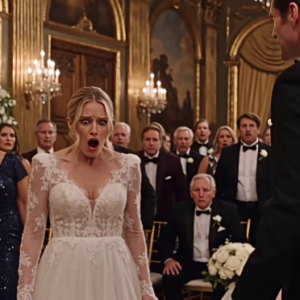
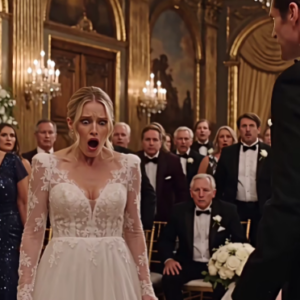
The silver pin Emily used had punctured the chamber that made the prosthetic appear rounded beneath the dress. The faint hiss had been compressed air escaping from the device.
It had not been a miracle or a medical emergency.
It had been a lie collapsing in front of one hundred and fifty witnesses.
The guardianship documents were also exposed as fraudulent. The signature dated three days after Laura’s death had been copied from an earlier document. A handwriting examiner found that it was not an original signature, despite the convincing appearance.
Jessica had planned to use our marriage to gain access to Emily’s trust and influence her guardianship arrangements. The fake pregnancy was intended to make me believe we were building a family together. Once married, she expected me to sign the financial authorization and guardianship amendment.
The man she called Uncle Victor was Marcus Bell.
And Rachel had given Jessica information about the hospital schedule, believing she was helping uncover negligence. She had not known about the forged documents or the plan to manipulate me. But her careless trust had given Jessica access she should never have had.
Rachel apologized more than once.
I didn’t forgive her immediately.
For a while, I couldn’t look at her without remembering the email, the hospital schedule, and how close Jessica had come to becoming Emily’s legal guardian.
But Rachel continued showing up for Emily. She attended school events, brought groceries, and sat quietly with us on difficult evenings. She never asked me to forgive her again.
Eventually, I did.
Not because what she had done was harmless, but because she accepted responsibility and proved that she understood why trust had to be earned.
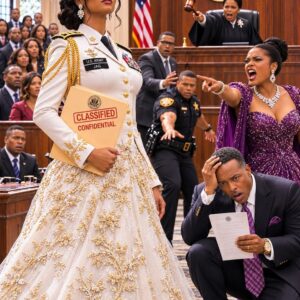
Jessica was arrested and charged with fraud, identity theft, forgery, unlawful access to medical records, and offenses related to the interference with Laura’s medical care. Marcus faced charges for his role in the scheme and agreed to cooperate with prosecutors.
The case took months.
There were hearings, interviews, and long days when Emily asked whether she would have to see Jessica again. A court order prohibited Jessica from contacting either of us while the criminal proceedings continued.
I changed the locks, installed security cameras, and moved Emily’s bedroom to the other side of the house. I also took her to a counselor who specialized in childhood grief and trauma.
I never told her she had saved me by exposing Jessica.
She was eight years old. She should never have had to carry that responsibility.
One evening, several months after the wedding, Emily sat beside me in the nursery.
The room no longer looked like the place where I had prepared for a baby that never existed. I had removed the crib and painted the walls a soft cream color. The wooden moon remained above the window.
Emily held Laura’s letter.
“Can I read it again?” she asked.
I nodded.
She unfolded the page carefully.
There was more writing on the back than I had noticed before. The final lines were addressed directly to her.
_My sweet Emily,_
_If you ever feel afraid to tell your father something, remember that he loves you more than he loves being right. You don’t have to protect grown-ups from the truth._
_You are never responsible for keeping a secret that makes you feel unsafe._
_And if I cannot be there to hold your hand, your father will._
Emily read the last sentence twice.
Then she looked at me.
“Mommy knew.”
I put my arm around her.
“She knew you were brave.”
“I wasn’t brave. I was scared.”
“You can be scared and still do the right thing.”
She leaned against my shoulder.
“Do you think Mommy would be mad that I used the pin?”
I shook my head.
“I think she would be proud that you tried to protect yourself. But next time, you tell me first. You don’t have to handle something dangerous alone.”
Emily nodded.
Outside, the evening light settled across the garden. The house was quiet. There was no wedding music, no crowd, no bride waiting at an altar.
There was only my daughter and me.
For a long time, I had believed that losing Laura meant I had to build a new family as quickly as possible. I had mistaken the promise of another child for the promise of healing. Jessica had seen that longing and used it against me.
But Laura’s letter reminded me of something I had forgotten.
**Emily was already my family. She had been enough from the beginning.**
I kissed the top of her head.
“Would you like to help me plant flowers for Mommy this weekend?”
She smiled.
“Can we plant the white ones she liked?”
“Of course.”
“And can we put one by the little moon in the garden?”
“We can.”
She folded the letter and placed it in the small wooden box we had found in the storage locker.
Then she climbed into my lap, just as she used to when she was younger.
“Dad?”
“Yes?”
“Are we safe now?”
I looked at the security light outside, the locked front door, and the woman-free nursery where my daughter could finally sleep without fear.
“We’re going to keep making sure we are,” I said. “And you never have to keep a frightening secret from me again.”
Emily wrapped her arms around my neck.
For the first time since the wedding, I felt my own breathing settle.
Jessica had tried to turn a wedding into a trap. She had used a fake pregnancy, forged documents, and a child’s fear to get what she wanted. She had nearly succeeded because I had wanted so badly to believe in a happy ending.
But the truth had survived—in a little girl’s memory, in a recording hidden away by a dying woman, and in a letter that had waited years to be read.
I had walked into that chapel believing I was about to become a father again.
I walked out understanding that being a father had never been about what I hoped to gain.
It was about whom I was willing to protect.
**And this time, I would never mistake silence for peace again.**