PART 13: THE EXERCISE BEYOND THE FENCE
The following morning, I stood in the training area with dust collecting around my boots and Colonel Hart’s question still turning inside my head.
The field rehearsal was designed to test communication, coordination, and the ability to adjust plans when new information appeared.
It wasn’t a combat operation.
Nobody was going into actual danger.
Yet the instructors treated the decisions seriously because training was supposed to reveal weaknesses before those weaknesses mattered in real conditions.
Captain Velez observed from a designated position alongside Gunnery Sergeant Webb.
Colonel Hart stood nearby with a clipboard.
Luis and I were assigned to the same team.
This time, he would lead the initial phase while I handled communication and helped verify incoming information.
I had accepted the assignment without complaint.
That didn’t mean my pride had disappeared.
When Luis began the briefing, I noticed several details I would have presented differently.
His voice was calmer.
His instructions were shorter.
He paused frequently to make sure everyone understood their tasks.
I found myself wanting to hurry him.
Then I remembered the whiteboard.
Listening.
Luis finished the briefing and looked around.
“Questions or concerns?”
Mason raised his hand.
“The route marking near the second checkpoint looked different during the last walk-through.”
Luis turned toward him.
“What changed?”
Mason explained that one of the temporary markers appeared to have been moved.
It was a minor detail.
In the past, I probably would have dismissed it as something we could sort out while moving.
Luis didn’t.
“Let’s verify it before we step off.”
He assigned me to confirm the route information with the instructor.
I contacted the designated control point and received an updated clarification.
The marker had indeed been moved to prevent teams from using a section temporarily closed for training maintenance.
I looked at Mason.
“Good catch.”
He seemed almost startled.
“Thanks.”
Luis adjusted the route.
The team moved out several minutes later.
As we progressed, I began to understand the value of what he was doing.
He wasn’t wasting time by asking questions.
He was preventing small uncertainties from becoming larger problems.
At the next checkpoint, we encountered a simulated communications disruption.
The exercise controller informed us that one channel was temporarily unavailable.
Luis immediately directed the team to use the approved alternate communication procedure.
I confirmed the change and passed the required information.
For several minutes, the sequence ran smoothly.
Then a new instruction arrived indicating that our simulated support element had changed its timing.
I read the update twice.
The information didn’t match an earlier message.
My first instinct was to choose the version that allowed us to continue.
We were close to completing the phase within the target time.
I could almost feel my old confidence pushing me toward a quick decision.
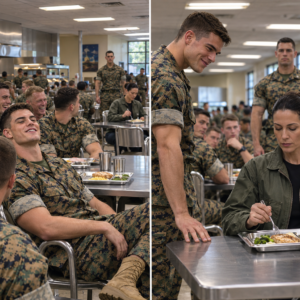
Then I remembered Colonel Hart asking why I had crossed the mess hall despite being warned.
I had ignored uncertainty because acknowledging it would have interrupted what I wanted.
I lowered the radio.
“Luis, we have conflicting timing information.”
He turned immediately.
“What doesn’t match?”
I showed him the messages.
He studied them.
“We need confirmation.”
I nodded.
“I agree.”
The words came easily, and their simplicity surprised me.
Luis directed a brief pause while we clarified the discrepancy through the exercise control channel.
The answer confirmed that the newer timing had superseded the earlier instruction.
Our team adjusted accordingly.
We finished the phase later than the original target but without an avoidable coordination error.
When the instructors gathered us for review, Captain Velez asked Luis to explain the decision.
Luis described the conflicting information and the reason for pausing.
Then he looked toward me.
“Corporal Miller identified the discrepancy.”
Captain Velez turned to me.
“Why didn’t you just choose the newer message and continue?”
I considered the question.
“Because I didn’t know whether it was valid, sir.”
He nodded.
“Did stopping cost time?”
“Yes, sir.”
“Was it worth it?”
“Yes, sir.”
Colonel Hart looked down at her clipboard.
I couldn’t read her expression.
Gunnery Sergeant Webb asked Mason about the route marker.
Mason explained what he had noticed and how Luis responded.
The gunny nodded.
“Good attention to detail.”
Mason glanced toward me.
I gave him an approving nod.
For the first time, I felt satisfaction that had nothing to do with receiving attention myself.
The team had worked well.
That mattered more than who looked impressive.
After the review, Luis approached me near the equipment area.
“Nice catch on the timing.”
“Thanks.”
He looked toward Mason.
“You also backed him up about the marker.”
“He was right.”
Luis nodded.
“Yesterday, you might have laughed at him.”
I didn’t argue.
“Yeah.”
He watched me carefully.
“You’ve been different.”
“I’m trying.”
“I can tell.”
Those three words meant more than I expected.
For a moment, I thought perhaps the worst of the situation had passed.
Then Gunnery Sergeant Webb called us toward the command observation area.
Captain Velez stood beside Colonel Hart with the completed evaluation sheets.
The captain looked at both of us.
“We’ve reviewed the workshop and rehearsal results.”
I straightened.
He glanced down at the paperwork.
“Tomorrow morning, we’ll make the final leadership assignment.”
Luis nodded.
“Understood, sir.”
Captain Velez turned toward me.
“Corporal Miller, both your performance and your earlier conduct will be considered.”
“Yes, sir.”
He closed the folder.
Then he added something that made my stomach tighten.
“Your recommendation remains under review, and Colonel Hart has submitted an observation that I want you to read before our final meeting.”