PART 20: The Place We Came Home To
I remember Room 407 most clearly because a stack of instructions held by the nurse made the moment impossible to mistake for an ordinary day.
That was when Constance’s discharge plan finally became real though her recovery remained uncertain.
I felt the situation changing before I found language for what it meant.
“One day at a time.”
The words did not settle things as neatly as anyone might have hoped.
The phrase sounded wiser than any confident promise.
I gave myself a moment to think before allowing my expression to answer for me.
The last thing I wanted was to make a difficult situation harder merely because I was frightened.
I had come to understand how quickly people reached for certainty when they could not bear uncertainty.
I did not want a victory in that moment; I wanted everyone to leave it with their dignity intact.
Even kindness needed boundaries, because compassion without them could leave the person giving it with nothing left.
I could feel the familiar pressure to be endlessly available, but the duty to care did not require me to stop being human.
Constance had a way of making the room quieter simply by insisting on speaking for herself.
I did not need to know the whole future to recognize the next necessary choice.
Adrian had spent much of his life being obeyed, and I wondered how long it had been since somebody disagreed with him without wanting something.
Every patient carried a whole history into the hospital, and none of that history could be summarized by a medical chart.
I paid attention to the small shift in his expression because it revealed more than another polished explanation would have done.
I reminded myself to separate the person from the mistake without pretending the mistake was harmless.
I returned my attention to Room 407, where the day had not paused to make our feelings easier.
Whatever I believed about the people around me, I still had to choose what I would do next.
I took the next step because standing still would not answer the question facing us.
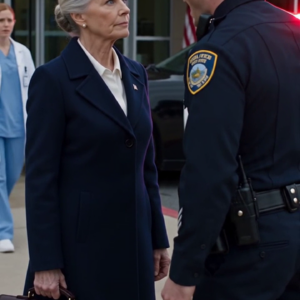
By the time I reached hospital corridor, a cart moving past the threshold had become the detail that stayed with me.
That was when Adrian thanked every shift and learned which questions were appropriate to ask.
I felt the situation changing before I found language for what it meant.
“I know I cannot repay what you gave her.”
The words did not settle things as neatly as anyone might have hoped.
I told him care was not a debt.
I gave myself a moment to think before allowing my expression to answer for me.
The last thing I wanted was to make a difficult situation harder merely because I was frightened.
I had come to understand how quickly people reached for certainty when they could not bear uncertainty.
I did not want a victory in that moment; I wanted everyone to leave it with their dignity intact.
I paid attention to the small shift in his expression because it revealed more than another polished explanation would have done.
Fear could explain a person’s hardness, but it could not excuse the damage done by that hardness.
I made myself focus on the next useful action rather than the outcome I secretly wanted.
I checked the time and realized how much of the day had passed without any of us noticing.
No one had appointed me the judge of his character, and that did not mean I had to accept the way he treated people.
When I thought about the morning in the car, I remembered not the expensive seats but how quickly a stranger had reduced me to an inconvenience.
There was something unsettling about discovering vulnerability in someone who had seemed invulnerable from a distance.
I pulled my shoulders back and looked again at the person standing in front of me.
I returned my attention to hospital corridor, where the day had not paused to make our feelings easier.
Whatever I believed about the people around me, I still had to choose what I would do next.
I took the next step because standing still would not answer the question facing us.
At hospital curb, I noticed rain-dark concrete and slow traffic, even while everything important seemed to be happening at once.
That was when we met beside the place where he had ordered me out.
I felt the situation changing before I found language for what it meant.
“I would do that morning differently if I could.”
The words did not settle things as neatly as anyone might have hoped.
I believed him because he no longer asked me to pretend it never happened.
I gave myself a moment to think before allowing my expression to answer for me.
The last thing I wanted was to make a difficult situation harder merely because I was frightened.
I had come to understand how quickly people reached for certainty when they could not bear uncertainty.
I did not want a victory in that moment; I wanted everyone to leave it with their dignity intact.
There was something unsettling about discovering vulnerability in someone who had seemed invulnerable from a distance.
I had to guard against the temptation to turn another person’s suffering into proof that my warning had been right.
What Constance deserved was care freely given, not care contaminated by an argument between her son and me.
I could hear the building carrying on around us with its ordinary, stubborn rhythm.
Her wishes were neither an obstacle nor an inconvenient detail, and I would not let anyone treat them that way.
It was easier to hear the truth in a room where nobody was trying to win.
I tried to imagine how each word would sound to someone who had been awake with worry for too many nights.
I made sure my next words were meant to clarify rather than to wound.
I returned my attention to hospital curb, where the day had not paused to make our feelings easier.
Whatever I believed about the people around me, I still had to choose what I would do next.
I took the next step because standing still would not answer the question facing us.
I stood in Dorchester apartment with a clean uniform hanging near the door surrounding me and tried to understand what came next.
That was when I returned home and allowed myself a full night of sleep.
I felt the situation changing before I found language for what it meant.
“Tomorrow is another day.”
The words did not settle things as neatly as anyone might have hoped.
I felt no need to measure my worth against his wealth.
I gave myself a moment to think before allowing my expression to answer for me.
The last thing I wanted was to make a difficult situation harder merely because I was frightened.
I had come to understand how quickly people reached for certainty when they could not bear uncertainty.
I did not want a victory in that moment; I wanted everyone to leave it with their dignity intact.
I tried to imagine how each word would sound to someone who had been awake with worry for too many nights.
The shift continued whether my heart was racing or not, and ordinary work had a way of teaching perspective.
In the quiet afterward, I noticed the effort it had taken for all of us to remain gentle.
I had no script for the conversation, only the responsibility to be honest.
The distance between an intention and its effect could be enormous, particularly when a frightened person believed authority was the same as love.
I knew better than to measure healing by one good hour or one reassuring conversation.
Even now I could remember the names of people who had treated me kindly when I had almost nothing left to give.
I watched the expression across from me change by degrees.
I returned my attention to Dorchester apartment, where the day had not paused to make our feelings easier.
Whatever I believed about the people around me, I still had to choose what I would do next.
I took the next step because standing still would not answer the question facing us.
What stayed with me about Voss home visit months later was Vermont photographs beside a bowl of lemon drops, and the uneasiness beneath it.
That was when after Constance was no longer my patient, she invited me for tea with her son.
I felt the situation changing before I found language for what it meant.
“You found your heart again, Adrian.”
The words did not settle things as neatly as anyone might have hoped.
I understood that the real ending was not wealth or romance but the dignity we chose to practice.
I gave myself a moment to think before allowing my expression to answer for me.
The last thing I wanted was to make a difficult situation harder merely because I was frightened.
I had come to understand how quickly people reached for certainty when they could not bear uncertainty.
I did not want a victory in that moment; I wanted everyone to leave it with their dignity intact.
Even now I could remember the names of people who had treated me kindly when I had almost nothing left to give.
Being needed was not the same as being valued, and I was beginning to understand the difference more clearly.
For once there was nothing useful to accomplish by speaking, so I let the silence give us room.
I listened for what was not being said, then waited without filling the silence.
I had spent years learning that the hardest part of nursing was not knowing what to do with my hands, but knowing when to make room for somebody else.
There were days when every practical answer seemed too small for the fear sitting in the room, and those days required a different kind of courage.
I could not change what had already happened, and I could not promise what the next hour would bring.
I wanted to rush past the awkwardness, but doing so would have made the moment dishonest.
I returned my attention to Voss home visit months later, where the day had not paused to make our feelings easier.
Whatever I believed about the people around me, I still had to choose what I would do next.
I took the next step because standing still would not answer the question facing us.
And when Adrian opened the door for me, he waited for my answer before taking a single step.