CHAPTER 1 – TAKE YOUR HAND OFF ME—OR LOSE IT
PART 1: THE WOMAN WHO LIED IN HER LETTER
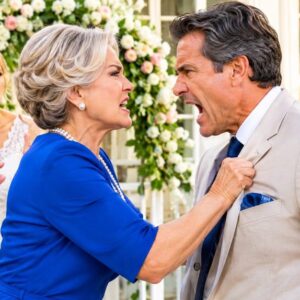
“Take your hand off me—or lose it.”
I spoke quietly.
The drunk laughed.
That was his mistake.
His fingers were still digging into my upper arm when I brought my boot down across his instep with every pound of my weight behind it.
Bone shifted beneath my heel.
His laughter became a scream.
Before he could release me properly, I drove my elbow upward.
It struck the underside of his jaw.
His teeth snapped together.
His eyes rolled.
Then all two hundred pounds of him stumbled backward off the stagecoach platform and landed in Bitter Creek’s horse trough with a splash big enough to muddy three nearby men.
The street went silent.
I adjusted my shawl.
The drunk surfaced choking.
“You crazy witch!”
Blood ran from his mouth.
“You broke my tooth!”
I looked down at him.
“You still have several.”
A miner laughed.
Another joined him.
I did not.
Neither did the man standing across the street beside a wagon.
I knew him immediately.
Wyatt Reed.
He was exactly as his photograph had suggested and nothing like the man I had imagined during the six hundred miles between Denver and Wyoming.
The photograph had made him seem stern.
In person he looked like a mountain that had learned to wear a coat.
Thirty-six years old.
At least six feet four.
Broad through the shoulders.
Dark beard.
Wind-burned skin.
Gray eyes beneath a low hat.
His buckskin coat looked old enough to remember winters I had never seen.
He was staring at me.
Not with admiration.
Not with amusement.
With the expression of a man who had ordered flour and received dynamite.
I could hardly blame him.
Three months earlier, I had written:
I am of a quiet disposition. I require little and speak less. I seek a peaceful home and welcome honest work.
All of that was technically true.
Most of the time.
The drunk in the trough groaned.
I stepped around him and crossed the street.
People moved aside.
I had been stared at all my life.
I knew why some of them stared now.
Partly the fight.
Partly because I was not the fragile little woman men expected when they heard the words mail-order bride.
I was five feet five in my stockings and heavyset enough that dressmakers always sighed before measuring me.
Broad hips.
Thick thighs.
Full waist.
Round arms that had never looked delicate no matter how tightly sleeves were cut.
My aunt used to say I had been built for kneading bread and birthing farmhands.
Men had been less charitable.
They called me heavy.
Soft.
Too much woman.
A few assumed my size meant I was slow.
The man dripping inside the horse trough had just learned otherwise.
I stopped in front of Wyatt.
“Wyatt Reed.”
His eyes narrowed.
“That’s me.”
“I’m Josephine Mercer.”
“I figured.”
“My trunk is behind the coach.”
He did not move.
“It’s heavy.”
His gaze moved toward the trough.
Then back to me.
“You broke that man’s jaw.”
“He put his hand on me.”
“You warned him?”
“Yes.”
“Once?”
“Once seemed sufficient.”
Something shifted behind Wyatt’s beard.
Not a smile.
Almost.
Then he reached inside his coat.
My heart jumped before I could stop it.
But he pulled out folded paper.
My letter.
Of course.
He opened it.
“Quiet disposition.”
I folded my arms.
He continued.
“Require little.”
“That remains accurate.”
“Speak less.”
“I speak less than many people.”
“You hit more.”
“That depends entirely on the company.”
He stared at me.
I allowed one eyebrow to rise.
Something almost dangerous happened around his mouth again.
I suspected it was amusement.
Then he folded the letter.
“I didn’t send for a fighter.”
“And I did not travel six hundred miles to be handled by drunken strangers.”
“That wasn’t what I meant.”
“Then perhaps we should both become more precise.”
His eyes sharpened.
I expected anger.
Men disliked being corrected by women.
They disliked it more when the woman doing the correcting was broad enough not to look frightened afterward.
But Wyatt did not raise his voice.
“I asked for somebody who wanted quiet.”
“I do.”
“You don’t look quiet.”
“I have had an unusually active five minutes.”
One of the miners laughed again.
Wyatt glanced toward him.
The laughter stopped.
I decided I liked that.
Not Wyatt.
Not yet.
The effect.
He tucked my letter into his coat.
“The arrangement isn’t legal yet.”
“I’m aware.”
“I paid your coach fare. Nothing more.”
“I’m aware of that too.”
“If either of us wants out—”
“You can send me back.”
His jaw tightened.
I regretted the words immediately.
Because behind me, the drunk was climbing out of the trough.
And because six hundred miles east lay the place I had no intention of ever seeing again.
Wyatt must have seen something change in my face.
His expression became less hard.
“I didn’t say I was sending you anywhere.”
I looked away.
The coach driver was dragging my trunk from the baggage rack.
Iron-bound oak.
Reinforced corners.
Two leather straps.
One new lock.
One old.
It hit the ground with a heavy metallic thud.
Wyatt turned.
“What’s in that thing?”
“Belongings.”
“Gold bars?”
“No.”
“Rocks?”
“Not intentionally.”
“That doesn’t answer the question.”
“It was not intended to.”
His gray eyes returned to me.
I held them.
Finally he sighed.
“Of course.”
He crossed to the trunk.
That was when I saw the man beneath the saloon awning.
Dark city coat.
Black hat.
Clean gloves despite the mud.
I knew that coat.
Or one like it.
My stomach went cold.
He held a folded paper.
Not reading it.
Watching me over the top.
The moment our eyes met, he stepped backward into the saloon.
I stopped breathing.
Wyatt noticed.
“Friend?”
“No.”
“Relative?”
“No.”
“Enemy?”
I watched the dark doorway.
“I haven’t decided.”
“That usually means yes.”
“It usually means I prefer evidence.”
Wyatt gripped one handle of the trunk.
The driver took the other.
Together they lifted.
Wyatt’s eyebrows rose.
“Josephine.”
“Yes?”
“What is in here?”
“Things I could not leave behind.”
“Another answer that answers nothing.”
“I appear consistent.”
They loaded it into the wagon.
I kept watching the saloon.
Nobody emerged.
That frightened me more.
Wyatt followed my gaze.
“You know him.”
“I know the kind of man he works for.”
“That is considerably worse.”
“Yes.”
“Do I get an explanation?”
“Not here.”
His expression hardened.
“You wrote asking to come into my home.”
“Yes.”
“You arrive and break a drunk’s jaw.”
“Possibly.”
“Possibly?”
“He was still speaking.”
“You recognize a man watching you, won’t say who he is, and your trunk weighs as much as a dead elk.”
“Not quite.”
Wyatt stared.
I softened my voice.
“I will explain.”
“When?”
“When there is no crowd.”
He looked around Bitter Creek.
Stockmen.
Miners.
Two women outside the mercantile.
The drunk complaining loudly about his tooth.
Wyatt nodded once.
“Three hours of daylight.”
“I’m ready.”
He began hitching the team.
I moved toward the wagon.
Then stopped.
“Does your cabin have a second door?”
His hands slowed.
“Yes.”
“Where?”
“Back of the kitchen. Leads toward the woodpile.”
“Windows facing the trail?”
“Two.”
“Cellar?”
“No.”
“Loft?”
“Yes.”
“Can somebody approach from behind without being seen?”
His hands stopped completely.
He turned toward me.
“What kind of bride asks about escape routes before she asks whether there’s a stove?”
“One who has learned that supper matters very little if she does not survive until breakfast.”
His face became unreadable.
I regretted saying that much.
Then he asked, “Will someone come after you?”
“I hope not.”
“That is not what I asked.”
“No.”
I paused.
“It’s the only honest answer I have.”
He tightened the harness.
“Get in.”
We left Bitter Creek fifteen minutes later.
I sat beside him with my hands folded under my shawl.
Snow dusted the mountains ahead.
The trail climbed through pine forest where sunlight vanished early.
Wyatt drove in silence.
I appreciated silence.
I had not lied about that.
What I had lied about was why.
People thought quiet women had nothing to say.
Sometimes quiet women were simply listening.
The first mile, I listened for hoofbeats.
The second, I watched the trail behind us.
The third, I studied every turn.
Wyatt noticed.
He noticed everything.
“You always count exits?”
“Yes.”
“Windows?”
“Yes.”
“Men?”
“Especially men.”
He looked ahead.
“Someone teach you that?”
“Yes.”
“Who?”
“Experience.”
He grunted.
That might have been irritation.
Or acceptance.
The road rose sharply.
At the last bend above town, we crossed an old logging bridge.
One plank had rotted through near the left side.
I saw the opening just as the team started across.
“Left wheel!”
Wyatt hauled the reins.
The horses moved right.
The wagon lurched.
Our rear wheel scraped the bridge rail instead of dropping through the broken plank.
Wyatt pulled us to a stop on the far side.
He looked back.
Then at me.
“You saw that before I did.”
“Yes.”
“You have good eyes.”
“I’ve needed them.”
There was that silence again.
Different now.
Less comfortable.
At the first creek crossing, I asked, “Do you own rifles?”
“Two.”
“Both working?”
“Better than most men.”
“Ammunition?”
“Enough.”
He looked at me.
“You expecting a war?”
“No.”
“Planning one?”
“No.”
“Planning to shoot somebody?”
“I sincerely hope not.”
That answer sat between us.
An hour later, the trail narrowed between granite walls.
Wyatt climbed down to check a harness strap.
I leaned toward the trunk to make sure the broken road had not loosened anything.
My shawl fell open.
The sleeve beneath slid back.
I saw Wyatt glance once toward my wrist.
He saw the scar.
A narrow white band circling the inside.
Rope.
I pulled my sleeve down.
He pretended not to have noticed.
That made me trust him one inch more.
Then a horse whinnied behind us.
Not one of ours.
Wyatt heard it too.
We both turned.
Far below, on the last visible switchback, three riders appeared from the pines.
Even at that distance, I recognized the center rider.
Dark coat.
Black hat.
My mouth went dry.
Wyatt climbed back onto the wagon.
“Know them now?”
I could not look away.
“We need to move.”
“Who?”
“Move.”
“Josephine.”
“They’re the kind of men who don’t ask twice.”
“Name.”
“I don’t know his.”
“That’s useful.”
“I know who sent him.”
“Who?”
The riders accelerated.
My heartbeat filled my ears.
I had spent four months believing they had stopped looking.
Three months corresponding with Wyatt.
Two weeks traveling under my own name again because I had finally convinced myself the dead were safe from pursuit.
I had been stupid.
“Men who were supposed to believe I was dead.”
Wyatt stared.
Then slowly looked toward my trunk.
“You wrote that in your letter?”
I almost laughed.
“Would you have paid six hundred miles of coach fare if I had?”
“No.”
“Then there is your answer.”
His jaw hardened.
“That isn’t comforting.”
“It was not meant to be.”
The riders were gaining.
Wyatt climbed onto the seat.
I joined him.
He slapped the reins.
The team surged uphill.
The iron-bound trunk jumped behind us.
Branches whipped against the wagon canvas.
I looked back.
The riders were closing.
A shout carried up the trail.
“Mercer!”
Wyatt looked at me.
I did not.
“Mercer! Stop the wagon!”
A gunshot cracked.
The bullet punched through canvas inches above Wyatt’s shoulder.
His horses lunged.
“Down!”
He grabbed my arm.
I pulled free.
Not because I objected to the warning.
Because I needed the rifle beneath the seat.
I seized it.
Winchester.
Lever action.
Good condition.
I checked the chamber.
Wyatt’s expression changed.
“How in God’s name do you know that weapon?”
“The same way I know where to aim an elbow.”
“That is becoming a very troubling sentence.”
I braced against the wagon side.
The road twisted.
I aimed behind us.
Did not fire.
The riders spread slightly.
The dark-coated man shouted again.
“Give us the trunk! Nobody has to get hurt!”
Wyatt glanced backward.
“They want your belongings?”
“They want what is hidden among them.”
“What?”
“Proof.”
“Of what?”
The wagon struck a rock.
The rear axle bounced.
One trunk strap snapped.
The iron latch caught against the wagon bed and broke.
The lid jumped open an inch.
Metal shifted inside.
My entire body went cold.
I turned.
The gap was tiny.
Still too much.
“Wyatt.”
He heard the fear.
Looked toward me.
“Whatever happens, do not let them open that trunk.”
His expression darkened.
“What is inside?”
Another shot cracked.
The lead horse screamed.
Blood sprayed across the harness.
The animal stumbled.
Our wagon jerked sideways toward the edge of the mountain road.
Wyatt threw both feet against the brake.
I grabbed the seat rail.
The wounded horse went down.
The second horse screamed and pulled sideways.
The wagon tilted.
Below us lay fifty feet of stone and pine.
“Jump!” Wyatt shouted.
I looked at the trunk.
“No.”
“Josephine!”
“They cannot get it!”
The wagon shifted again.
Wood cracked.
I shoved the rifle into Wyatt’s hands and crawled backward.
He cursed.
I grabbed the surviving trunk strap.
The weight nearly pulled me from the wagon.
My heavy body worked against me for one second.
Then for me.
I lowered my center of gravity.
Planted both boots.
Used my hips and legs instead of my back.
Pulled.
The trunk slid three inches.
Another three.
Wyatt stared.
“What are you doing?”
“Saving the thing they are shooting us for!”
“Leave it!”
“No!”
The rear wheel slipped over the road edge.
The entire wagon tipped.
Wyatt lunged.
One hand caught my waist.
His arm wrapped around me.
He pulled.
I was not a light woman.
Men had spent years reminding me of that.
Wyatt did not complain.
He dragged me off the wagon as the surviving horse tore loose.
We hit frozen ground together.
The wagon rolled.
Wood exploded against stone.
The trunk disappeared over the embankment.
For one second, everything became silence.
Then the riders slowed around the bend.
Wyatt rolled onto one knee.
Rifle up.
I crawled toward the road edge.
The trunk had fallen twenty feet.
It rested upside down between two pines.
Still closed.
Barely.
The dark-coated man saw it too.
His horse turned toward the slope.
I raised my voice.
“Don’t.”
He looked at me.
For the first time, I saw his face clearly.
Thin.
Pale.
A neat mustache.
A smile without warmth.
“Miss Mercer.”
My blood froze.
He touched his hat.
“Mr. Vale sends his regards.”
Wyatt looked at me.
I closed my eyes.
Of course.
Silas Vale.
I had hoped never to hear the name again.
The rider continued.
“Give us the records.”
Wyatt’s rifle aimed at his chest.
“Ride back down.”
The man smiled.
“This has nothing to do with you.”
Wyatt looked at me.
Then at the man.
“She came up my road.”
“That your law?”
“Yes.”
The rider laughed.
“You don’t even know what she is.”
Wyatt’s answer came without hesitation.
“She’s standing on my side of the rifle.”
Something inside my chest moved.
Dangerously.
The rider’s smile disappeared.
“Last warning.”
Wyatt worked the rifle lever.
“No.”
The man looked at me.
“You know what happens if that ledger reaches a marshal.”
“Yes.”
“You know what happens to everyone named inside.”
“Yes.”
“You think a mountain hermit can protect you?”
Wyatt’s eyes narrowed.
I said, “He does not need to.”
The man looked amused.
“I can protect myself.”
That amusement lasted until I raised the revolver I had pulled from the small of my back.
Wyatt glanced at it.
Then at me.
“You have a gun too.”
“Yes.”
“Anything else I should know?”
“Several things.”
“I was afraid of that.”
The dark-coated rider backed his horse.
Not retreating.
Reconsidering.
Then he smiled again.
“We’ll see you at the cabin.”
My stomach dropped.
He knew where we were going.
Of course he did.
Wyatt’s name had been on every letter.
His settlement address.
Bitter Creek post.
I had led them directly to him.
The three riders withdrew down the trail.
Wyatt waited until they vanished.
Then he looked at me.
Really looked.
My body.
My gun.
My scarred wrist.
The fallen trunk.
The trail behind us.
“What did you bring to my mountain, Josephine?”
For once, I had no clever answer.
“Trouble.”
He glanced down the slope.
“Looks expensive.”
“It may cost people their lives.”
His eyes returned to mine.
“Then I suggest you start explaining.”
CHAPTER 2 – PART 2 – TAKE YOUR HAND OFF ME—OR LOSE IT
PART 2: WHAT WAS INSIDE THE TRUNK
We reached Wyatt’s cabin after dark.
On foot.
The wounded horse had died beside the road.
The other had run three miles uphill before Wyatt caught it.
We salvaged what we could from the wagon.
Blankets.
Food.
One rifle.
My trunk.
The trunk took both of us.
Mostly him.
I helped enough to preserve my pride.
Wyatt helped enough to preserve my back.
Neither mentioned the difference.
The cabin stood beneath a wall of granite with pine forest behind it.
Exactly as he had described in his letters.
One main room.
Kitchen corner.
Stone fireplace.
Small bedroom.
Loft.
Back door opening toward the woodpile.
Two front windows.
One rear.
Good sight line down the approach.
Not perfect.
Better than most.
I examined everything.
Wyatt watched me.
“You’re doing it again.”
“What?”
“Counting exits.”
“Yes.”
He set the trunk near the fireplace.
“Start talking.”
I removed my shawl.
He stared.
Not rudely.
Surprised.
The charcoal dress hid less without it.
I knew what he saw.
A heavyset woman with a thick waist and broad hips standing in his cabin as though she had brought a small war with her.
I had learned long ago that men formed opinions based on shape.
Too soft to be dangerous.
Too large to be graceful.
Too plain to be worth noticing.
Vale’s men had once made that mistake too.
One of them still walked with a limp.
Wyatt looked away first.
Good.
I went to the trunk.
“Help me turn it.”
He did.
The broken latch worried me.
The second lock held.
I removed a key from inside my bodice.
Wyatt’s eyebrow lifted.
“Anything else stored in there?”
“Nothing sharp.”
“I’m beginning to doubt everything you say.”
“That seems healthy.”
The lock opened.
I raised the lid.
Wyatt leaned closer.
His expression changed.
No dresses lay on top.
No shoes.
No sewing box.
Only a thin blanket covering metal dispatch cases.
Three ledgers.
Bundles of letters tied with cord.
Two official seals.
A packet of photographs.
And a revolver wrapped in oilcloth.
Wyatt looked at me.
“You travel light.”
“I had another dress.”
“Comforting.”
I lifted the black ledger.
“This is why they followed us.”
“What is it?”
“Names.”
I handed it over.
Wyatt opened to the first page.
Dates.
Payments.
Addresses.
Correspondence codes.
Women’s names.
Men’s names.
Wyatt frowned.
“Marriage bureau?”
I nodded.
His eyes lifted.
“No.”
“Yes.”
He looked toward the letters.
“The agency that sent me your ?”
“The same.”
“Crown & Bell?”
“Yes.”
He sat down slowly.
That was fair.
“You worked there?”
“I kept correspondence records.”
“How long?”
“Four years.”
“You sent brides west.”
“I helped match letters.”
His expression became unreadable.
“There is more.”
“Of course there is.”
I sat across from him.
For the first time since Bitter Creek, my hands began trembling.
I placed them beneath the table.
Wyatt noticed anyway.
I hated that he noticed everything.
“Crown & Bell was legitimate when I started.”
“What changed?”
“Maybe nothing.”
“What does that mean?”
“It means I was twenty when I took the job and grateful anyone would hire a woman my size for office work instead of laundry.”
His gaze moved once over me.
Not judgment.
Recognition.
I continued.
“The agency advertised respectable marriages. Widowers. Ranchers. Shopkeepers. Railroad men. Women answered from cities where they had few prospects.”
“Like you.”
“Yes.”
“Except you worked there.”
“Yes.”
“What went wrong?”
I opened the ledger.
“Some men paid more.”
Wyatt waited.
“Not for wives.”
His jaw tightened.
I swallowed.
“They wanted addresses.”
“Whose?”
“Isolated men. Homesteads. Ranchers with savings. Men without nearby family.”
Wyatt looked toward his own cabin.
Understanding.
“The bureau sold information.”
“Yes.”
“Robbery?”
“At first.”
“At first?”
“Men posing as relatives. Freight agents. Land buyers. Sometimes fake brides who never intended to stay.”
His expression hardened.
“And later?”
I could hear the old office.
The clock.
Pens scratching.
Vale walking behind my desk.
My supervisor lowering his voice when I entered.
“Later they discovered women were easier to control than men.”
Wyatt became still.
I continued because stopping would make it worse.
“They began redirecting some applicants.”
“Where?”
“Mining camps. Houses. Labor settlements.”
His face changed.
“You mean—”
“Yes.”
The word tasted like iron.
“Women thought they were traveling to husbands.”
Wyatt closed his eyes.
“What happened?”
“Some were forced into work. Some into marriages they had not agreed to. Some disappeared.”
“And you found this?”
“Gradually.”
“Why not go to the law?”
“I tried.”
My wrist hurt though the scar was years old.
“Marshal?”
“Vale owned one deputy.”
“Judge?”
“The bureau’s investors included a judge.”
Wyatt looked at the ledger.
“Names are here?”
“Yes.”
“Everything?”
“Enough.”
“Why would they keep records of crimes?”
“Because criminals distrust each other.”
That almost made him smile.
“Fair.”
“The ledger tracked payments so nobody could deny what they owed.”
“And you stole it.”
“I copied it first.”
“Then?”
“They discovered me.”
His eyes moved to my wrist.
I looked at the scar.
“They locked me in a room above a warehouse.”
Wyatt’s voice became very quiet.
“How long?”
“Two days.”
“Rope?”
“Yes.”
“Who got you out?”
“I did.”
His eyes lifted.
“How?”
“The man guarding me believed heavy women were slow.”
I smiled without humor.
“He sat too close.”
Wyatt understood.
“What happened after?”
“I took the records.”
“All of them?”
“Enough.”
“Then?”
“There was a fire.”
“Did you set it?”
“No.”
I looked into the flames.
“They did.”
“What?”
“They decided evidence mattered more than whether I escaped.”
Wyatt stared.
“The warehouse burned?”
“Yes.”
“How did you survive?”
“Drainage window.”
My chest tightened.
“Too small for me.”
His expression changed.
I knew the thought.
I was heavy.
Broad.
A narrow window would be worse for me than a thin woman.
“I almost didn’t.”
I touched the side of my ribs.
“There were iron bars. One was loose from heat. I kicked until the mortar broke.”
“With that body?”
The words escaped him.
He immediately looked ashamed.
I surprised us both by laughing.
“Yes, Wyatt. With this body.”
“I didn’t mean—”
“I know what you meant.”
He rubbed his beard.
“I suppose being built like a sapling would not have helped with kicking masonry.”
“No.”
“Point taken.”
I looked back at the ledger.
“The roof collapsed before they saw me leave. They believed I died.”
“Until when?”
“I don’t know.”
“Today?”
“Possibly.”
“You used your real name.”
“Yes.”
“Why?”
“Because I was tired.”
That answer surprised him.
It surprised me too.
“For four months I moved from boarding house to boarding house under false names. I slept with chairs against doors. I changed trains when men looked familiar. Then I saw your .”
His face tightened.
“What did I write?”
I remembered every word.
Wyatt Reed, thirty-six, Wyoming Territory. Timber and cattle. Own cabin. No children. No close neighbors. Require practical woman not frightened of winter. No preference regarding beauty. Quiet temperament preferred. I offer honesty and expect the same.
The last line still hurt.
“I answered.”
“You expected honesty.”
“Yes.”
“And lied.”
“Yes.”
He stood.
I did not stop him.
He walked to the window.
Snow had begun.
Large flakes.
Soft.
“You should be angry.”
“I am.”
“Good.”
“That doesn’t help you.”
“No.”
He turned.
“Was any part of your letter true?”
“Yes.”
“You want quiet?”
“More than anything.”
“You welcome honest work?”
“Yes.”
“You require little?”
“Yes.”
“Speak less?”
“When people aren’t shooting.”
He almost smiled.
Then it disappeared.
“Why me?”
That was harder.
I looked toward the fire.
“Because your letter did not ask for beauty.”
His expression changed.
I hated that I had admitted it.
“There were other reasons.”
“What?”
“You lived far from towns.”
“Because you wanted to hide.”
“Yes.”
“Anything else?”
I hesitated.
“You wrote that your wife, if you found one, would have her own money from garden sales and sewing if she wanted it.”
He looked confused.
“That seemed important?”
“Yes.”
“You wrote that you did not strike women.”
His face went hard.
“I shouldn’t have needed to write that.”
“But you did.”
The room became quiet.
Finally he said, “I still don’t know whether to marry you.”
“I don’t know whether I would say yes tonight.”
His eyebrow rose.
“That’s reassuring.”
“You asked for honesty.”
“Late, but appreciated.”
Outside, wind struck the wall.
Wyatt looked toward the trunk.
“What do you intend to do with the ledger?”
“Get it to Territorial Marshal Rourke in Laramie.”
“Why haven’t you?”
“Vale’s men watched the rail stations.”
“You carried it west instead.”
“I believed they thought I was dead.”
“And now?”
“Now they know.”
Wyatt walked toward the window.
“Three riders.”
“At least.”
“You think more?”
“Yes.”
“How many?”
“I don’t know.”
“That’s a bad answer.”
“It’s the truth.”
A horse neighed outside.
Both of us froze.
Wyatt reached for the rifle.
I reached for mine.
He looked at me.
I corrected myself.
“My revolver.”
“Better.”
The horse sound came again.
Near the barn.
Wyatt extinguished the lamp.
Darkness swallowed the cabin except for firelight.
He went to the side window.
I moved to the rear.
Snow blurred everything.
Then I saw movement between trees.
One figure.
Maybe two.
“They found us.”
“Probably.”
Wyatt looked at the trunk.
“Can it burn?”
My head snapped toward him.
“What?”
“The records.”
“Yes.”
“If the cabin catches?”
I understood.
I removed the ledger.
Wrapped it in oilcloth.
Placed it beneath my dress coat.
Wyatt looked at my waist.
“You are hiding a ledger under there?”
“I have room.”
His mouth moved.
This time he did smile.
I stared.
“Was that a joke about my size?”
“No.”
“Good.”
“A tactical observation.”
“Dangerous distinction.”
A knock struck the front door.
Three times.
Neither of us moved.
Then a voice called.
“Reed!”
Wyatt looked at me.
“You know him?”
“No.”
“Helpful.”
The voice came again.
“We only want Mercer!”
Wyatt raised the rifle.
I whispered, “Do not answer.”
He looked at me.
“They know I’m here.”
“They don’t know where.”
“That is true.”
I moved toward the fireplace.
The fire needed killing.
Smoke could silhouette us.
I grabbed the poker.
Wyatt’s hand caught my sleeve.
“Josephine.”
I looked at him.
“If they get inside, use the back door.”
“No.”
“That was not a question.”
“Then it was wasted breath.”
His eyes narrowed.
“I am not dying for a mail-order bride I met four hours ago.”
“Excellent. Neither am I.”
“That is why you leave if they breach.”
“I am the reason they are here.”
“Yes.”
“So I stay.”
The front window shattered.
Gunfire exploded.
Glass sprayed across the room.
Wyatt fired once.
A man shouted outside.
I dropped behind the table.
Another bullet buried itself in the log wall.
Then silence.
I listened.
Hoofbeats.
Retreating.
Too easy.
Wyatt knew it too.
“They’re testing.”
“Yes.”
“What?”
“Windows. Positions. Number of guns.”
He looked toward me.
“How do you know?”
“Vale’s men tested the warehouse before they took me.”
His jaw tightened.
“We’re not waiting for them to do it properly.”
“What do you suggest?”
“Leave.”
“In snow?”
“They expect us to stay.”
“Where?”
I pictured the trail.
Bridge.
Granite walls.
Old logging turnoff.
“You said there was an abandoned logging camp farther north.”
“Three miles.”
“Buildings?”
“Two.”
“Road?”
“Old track behind the woodpile.”
His eyes sharpened.
“They won’t know it.”
“Exactly.”
He looked at the trunk.
“We can’t move that through snow.”
“No.”
I opened it.
“We take what matters.”
“Which is?”
“The ledger. Letters. photographs. seals.”
“What about the rest?”
“Bait.”
Wyatt understood immediately.
We repacked the trunk.
Added stones from the hearth.
Left one metal box inside so it would still sound right.
Then Wyatt frowned.
“What?”
“The back trail crosses open ground for fifty yards.”
“So?”
“They may have a man watching.”
I looked at myself.
Heavy coat.
Wide skirt.
Dark clothes.
Wyatt.
Tall enough to be seen from Nebraska.
“We need a distraction.”
He raised an eyebrow.
I smiled.
That worried him.
“What?”
“Do you trust your stove?”
“No.”
“Good.”
Ten minutes later smoke began pouring from the front chimney.
Too much smoke.
I had thrown damp cloth and green wood over the fire.
Wyatt kicked open the front door and fired twice toward the trees.
Then we heard horses move.
Exactly what we wanted.
Men shifting to watch the front.
We slipped out the rear.
The snow swallowed us.
I carried the evidence beneath my coat.
Wyatt carried one rifle and a supply bag.
We had gone perhaps two hundred yards when an orange glow appeared behind us.
I stopped.
Wyatt stopped too.
The cabin.
“No.”
“They fired it.”
Flames caught along the roof.
For one terrible second Wyatt simply stared.
His home.
Years of work.
The place he had offered a stranger.
Burning because of me.
“I’m sorry.”
He said nothing.
That hurt worse.
Then movement appeared near the front porch.
Vale’s men ran toward the cabin.
One kicked open the door.
Another dragged out the trunk.
They had taken the bait.
Wyatt looked at me.
“Move.”
We disappeared into the trees while his cabin burned behind us.
I did not know whether he would ever forgive me.
I was no longer sure I deserved him to.
Don’t stop here—the ending will shock you. Continue reading Part 3 below.