“Your daughter is in surgery, Elena.
That doesn’t mean you can abandon your sister’s celebration.
I need you here to clear the tables.”
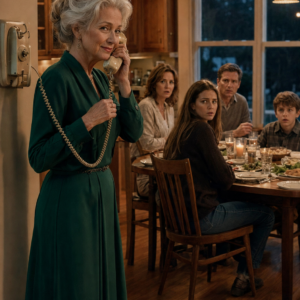
My mother’s voice came through the hospital waiting-room speaker while I sat holding my eight-year-old daughter’s purple sneaker.
Behind the operating-room doors, surgeons were trying to relieve pressure on Maya’s spinal cord after a highway accident, and my father had ignored twelve calls asking him to come.
“Mom, they don’t even know if she’ll walk again.”
“Then there’s nothing you can do by sitting there.
Chloe’s PhD dinner is important, too.”
I looked at the little sneaker in my lap.
Its heel flashed three times when Maya stamped hard enough, something she’d demonstrated proudly that morning before we left for the library.
Now I didn’t know whether she’d ever make it light up again.
The accident happened when a truck’s trailer swung into our lane on the interstate outside Columbus, Ohio.
I remembered the windshield cracking, an audiobook still playing, and Maya quietly telling me she couldn’t feel her feet properly.
At the hospital, Dr.
Rao explained that surgery was necessary to stabilize her injured spine.
When I asked whether she’d walk, he promised to do everything possible but refused to predict her recovery.
Before they took her away, Maya pressed her palm against mine.
“Will you be there when I wake up?”
“Every second I can be, sweetheart.”
Then she asked me to tell Aunt Chloe she wouldn’t be coming to the graduation dinner.
I’d promised I would.
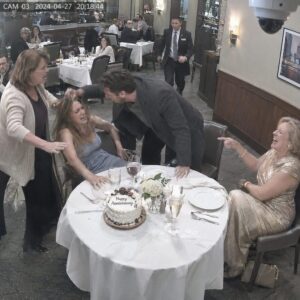
My younger sister had spent six years earning her doctorate, and our parents had arranged an elaborate celebration at Oakmont Country Club.
That morning, Mom had already asked me to help the servers despite knowing I’d been invited as a guest.
I had agreed to attend, not work.
After the accident, I sent everyone the hospital address and explained that Maya required emergency spinal surgery.
Nobody came.
Instead, Chloe called from her party, where music and laughter filled the background.
When I begged her to put Dad on, she refused because he was entertaining the university provost.
“Honestly, Elena, you can’t expect everyone to stop living whenever something happens to Maya.”
Then she called my daughter defective because of her stutter.
I ended the call before she could hear me crying.
What none of them knew was that I’d secretly paid for Chloe’s education through a trust administered by my attorney, Martin Okafor.
I’d also guaranteed the country club’s dinner bill.
Then Martin sent me a message.
“Elena, your mother just asked us to guarantee another $12,000 for Chloe’s celebration.
She says the anonymous benefactor always agrees.
Did you authorize this?”
I called Martin from the hospital corridor, where a vending machine hummed beneath a flickering fluorescent light.
He answered immediately and listened without interrupting as I explained what had happened to Maya and what my mother was demanding.
“Pay everything we’ve already agreed to,” I told him. “But don’t authorize another dollar for that party.”
“Understood.
I’ll notify Oakmont that any additional expenses require the family’s own payment arrangements.”
There was no reason to punish the club’s employees or leave legitimate bills unpaid.
The banquet we’d guaranteed would be covered, but my parents would have to pay for any extras they chose to order.
Martin had managed my family’s anonymous financial assistance for nearly eight years.
I’d founded Hilliard Medical after developing a hospital equipment-tracking program while working as a night clerk.
The software eventually became successful enough that I could fund Chloe’s graduate education without borrowing money or jeopardizing Maya’s future.
My parents believed I still worked from home entering medical records.
I had encouraged that misunderstanding after Mom began treating every professional success as an invitation to request more money.
Through Martin, I’d also arranged legitimate consulting work for Dad when his architectural business collapsed.
He’d been paid for reviewing hospital renovation plans, never realizing the company purchasing his expertise belonged to his eldest daughter.
At , Dr.
Rao appeared.
Maya had survived surgery, and the stabilization procedure had gone as planned.
But swelling around her spinal cord meant nobody could promise how much movement she would recover.
I held my breath until he said I could see her.
She was pale beneath the hospital blankets, surrounded by equipment, but she opened her eyes when I touched her hand.
“Did Aunt Chloe like her party?”
I brushed hair away from her forehead.
“I’m sure she did, sweetheart.”
By Sunday morning, my family still hadn’t visited.
Instead, Mom called demanding to know why the anonymous benefactor had refused to cover an additional reception.
“It’s embarrassing, Elena.
Your father had to put the extra charges on his credit card.”
“Then he should only have approved what he could afford.”
She went silent.
“How dare you lecture us when you couldn’t even attend?”
Chloe joined the call and accused me of deliberately making her graduation about Maya.
Finally, Dad spoke.
“I heard your messages, Elena.
Your mother said the doctors were handling things, and I decided to stay.”
His admission hurt more than another unanswered call.
I looked through Maya’s hospital-room window.
“You knew she was in spinal surgery, Dad.
You chose dinner.”
That afternoon, Aunt Lorraine arrived carrying clean clothes and a homemade sandwich.
When she learned why my parents hadn’t come, she insisted they meet with us by video call.
I agreed, but asked Martin to join.
Mom appeared on the screen beside Chloe and Dad, already complaining about the mysterious sponsor’s refusal to pay.
Martin opened his folder.
“Before anyone asks Elena for another favor,” he said, “I think you should finally learn who has been paying for this family’s celebrations, education, and financial emergencies.”
Martin waited until I nodded, then turned the first document toward the camera.
“The education trust that paid for Chloe’s graduate studies was established and funded by Elena.
The private guarantee for last night’s banquet came from the same source.”
Mom stared at the screen.
“What do you mean, Elena?”
I folded my hands in my lap.
“I paid for Chloe’s education, Mom.
And I paid for her graduation dinner.”
Chloe shook her head.
“No.
The scholarship came from a private benefactor.”
“Yes,” Martin replied. “That benefactor was your sister.”
He reviewed the trust’s completed payments, including tuition, approved educational expenses, and the banquet guarantee.
Then he showed Dad the consulting arrangements that had provided work after his architecture firm closed.
Dad leaned toward the screen.
“Those hospital projects were yours?”
“The work was yours,” I answered. “You earned every payment.
I just made sure someone hired you when you needed it.”
For several seconds, nobody spoke.
Then Mom covered her mouth.
“Why didn’t you tell us?”
I looked at her.
“I told you when I landed my first major hospital contract.
You congratulated me, then asked whether I could pay for Chloe’s semester abroad.”
She lowered her eyes.
“After that, every success became another bill, so I stopped telling you what I earned.”
Chloe crossed her arms.
“You could have been honest instead of making us believe some stranger was helping.”
I nodded.
“I should have stopped financing things secretly.
But that doesn’t change what happened yesterday.”
Her expression hardened.
“You’re holding my education over my head because I didn’t leave my graduation party?”
“No, Chloe.
Your education is finished, and the money was a gift.
I’m not asking for it back.”
I moved closer to the screen.
“I’m asking why you could accept years of help from someone you never bothered to know, then call my eight-year-old daughter defective while she was undergoing spinal surgery.”
Chloe looked away.
Mom began crying.
“Elena, we didn’t realize how serious it was.”
Dad interrupted her.
“Yes, we did.”
His voice sounded unfamiliar.
“She called me twelve times.
She told me Maya needed surgery, and I chose to stay at the party.”
He looked directly at me.
“There’s no excuse for that.”
I waited for Mom to say something similar.
Instead, she whispered, “But you can’t expect us to abandon Chloe whenever Maya needs attention.”
Something inside me finally settled.
“I’m not asking you to abandon anyone.
I’m asking you to understand that my daughter was fighting for her recovery while you wanted me to clear dinner plates.”
Martin quietly confirmed that all existing financial commitments would be honored.
No further discretionary gifts, guarantees, or consulting referrals would be arranged on my family’s behalf.
Chloe’s degree was hers.
The banquet had been paid for.
Dad would receive everything owed for his completed work.
But the anonymous benefactor was finished.
I ended the call.
Two days later, Dad appeared at the hospital carrying two coffees.
He’d remembered that I drank mine black, but I didn’t mistake that small kindness for a repaired relationship.
He apologized without asking me to forgive him.
Then he sat beside Maya’s bed and read her a story while I ate breakfast.
He returned the following week, and the week after that.
I allowed those visits because he kept his promises, not because he was my father.
Mom sent flowers and several messages, but I told her I needed time and a genuine acknowledgment of what she’d done.
Chloe never apologized for calling Maya defective, and I stopped inviting her into our lives.
Maya spent months in rehabilitation.
Some days brought encouraging movement; others brought exhaustion and tears.
Her doctors remained cautious about long-term recovery, and I learned to celebrate progress without demanding certainty.
One afternoon, during physical therapy, she managed several supported steps with her walker.
Afterward, she looked toward the purple sneakers resting beneath her chair.
“Mom, do you think they’ll still light up?”
I pressed one heel against the floor.
Three little flashes appeared.
Maya laughed.
I sat beside her, holding the shoe I’d carried through the longest night of my life.
My family had spent years teaching me that love meant being useful, accommodating, and available whenever someone needed something.
But that night in the hospital, my daughter had needed only one promise.
Will you be there when I wake up?
I had kept it.
And for the first time, I understood that keeping my daughter safe mattered far more than keeping everyone else comfortable.
I paid for my sister’s education and her graduation dinner, but when my daughter needed her family most, they chose a celebration over her hospital bed.
They wanted me to clear the tables.
Instead, I finally cleared my life of the obligation to earn their love.