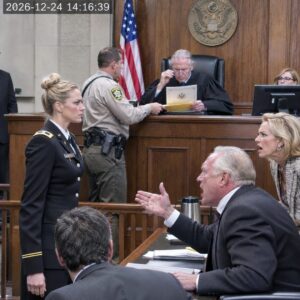
My Husband Left Me Penniless After Fifty-One Years—Then a Banker Read My Father’s Letter and Locked the Doors
The morning after our divorce became final, my husband handed me twenty dollars and told me to take the bus.
Fifty-one years of marriage, three children, and a lifetime spent making his comfort look effortless had apparently been worth less than a tank of gas.
Three days later, when I placed my father’s unopened letter on a banker’s desk, she read the first paragraph, went pale, and quietly locked her office door. “Mrs.
Whitaker,” she said, reaching for her telephone, “before we discuss your money, I need to know whether your former husband knows you’re here.” Until that moment, I had believed the worst thing Robert had done was leave me.
I was seventy-three years old, standing in a borrowed coat with a suitcase that smelled faintly of my daughter’s garage, and I still had not understood that being abandoned might have saved my life.
My name is Eleanor Whitaker, though the people who love me call me Ellie.
Robert used to call me that, too, before my name became something he shouted from another room whenever he needed his glasses, his dinner, or someone to blame.
We had married in Columbus, Ohio, when I was twenty-two and he was twenty-four.
Our first apartment had a radiator that knocked like a stranger at midnight, and our wedding china consisted of four plates purchased with grocery-store stamps.
I worked the early shift at a bakery while he sold industrial equipment.
When our first child arrived, I stayed home because Robert said his career needed flexibility.
When his mother became ill, I took care of her because Robert said strangers would upset her.
When he opened his own business, I kept the books at our kitchen table because Robert said an outside accountant would waste money.
Every decision sounded reasonable by itself.
Together, they built a life in which his name appeared on everything important and mine appeared beside emergency contact.
I did not notice the shape of that life until he dismantled it.
The divorce began with an envelope beside my breakfast plate.
Robert stood at the counter wearing the navy sweater I had given him for Christmas, watching me read as if I were opening a warranty notice.
He told me he had met someone who made him feel young.
Her name was Vanessa, she was forty-six, and she sold luxury homes. “We’ve become roommates,” he said.
I looked at the coffee I had made him, the prescription bottles I had arranged by day, the grocery list written in my handwriting. “Roommates usually pay their own bills,” I answered.
His mouth hardened.
By lunchtime, the joint checking account had been emptied.
By evening, he was explaining that the house belonged to a company, the company had debts, and there would be very little to divide.
I learned later how much preparation lay behind those calm sentences.
At the time, all I heard was the refrigerator humming while my entire life changed around it.
I did not simply agree to leave with nothing.
That is the part people always want explained, as though a woman can lose fifty-one years only by failing to read a document.
I hired an attorney named Martin Cole with money I earned selling two bracelets.
He filed requests, asked questions, and tried to trace accounts Robert claimed had disappeared into business losses.
But Martin was a neighborhood lawyer approaching retirement, and Robert arrived with a financial specialist, a stack of statements, and an urgency that made every delay sound expensive.
The business had been transferred years earlier.
The home sat inside an entity I had signed papers for without understanding them, believing we were simplifying estate planning.
Robert described family loans, personal guarantees, and tax obligations.
Each explanation led to another document, another bill, another hearing.
Martin warned me that the disclosures looked incomplete.
He also warned me that getting to the bottom of them would cost money I did not have.
A small account in my name would cover some legal fees.
A temporary support arrangement kept me afloat while the case dragged on, but Robert missed payments, disputed expenses, and threatened bankruptcy.
By the time we reached a settlement, I was exhausted enough to confuse an ending with relief.
The agreement gave me a modest payment payable in installments and responsibility for debts Robert insisted were mine.
The first installment never arrived.
My attorney was preparing an enforcement motion when Robert changed the locks.
Our oldest son, Andrew, said he could not take sides because his construction company depended on contracts from his father.
Our daughter, Melissa, cried and cleared a space beside the freezer in her garage for my belongings.
Our youngest, Daniel, lived in Colorado and said he needed time to process everything.
I understood their shock.
What I could not understand was how quickly their shock became my inconvenience.
Melissa’s husband did not want a long-term houseguest.
Andrew suggested a senior apartment without offering the deposit.
Daniel sent flowers with a card that said, Hang in there, Mom.
So I stayed with my friend June Keller, a retired school librarian who put clean sheets on her spare bed and never once asked how long I intended to remain.
On my third morning there, I emptied the suitcase looking for my Social Security card.
Beneath a wool scarf lay a narrow cedar box.
My father had given it to me shortly before his death in 1998.
He had been a quiet man named Samuel Bennett, a machinist who smelled of metal shavings and peppermint.
Inside the box were my mother’s wedding band, an old photograph, and an envelope addressed to Eleanor Bennett Whitaker.
The instructions on its front read: If you ever need a place to begin again, take this unopened to a trust officer at Franklin Union Bank.
I had brought it out twice over the years.
Both times, Robert told me my father had probably left a forgotten savings bond and offered to handle it.
Both times, something stubborn in me put it away again.
Now I had twenty dollars, an unpaid settlement, and a place to begin again.
June drove me downtown.
Franklin Union occupied a limestone building with brass doors and a lobby so quiet I could hear the rubber tips of my cane against the marble.
The receptionist offered me an appointment the following week until she saw my father’s name on the envelope.
She made a call, listened, and asked us to wait.
Ten minutes later, a woman in her early sixties introduced herself as Margaret Ellis, senior trust officer.
She escorted us into an office overlooking the street and offered water before asking for identification.
I apologized for wasting her time with what might be an old account worth forty dollars.
She smiled politely, but the smile vanished when she examined the envelope.
The flap bore my father’s signature across its seal.
Beneath it was a reference number written in blue ink.
Margaret asked permission to open it.
I nodded.
She read the letter once, then again, more slowly.
That was when she locked her door and asked whether Robert knew I was there. “No,” I said. “Why would that matter?” She did not answer immediately.
Instead, she called someone named Leonard Price and requested the Bennett archive, including the exception correspondence.
When she hung up, she folded her hands on the desk. “Your father established a trust for you,” she said. “There are historical records we need to verify before I can discuss its current value.
There is also a security concern.” June leaned forward. “What kind of concern?” Margaret looked at me. “Several years after your father died, someone submitted documents claiming that you were deceased.” For a moment, I could hear nothing but the blood moving in my ears. “I’m sitting right here.” “Yes,” she said softly. “And I am very glad you are.” She explained that the submission had failed verification.
The bank had neither released the assets nor accepted the claim.
Its staff had attempted to contact me at the address on file, then followed the protective procedures built into the trust.
I remembered mail that never reached me, phone calls Robert answered, the way he had taken over our paperwork after my father’s funeral.
I remembered him telling me that Dad had left debts rather than money.
Margaret was careful.
She would not name the sender until the records were retrieved and reviewed.
But she slid my father’s letter across the desk, and I began to read.
Ellie, it said, if you are holding this because someone has made you feel small, remember that small is not the same as powerless.
I have made provisions that belong to you alone.
You need not earn them by being useful to another person.
I stopped there because my hands were shaking too badly to hold the page.
For fifty-one years, I had been useful.
Useful when the children were sick.
Useful when the business struggled.
Useful when Robert needed a signature, a hostess, a nurse, a witness who would remember events the way he preferred.
My father had put something aside for the woman underneath all that usefulness.
Across from me, Margaret quietly placed a box of tissues within reach.
Leonard arrived carrying a locked document case and wearing the grave expression of someone who understood that numbers could hurt people.
He was the bank’s outside trust counsel, not my lawyer, a distinction he made before saying anything else.
They verified my identity through several records, asked about my father, and explained that formal access would require additional checks.
Nothing was going to be transferred merely because I possessed an envelope.
Still, by the end of that meeting, they could tell me enough to make the floor feel unsteady beneath my shoes.
My father had owned more than the small machine shop I remembered.
In the late seventies, he had helped a struggling engineer develop a component used in manufacturing equipment.
Unable to afford cash payment, the engineer gave him a minority ownership interest.
My father kept working because he liked working.
He never bought a bigger house, never drove anything grander than a pickup, and never discussed the investment with people who might tell him what to do with it.
When the company was acquired, his shares produced a substantial payment.
He placed part of it in a trust for my mother, who died before him, and the remainder in a separate trust for me.
The assets had been managed and invested for nearly three decades.
Margaret showed me a preliminary statement with a figure just above eight million dollars.
I stared at it until the digits stopped looking like money and became an absurd series of shapes. “There has to be a mistake.” Leonard shook his head. “We will confirm the full accounting.
Your father’s contribution, the investment history, and the trust documents are all in the archive.” I thought about the bakery, about stretching hamburger with oats when the children were little, about the winter I wore cardboard inside a leaking boot because Robert needed a new suit for a sales conference. “Why didn’t he tell me?” Margaret did not invent an answer.
She pointed me back to his letter.
Your mother and I worried about the way Robert speaks over you, my father had written.
I hope we are mistaken.
I do not wish to put a weapon into your marriage.
I wish to leave a door that cannot be locked from the other side.
The trust had initially retained the funds under management, with instructions allowing distributions when I personally requested assistance and completed verification.
My father expected the envelope to bring me to the bank.
The failed death claim had triggered further safeguards.
Leonard said there had also been suspicious documents purporting to transfer my interest, which the trustees had rejected.
I asked to see the correspondence.
He hesitated, then explained what could be provided after the records review.
June squeezed my hand. “One thing at a time, Ellie.” Margaret arranged a follow-up meeting and referred me to an independent attorney experienced in trusts and complex financial disputes.
Before we left, I looked through the window at people crossing the street with lunch bags and umbrellas.
The world looked exactly as it had an hour earlier.
Only mine had changed.
In the lobby, June asked whether I wanted to celebrate.
I told her I wanted a cheeseburger.
For the first time in weeks, I was hungry.
The independent attorney was named Rachel Monroe.
She wore flat shoes, kept no family photographs on her desk, and listened without interrupting while I explained my marriage, the divorce, and the bank.
When I finished, she asked for every document I had signed in the past ten years.
I almost laughed. “That could fill a moving truck.” “Then we’ll start with the divorce file and work backward.” She did not promise revenge or immediate victory.
She explained that the trust and the divorce were separate issues requiring coordinated review.
Whether any funds might be treated as marital property depended on the documents, distributions, and applicable law.
Whether the divorce judgment could be challenged depended on the evidence and procedural deadlines.
But forged records and concealed assets were serious matters, and there were steps she could take immediately to preserve evidence and protect my accounts.
Her steadiness helped more than excitement would have.
She contacted Martin with my permission, and he sent his file that afternoon.
His cover note said he had suspected undisclosed transfers but lacked the resources to investigate them fully.
Rachel read it without comment.
The following morning, she accompanied me to the bank.
This time, Leonard had copies ready.
The rejected death submission had arrived in 2006 through an intermediary claiming to represent my estate.
The attachments included a purported death certificate and letters asserting that Robert was entitled to act.
The bank had found inconsistencies, confirmed that the certificate did not match official records, and declined the request.
Later communications included a supposed assignment bearing my signature.
I recognized that signature immediately.
It resembled mine as it had appeared on a birthday card, including the awkward loop I made after injuring my wrist.
Someone had copied it carefully.
The cover correspondence carried the letterhead of a consulting business connected to Robert’s former accountant.
Rachel asked precise questions and took notes.
I could barely speak.
In 2006, I had undergone surgery on my knee.
Robert had brought flowers to my hospital room and told our children he did not know what he would do without me.
During that same year, someone had tried to persuade a bank that I was dead.
The bank’s contact history showed letters sent to our house and messages left on our landline.
One response, allegedly from me, requested that further communication go through my husband because I was overwhelmed by health issues.
The bank had refused to rely on that instruction without direct authentication, but the attempts to reach me had dwindled after its legal department secured the account.
Rachel laid a hand beside mine, close enough to be reassuring without touching. “We need to establish who created and sent these.
The documents alone don’t tell us every person involved.” I appreciated her care, even while anger moved through me like heat returning to a frozen room.
That evening, Robert called.
I had not heard his voice since the bus money. “Andrew says you’ve been downtown,” he said. “What are you doing, Eleanor?” It was the first time in years he had asked about my day.
I told him I had errands.
He was quiet long enough for me to hear a television in the background and Vanessa saying something about dinner reservations. “You need to be careful,” he said. “There are people who prey on elderly women.” I looked at June across her kitchen table.
She watched my face, set down her tea, and reached for a pencil. “I have an attorney,” I replied. “A new one?” The question came too quickly. “Yes.” His voice changed into the patient tone he used when explaining something he believed I was too foolish to understand. “Don’t let someone convince you there’s money hidden somewhere.
You’ll spend the little you have chasing fantasies.” “Then you have nothing to worry about.” He hung up without saying goodbye.
June wrote the time and the words we could remember.
Rachel had asked me to preserve messages and make contemporaneous notes of conversations.
We did not turn ourselves into detectives.
We simply stopped letting events disappear.
Within a week, the trust verification was completed, and an authorized distribution went into a new account under my sole control.
I rented a small furnished apartment overlooking a neighborhood park.
June helped me choose towels.
I bought a coat with a lining that did not snag and shoes that fit my swollen feet.
Those purchases moved me more than the balance in the account.
For decades, I had asked whether we could afford something for me.
Now the question was whether I wanted it.
Meanwhile, Rachel brought in a forensic accountant named Olivia Grant, who began examining the divorce disclosures against bank records obtained through proper channels.
The first clear discrepancy involved a warehouse Robert had described as sold to satisfy debt.
The buyer was a company controlled through another business associated with Vanessa.
There were additional transfers, consulting payments, and a loan whose supporting documents did not match the money trail.
Rachel sought court relief and requested preservation of relevant records.
She also helped me report the suspected forged trust submissions.
Investigators would decide what charges, if any, the evidence supported.
I expected the discovery to bring my children closer.
Instead, Andrew appeared at my apartment carrying pastries and a warning.
Dad was under pressure, he said.
The business supported employees.
Public accusations could hurt everyone. “Did you come to ask whether I’m all right?” I asked.
He looked toward the window. “Of course.” “Then ask.” He finally did, but by then I was crying, and he seemed bewildered by tears that did not resolve into reassurance.
I told him about the false death claim.
His face went slack. “You don’t know Dad did that.” “I know someone tried it.
I know I never saw the letters.
I know your father controlled the mail.” Andrew stared at his hands.
Before leaving, he asked whether I really had millions.
I answered with a question of my own. “Would you be sitting here if I still had twenty dollars?”
Melissa came the next day without pastries, excuses, or her husband.
She brought the cedar box, which I had left at June’s, and a folder she had found among old family photographs.
Inside were papers from my father’s estate that Robert had given her years earlier when she was helping organize his office.
She had never examined them.
One page was a photocopy of a letter from Franklin Union acknowledging receipt of documents concerning the Bennett trust.
Another contained my father’s handwriting: Ellie must speak for herself.
Melissa began crying before I said anything. “I put your suitcase in the garage.” “You gave me somewhere to put it.” “That’s not the same as giving you somewhere to belong.” We sat together for a long time.
I did not tell her that everything was forgiven, because it was not.
But I told her I was glad she had come.
She admitted that Robert had called each of the children before telling me about the divorce.
He had said I was confused, spending impulsively, and becoming difficult to live with.
He had described the financial settlement as generous.
When I complained, they had filtered my words through the story he had already supplied. “You thought I was losing my mind,” I said.
She lowered her head.
I remembered Andrew asking whether I took my medication regularly and Daniel suggesting a cognitive evaluation during a telephone conversation about grocery money.
The humiliation of those memories was sharp, but beneath it lay an explanation.
Robert had not merely hidden money.
He had prepared an audience that would doubt me.
Rachel took the new papers and asked Melissa to write an account of what she had personally seen and heard.
Daniel called that evening after speaking with his sister.
He stayed on the phone for two hours and finally said the sentence I had needed weeks earlier: “Mom, I believe you.” A few days later, the story changed again.
Olivia located payments to a storage facility outside Dayton, billed through a business account Robert had said was inactive.
Rachel sought the relevant records and learned that the unit contained archived company files.
Before access could be arranged, the facility reported that someone had requested removal of its contents.
Rachel moved quickly to seek an order preserving the records.
I was at her office when she received confirmation that the files would remain in place pending the court’s direction.
She exhaled and looked at me. “There may be original documents there.” That night, I could not sleep.
My father’s letter lay on the bedside table beside my glasses.
I read it again, including a passage I had barely noticed before: If questions arise about the shop, speak to Henry Mercer.
He knows what I could not put on paper while you were still trying to keep peace.
Henry had been Dad’s closest friend.
I remembered a laugh like gravel and a little white house somewhere near Chillicothe.
I also remembered Robert telling me, after the funeral, that Henry wanted nothing more to do with our family.
Henry Mercer was eighty-eight and very much alive.
His granddaughter answered the number Rachel’s assistant located through public listings, listened to my name, and put him on the phone. “Ellie?” he said. “Good Lord.
Where have you been?” I sat down.
He told me he had tried to reach me after my father’s death.
Robert said I was too upset to talk and later claimed I wanted no contact.
Henry had sent a letter, received a terse reply supposedly from me, and respected what he thought was my decision.
Three days later, June and I drove south to see him.
Rachel knew where we were going and had reminded me that memories were leads, not proof.
The road rolled through fields beginning to turn gold, and for the first time in years, I felt the old excitement of going somewhere without arranging someone else’s comfort first.
Henry lived with his granddaughter, Caroline, in a farmhouse with a blue porch.
He stood when I entered, leaning heavily on a walker, and held both my hands. “You look like your mother.” I cried before we reached the chairs.
He waited until I was ready, then told me that my father had once lent Robert money to expand the equipment business.
The arrangement included a written repayment obligation and a security interest in certain business assets.
Robert later claimed the loan had been forgiven.
My father said it had not.
Their disagreement had become ugly enough that Dad began keeping copies of everything away from his own house. “Your father wasn’t afraid of an argument,” Henry said. “He was afraid you’d pay for it.” He asked Caroline to bring a metal box from his closet.
Inside were letters, canceled checks, and copies of signed agreements.
There was also a small notebook in which my father recorded conversations by date.
I recognized his careful printing.
One entry described Robert demanding that the debt be canceled because family should help family.
Another read: R says Ellie will choose him.
Told him this isn’t a contest.
Henry had retained the documents because my father asked him to, then waited for a daughter who never knew she was supposed to come.
Not every page would prove useful.
Some might be too old, some merely context.
But one item made my chest tighten.
It was a letter Robert had written acknowledging the outstanding balance and offering a schedule of payments.
The date was three months before Dad died.
The amount was substantial, and the payment schedule extended well beyond his death.
Yet the estate papers Robert had shown me years earlier listed the obligation as satisfied.
On the drive home, June said very little.
I watched barns and grain silos pass in the late afternoon light, holding the box on my lap.
I had thought my father left me a fortune.
Now I understood that he had also left a trail.
Following it would take me through places I had avoided for half a century, including the hardest place of all: the truth about the man I married.
Robert came to my apartment before Rachel had finished reviewing Henry’s documents.
I had not given him the address.
He said Melissa had, though she later denied it, and I never established exactly how he found me.
I opened the door with the chain in place.
He wore the same navy sweater, and for a strange instant I felt an old impulse to ask whether he had eaten. “We need to talk privately,” he said. “You can speak to Rachel.” “For God’s sake, Ellie.
Fifty-one years, and now you hide behind a lawyer?” Hearing the nickname hurt more than the anger.
I kept the chain fastened.
He said Vanessa had left him, or was threatening to leave him; his account shifted twice within a minute.
He said the warehouse transfer was ordinary business.
He said Andrew was terrified of losing contracts.
He said I was destroying the family over misunderstandings.
Then he mentioned Henry. “That old man has always hated me.” I had not told him about our visit. “How do you know I saw Henry?” He looked away. “People talk.” I asked him about the false death certificate.
For the first time, he had no prepared answer.
He rubbed his mouth, glanced down the hall, and lowered his voice. “The accountant handled things badly.” “What things?” “Your father’s money was sitting there doing nobody any good.
We had responsibilities.
You wouldn’t have understood.” I felt myself go cold.
He had not admitted every act.
He had not explained who forged which document.
But he had revealed the belief underneath them: money left to me was money wasted unless he could use it. “I was alive,” I said.
He frowned, impatient with the obvious. “Of course you were alive.” “Then why did anyone tell the bank I was dead?” He stepped closer to the gap. “Stop repeating that.
You’re making it sound monstrous.” I closed the door.
Through the wood, he said he could still help me avoid embarrassment.
I called Rachel after he left and wrote down the conversation while it was fresh.
The next morning, she arranged for a formal notice directing communication through counsel and discussed practical security measures with me.
I changed routines, informed the building manager, and let June know when I was out.
I resented having to think that way, but resentment did not make a locked door unnecessary.
At the hearing on the financial records, Robert appeared with a new attorney and an expression of injured dignity.
I wore a green dress I had purchased because I liked the color.
Olivia explained the discrepancies she had found, grounding each statement in documents rather than suspicion.
The judge directed further disclosure and maintained restrictions against destroying or transferring relevant records.
There was no dramatic announcement awarding me everything.
There was something better: questions Robert could no longer dismiss by telling me I did not understand business.
The storage files supplied answers slowly, in cardboard boxes that smelled of dust and printer toner.
Rachel’s team reviewed them alongside the newer records, and Olivia built a timeline that separated legitimate transactions from transfers requiring explanation.
The warehouse sale had routed value away from the business without the full disclosure Robert had represented in the divorce.
A consulting arrangement sent recurring payments to an entity connected to Vanessa.
Documents concerning my father’s loan contradicted the satisfaction record in the estate materials.
The investigators examining the trust submissions pursued their own evidence, including the intermediary’s role and the origins of the false certificate.
I learned to tolerate the phrase we cannot conclude that yet.
It had irritated me at first.
After years of living with Robert’s certainty, though, I began to see the dignity in someone refusing to pretend.
During those months, my own life expanded in small directions.
I joined a water exercise class.
I learned the names of three neighbors.
I bought an electric kettle without comparing its price to the cost of Robert’s preferred coffee.
Daniel visited and repaired a loose cabinet hinge, then apologized when he realized he had spent the first hour doing tasks instead of listening.
We walked in the park, and he asked questions about my childhood that none of my children had asked before.
Andrew took longer.
He lost one contract, blamed the dispute, and sent a message saying I needed to consider the consequences.
I replied that consequences had been considered for me all my life.
He did not answer for twelve days.
Then he arrived with a copy of an email from Robert instructing him to keep certain invoices out of the records provided to Olivia.
Andrew had refused, but only after sitting with it overnight. “I wanted there to be an innocent explanation,” he said. “So did I.” That was the first conversation we had without either of us trying to protect his father from what his father had done.
Andrew’s business survived, although he had to find other clients.
He began therapy, something he once called indulgent.
Melissa started visiting on Sunday mornings, sometimes with her children, sometimes alone.
We made pancakes and talked honestly about the years when I had solved every problem before anyone else noticed it existed.
She said she wanted to repay me.
I told her love was not an invoice.
Trust, however, required different behavior.
By winter, Robert’s carefully arranged life was beginning to unravel.
His attorneys stopped describing the disputed transfers as irrelevant.
They proposed negotiations.
Rachel showed me an offer that included payment of the original settlement arrears and a larger financial adjustment in exchange for resolving the civil dispute.
I read it twice, then asked whether accepting it would require pretending none of the other events had happened. “No,” she said. “And no private agreement can dictate what investigators choose to pursue.” I set down the papers.
For once, I had enough money to be patient.
The second great revelation came from Vanessa.
She contacted Rachel through her own attorney and offered records, apparently hoping to separate herself from conduct she said predated her relationship with Robert.
I did not know whether to believe her motives, and Rachel reminded me that documents could be useful regardless of motives.
Among the materials were messages in which Robert discussed the Bennett trust long before filing for divorce.
He knew it existed.
He had monitored whether the bank would relax its safeguards.
He had also described me as “manageable” and complained that the trust required my direct participation.
One message, sent only weeks before he placed the divorce envelope beside my breakfast, read: She’ll come around when she realizes she can’t live on her own.
I understood then why the unpaid settlement, the emptied account, and the children’s warnings had fit together so neatly.
Whether every act had been coordinated would have to be established through evidence, but his expectation was plain.
He believed desperation would return me to his control.
There was also a draft agreement, prepared but never presented, under which we would supposedly reconcile and I would authorize investment of trust distributions in one of his ventures.
Vanessa’s attorney said she had discovered it after Robert promised her that his divorce would release money.
Whatever story he had told each woman, he had been counting on mine.
I asked to meet Vanessa once, with our attorneys present.
Rachel advised that I did not need to do so, but respected my choice.
Vanessa looked older than the photograph Robert had left on his phone where he knew I would see it.
She wore a cream suit and held her handbag so tightly that the clasp dug into her palm. “He told me you were taken care of,” she said. “He told me you had agreed to the divorce.” “I agreed to end a marriage,” I replied. “I did not agree to be lied about.” She nodded.
I did not absolve her.
There were messages she could not explain away, and her role in the property transactions still required examination.
But I saw that Robert had sold her a future using pieces stolen from my past.
Before leaving, she said, “He told me you never asked questions.” I thought of all the questions I had swallowed to keep dinner peaceful, Christmas pleasant, the children comfortable. “I asked,” I said. “He taught me that asking twice would cost me.” After that meeting, I went home and removed Robert’s number from the favorites in my phone.
It was a small action, absurdly late, but my thumb trembled as I did it.
June came over with soup and found me sitting on the floor sorting photographs.
We kept pictures of the children, my parents, birthdays, vacations, ordinary mornings.
I did not throw away fifty-one years because the ending was cruel.
There had been real happiness in some of them, even if I now understood its price differently.
What I discarded was the obligation to use those happy moments as an excuse for everything else.
Spring brought a resolution to the civil case.
After additional discovery, negotiations, and court proceedings, the financial provisions of the divorce were revised through an agreed order.
I received the overdue amounts, a substantial additional payment reflecting the assets and transfers that had not been properly disclosed, and a contribution toward legal costs.
The arrangements included enforceable terms rather than Robert’s assurances.
Matters involving my father’s estate were addressed separately where they could be, and Rachel made certain I understood each provision before signing.
For the first time in my adult life, nobody hurried me through a page.
Robert sat across the conference table with skin that looked loose around his jaw.
When his attorney stepped out, he leaned forward. “You won,” he said.
I looked at the hands I had once held in church. “I got accurate information.” He shook his head as though I had failed to understand the rules of an argument. “Eight million dollars, Ellie.
You could have helped me.” There it was again, his instinctive ownership of anything that might relieve him of responsibility. “My father did help you,” I said. “You know how that ended.” He looked toward the closed door.
Then he tried tenderness.
He remembered our first apartment, the radiator, the time we drove to Lake Erie with six dollars and sandwiches in waxed paper.
He remembered the night Andrew was born and how frightened he had been.
Every memory was true.
That was what made it painful.
I had not married a villain from the first page of a story.
I had married a man capable of kindness who gradually decided kindness was something other people owed him. “We weren’t always like this,” he said. “No,” I answered. “But we are like this now.” He asked whether we might have coffee sometime after the lawyers were finished.
I told him I would not meet privately.
His eyes hardened, and the brief warmth disappeared. “Your father always interfered.” I gathered my folder. “He left me a door.” The criminal investigation took longer.
I did not attend every interview or hear every argument.
Eventually, charges were brought against Robert and the intermediary involved in the fraudulent submissions.
The case was resolved through pleas covering specified acts supported by the evidence.
Robert received a sentence that included time in custody and financial penalties; the intermediary faced separate consequences.
I took no pleasure in the sight of a man in his seventies entering a prison van.
I also did not confuse my lack of pleasure with a duty to rescue him.
Andrew attended the sentencing.
Melissa stayed with me afterward.
Daniel called from Colorado and let me talk until I ran out of words.
For dinner, we ordered Chinese food and watched a baseball game with the sound turned low.
The ordinary evening felt almost indecent after so much upheaval.
Then I realized that ordinary was precisely what I had been fighting to recover: a meal without fear, a phone call without instructions, a night in which someone else’s wrongdoing did not determine the shape of my sleep.
I bought a modest house near June, with two bedrooms, a sunroom, and a maple tree that turned the windows gold in October.
Rachel and an independent financial adviser helped me make plans I understood.
We reviewed taxes, expenses, investments, and the cost of living long enough to be old in ways I had not yet imagined.
I did not spend as though eight million dollars made every decision harmless.
The trust had given me freedom, and I wanted that freedom to last.
I established support for a local organization that helped older women navigate housing and financial upheaval, funding professional services rather than expecting volunteers to solve complex problems with goodwill alone.
I paid for Henry’s porch to be rebuilt after learning the steps were unsafe.
He protested until I told him it was my father’s money visiting an old friend.
June accepted a trip to Maine only after I agreed she could buy the lunches.
We stood beside the ocean in jackets that snapped in the wind, laughing like girls when a wave soaked our shoes.
At home, my grandchildren discovered that Grandma had opinions about music, liked mysteries, and could be persuaded to eat ice cream before dinner.
Melissa asked me one afternoon whether I regretted the years I had spent with their father.
I watched her youngest child trying to persuade a squirrel to accept a cracker. “I regret the years I spent believing I had no choices,” I said.
That was as honest an answer as I could give.
Regret is not a ledger that can be balanced with money.
Neither is love.
Some mornings, I still reached toward the empty side of the bed before remembering why it was empty.
Sometimes a song in a grocery store brought back a younger Robert and left me standing beside the cereal with tears in my eyes.
Healing did not require those memories to vanish.
It required me to stop following them back into a life that had hurt me.
On the first anniversary of the day I walked into Franklin Union, Margaret invited me to lunch.
She asked how the house was, how the children were, whether I still had my father’s letter.
I told her it hung in a simple frame in the sunroom, where I could read it without making a ceremony of it.
She smiled. “I wish he could have seen you walk in.” “I think he knew I might need to.” That evening, I found an envelope on my porch.
It contained a letter from Robert, forwarded through an approved channel, asking for help with expenses and saying that fifty-one years ought to count for something.
I read it once.
Then I placed it in the folder Rachel kept for correspondence and went outside to join June, who was waiting beside the maple tree with two cups of coffee.
Across the street, a little boy was learning to ride a bicycle.
His father ran beside him until the child realized the supporting hand had fallen away.
For a moment, the boy wobbled.
Then he steadied himself and kept going.
June watched me watching him. “What?” she asked.
I shook my head and smiled.
When Robert left, he thought he had taken everything that could hold me upright.
My father’s money helped me stand, but standing was something I had learned for myself.
I was seventy-four years old, the coffee was hot, and nobody was waiting inside to tell me when to come home.
THE END