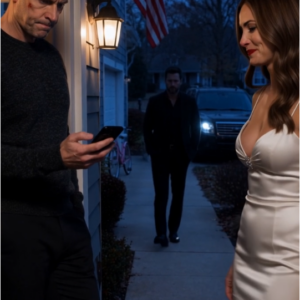
The moment my son walked into my living room after four years of silence, I knew he hadn’t come to apologize.
He looked around my newly renovated house in Charleston, South Carolina, admiring the expensive furniture, hardwood floors, and beautiful garden visible through the windows.
Then he smiled.
“Dad, you’re looking great.
Retirement certainly suits you.”
I placed my coffee on the table.
“What do you want, Brandon?”
He laughed awkwardly.
“Can’t a son visit his father?”
“A son can.
A stranger usually needs an appointment.”
His smile disappeared.
My name is Richard Bennett.
I’m sixty-seven years old, and four years earlier, I nearly lost everything.
My construction company collapsed after a major client declared bankruptcy.
Shortly afterward, I suffered a heart attack that required emergency surgery.
My wife, Margaret, had passed away two years before.
Brandon was my only child, and I believed he would stand beside me when things became difficult.
I was terribly wrong.
From my hospital bed, I called him.
“Brandon, I need some help.
The doctors say I can’t live alone for several weeks.”
He sighed impatiently.
“Dad, I’ve got my own responsibilities.”
“I’m not asking for money.
I just need someone around while I recover.”
“Hire a nurse.
I’m not putting my life on hold because you made bad business decisions.”
Then he hung up.
Three days later, I discovered he had blocked my number.
I spent weeks recovering with the help of my neighbor, Emily Carter, a forty-year-old schoolteacher who barely knew me at the time.
She brought groceries, drove me to medical appointments, and helped organize my overwhelming paperwork.
Whenever I offered payment, she refused.
“You’d do the same for someone else, Richard.”
Eventually, I sold my remaining business assets, negotiated my debts, and started working as an independent construction consultant.
My experience attracted several major clients.
Within four years, I had rebuilt my financial stability and accumulated considerable savings.
A local business magazine recently published an article about my recovery.
Apparently, Brandon had read it.
He sat across from me, adjusting his expensive watch.
“I heard you’ve been doing extremely well.”
“Well enough.”
“And this house must be worth a fortune now.”
I remained silent.
He leaned forward.
“Dad, you’re getting older.
We should probably discuss your inheritance arrangements.
You know, make sure everything stays within the family.”
I stared at him.
“You disappeared when I was lying in a hospital bed, and now you’re worried about my inheritance?”
“Come on.
That was years ago.”
“You blocked my number.”
“I was under pressure!”
“You didn’t even know whether I survived.”
He stood abruptly.
“I’m your only son!
Whatever happens, I’m entitled to something!”
I rose slowly from my chair.
“I don’t have any son.”
His face turned red.
“What did you just say?”
“You heard me.”
He slammed his palm against the coffee table.
“You can’t cut me out!
Mom would never have allowed this!”
“Don’t use your mother’s memory to justify your greed.”
At that moment, Emily entered through the kitchen carrying groceries.
Brandon looked at her suspiciously.
“Who’s this?”
“Someone who understands what family means.”
He laughed bitterly.
“Oh, I get it.
She’s after your money!”
Emily froze.
I pointed toward the front door.
“Get out of my house.”
Brandon grabbed his jacket.
“You’ll regret this, Dad.
I promise.”
After he left, Emily placed the groceries on the counter.
“Richard, there’s something you should know.”
She handed me an envelope that had arrived that morning.
It contained a letter from Brandon’s attorney requesting information about my estate.
But the final paragraph made my blood run cold.
My son wasn’t simply asking about his inheritance.
He was preparing to challenge my ability to manage my own affairs.
The following morning, I visited my attorney, Susan Mitchell, who had handled my legal affairs for nearly twenty years.
She read the letter twice before removing her glasses.
“Richard, your son appears to be gathering information for a possible guardianship or conservatorship petition.”
“On what grounds?”
“He claims you’ve become mentally vulnerable and may be experiencing financial exploitation.”
I almost laughed.
“Because I refused to give him money?”
“Possibly.
But we need to take this seriously.”
Susan recommended an independent medical assessment and a thorough review of my financial records.
I agreed immediately.
Meanwhile, Brandon began contacting relatives I hadn’t spoken to in years.
He told them Emily was manipulating me, controlling my finances, and convincing me to abandon my family.
My younger sister, Linda, called that evening.
“Richard, Brandon says you’re giving everything to some woman.”
“Brandon hasn’t visited me in four years.”
“He’s still your child.”
“And where was my child when I needed help getting out of bed?”
Linda fell silent.
Two days later, Brandon arrived with his wife, Jessica.
She looked uncomfortable as he marched toward my porch.
“Dad, we need to settle this privately.”
“There’s nothing to settle.”
Jessica finally spoke.
“Richard, we’re having financial problems.”
Brandon glared at her.
“That’s irrelevant.”
“No, it isn’t,” she replied.
She explained that Brandon’s real estate investments had failed.
They were behind on mortgage payments and owed substantial amounts to several creditors.
Brandon interrupted her.
“We just need temporary assistance.”
“How much?” I asked.
He hesitated.
“About three hundred thousand dollars.”
I shook my head.
“No.”
His expression hardened.
“You’d rather watch your own son lose his house?”
“You watched your father nearly lose his life.”
Jessica lowered her eyes.
Brandon stepped closer.
“That woman has poisoned you against me!”
Emily appeared behind me.
“Your father makes his own decisions.”
“Stay out of this!”
He lunged toward the doorway, but Jessica grabbed his arm.
“Brandon, stop!”
I warned him that I would call the police if he refused to leave.
He stormed away, dragging Jessica behind him.
That afternoon, my medical assessment confirmed that I was fully capable of managing my finances and making independent decisions.
Susan also documented every major transaction in my accounts.
Emily had never received money beyond occasional reimbursements for groceries.
Brandon’s accusations had no factual foundation.
Nevertheless, Susan discovered something troubling while reviewing old documents connected to Margaret’s estate.
She called me into her office.
“Richard, do you remember the money Margaret left Brandon?”
“Of course.
Two hundred thousand dollars.”
“Did you know she also created a separate emergency reserve for your medical care?”
I frowned.
“No.”
Susan explained that another attorney had established the reserve before Margaret’s death.
Brandon had been entrusted with managing it exclusively for my benefit.
My hands began trembling.
“How much was in it?”
“Four hundred thousand dollars.”
She opened a folder containing statements obtained through a formal accounting request.
Almost the entire reserve had been withdrawn during the months surrounding my heart attack.
The money had financed Brandon’s real estate investments.
Susan then showed me a withdrawal authorization bearing my signature.
I recognized the date immediately.
It was the day I underwent emergency heart surgery.
“Richard,” she whispered, “you couldn’t possibly have signed this.”
My son hadn’t merely abandoned me during my darkest days.
He had apparently stolen the money his mother had specifically set aside to save my life.
For several minutes, I couldn’t speak.
I stared at the signature on the document, remembering the hospital room, the machines surrounding my bed, and the terrible loneliness I had experienced.
Margaret had anticipated that I might someday need help.
Our son had betrayed both of us.
Susan gently closed the folder.
“We need to preserve these records and report the suspected fraud.”
I nodded.
“Do whatever is necessary.”
The investigation began immediately.
Susan contacted the financial institution, requested additional records, and helped me submit a report to the authorities.
Several days later, Brandon received a formal demand for an accounting of the reserve.
He called me seventeen times.
Finally, I answered.
“Dad, this is a misunderstanding!”
“Did you take your mother’s money?”
“I was going to put it back!”
“Did you forge my signature?”
Silence.
“Brandon, answer me.”
“I needed capital!
My investments were supposed to make millions!”
I closed my eyes.
“You told me to hire a nurse while you were spending the money meant to pay for one.”
“Dad, please.
Don’t destroy my life.”
“You made those decisions yourself.”
He arrived at my house that evening, looking exhausted.
For the first time in years, he wasn’t wearing expensive clothes or pretending to be successful.
He stood on the porch with tears in his eyes.
“I’m sorry.”
“Are you sorry you stole from me, or sorry I found out?”
He began crying.
“I made a mistake.”
“A mistake is forgetting someone’s birthday.
You abandoned your sick father and took money intended for his recovery.”
He lowered his head.
“Can you withdraw the complaint?”
“No.”
His expression changed immediately.
“So you’re choosing that woman over your own blood?”
I opened the door wider.
Emily was sitting at the dining table, helping me prepare paperwork for a charitable project.
“She never asked for my money.
You came here asking how much you would receive when I died.”
Brandon clenched his fists.
“Then what happens to your estate?”
I looked directly into his eyes.
“Most of it will support a program that helps elderly people recovering from medical emergencies.
Emily will receive a personal gift because she stood beside me when nobody else did.”
“You’re giving strangers my inheritance?”
“It was never yours.”
He stared at me before turning away.
That was the last conversation we had for several months.
The investigation eventually uncovered evidence supporting the allegations of financial misconduct and forgery.
Facing criminal charges, Brandon accepted a negotiated plea agreement that included restitution obligations and supervised probation.
His investment properties were sold, and Jessica eventually separated from him.
I didn’t celebrate his downfall.
No father dreams of watching his child face criminal consequences.
But protecting him from accountability would only have encouraged him to continue hurting others.
With Susan’s assistance, I established a charitable fund in Margaret’s memory to provide temporary home care and transportation for elderly patients without reliable family support.
Emily agreed to serve on its advisory committee.
At the opening ceremony, she stood beside me beneath a photograph of Margaret.
“She would have been proud of you,” Emily said.
“I hope so.”
Nearly a year later, a handwritten letter arrived from Brandon.
He had found steady employment and started making restitution payments.
For once, his letter contained no request for money.
“Dad, I finally understand that I treated you like something I could use instead of someone I should love.
I don’t expect forgiveness.
I just wanted you to know I’m trying to become a better person.”
I read it several times.
Then I wrote back.
“Brandon, becoming a better man is your responsibility.
If you truly change, perhaps someday we can rebuild something.
But my estate is no longer a subject for discussion.”
I sealed the envelope and placed it beside Margaret’s photograph.
I still loved the little boy I had raised.
But I would never again sacrifice my dignity to protect the man he had become.
Because inheritance isn’t proof of love.
And sharing someone’s blood doesn’t automatically earn you a place in their life.