## THE WEDDING SLIDESHOW
## PART 1
“I didn’t sleep with any of them! Stop acting like it’s the end of the world!”
That’s what my fiancée, Madison, said when I confronted her with a video from her bachelorette party.
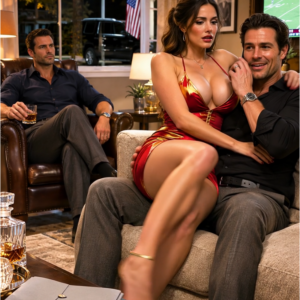
**One week before our wedding, several male dancers had been lifting her into the air while her friends screamed, laughed, and filmed everything.**
Madison had been drinking heavily.
But the next morning, she wasn’t embarrassed.
She laughed at me.
“Ryan, it’s a bachelorette party. That’s literally the point.”
I stared at her.
“So you think this is okay?”
She shrugged.
“Our wedding is already paid for. My dress is finished. Everyone’s coming.”
Then she smiled confidently.
**“We both know you’re not blowing up a wedding over one stupid night.”**
I said nothing.
She mistook my silence for forgiveness.
Six days passed.
The night before our wedding, another version of the Nashville video appeared online.
This one was much longer.
And it showed something the original clip hadn’t.
**Something that happened BEFORE her friends started cheering.**
I watched it twice.
Then I paused on one particular moment.
My hands went cold.
I picked up my phone and called the man responsible for our wedding slideshow.
“Is it already loaded?”
“Yes, sir.”
“I need to replace it.”
“All of it?”
“Every slide.”
The next afternoon, Madison walked down the aisle smiling.
We exchanged vows.
We took photographs.
At the reception, she squeezed my hand beneath the table.
“See? I told you everything would be fine.”
I smiled back.
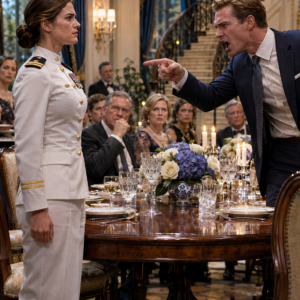
Minutes later, the lights dimmed.
Over a hundred guests turned toward the giant screen, expecting our romantic engagement slideshow.
Madison leaned back confidently.
Then the first image appeared.
**Her fingers suddenly tightened around mine.**
The color drained from her face.
“Ryan…” she whispered.
She recognized what was on that screen before anyone else did.
And for the first time since Nashville, my fiancée wasn’t laughing.
## PART 2
The first image wasn’t a photograph of Madison kissing another man.
It was a photograph of us.
Taken three years earlier, standing outside the little coffee shop where we’d had our first date.
Madison wore a blue sweater. I had my arm around her shoulders. We were both smiling at the camera.
For a moment, I heard people around us sigh affectionately.
Then the words beneath the photograph appeared.
**“THREE YEARS OF PROMISES.”**
Madison stopped breathing for a second.
Because she knew what came next.
The photograph faded.
A second image appeared.
It was a still frame from the longer Nashville video.
Madison stood beside one of the male dancers. Her arm was around his neck, and his hands rested on her waist.
The image itself wasn’t particularly shocking.
What mattered was the expression on her face.
She wasn’t being lifted into the air.
She wasn’t surrounded by screaming women.
She was looking directly at him.
And the next image made the entire room go quiet.
It showed Madison leaning forward and kissing him.
Not a quick, accidental touch.
Not a staged photograph taken at the wrong angle.
A deliberate kiss.
Her hands were on his face.
His arm was around her.
And the camera had captured the moment clearly.
Someone near the front whispered, “Oh my God.”
Madison dug her fingernails into my hand.
“Turn it off,” she whispered.
I looked at her.
“Why?”
“Ryan, please.”
“That’s what I asked you to do with the video last week. Remember?”
Her eyes filled with panic.
On the screen, the photographs disappeared.
Then the actual footage began.
It lasted less than twenty seconds.
But those twenty seconds changed the atmosphere of our wedding reception completely.
The video showed Madison standing beside the dancer while her friends encouraged her.
Someone behind the camera laughed.
Madison stepped closer.
She wrapped both arms around his neck and kissed him.
When she pulled away, she laughed and said something the microphone barely captured.
Then her friends erupted into cheers.
Only after that did the dancers lift her into the air.
The same moment I’d seen in the original video.
Except now everyone understood what had happened immediately before it.
The video ended.
The screen went black.
Nobody applauded.
Nobody laughed.
A hundred people sat in stunned silence.
Madison slowly released my hand.
“You did this?” she whispered.
I didn’t answer immediately.
She turned toward me.
“You deliberately showed that to everyone?”
“Yes.”
Her voice rose.
“At our wedding?”
“Yes.”
She stared at me as though I’d suddenly become a stranger.
Then she stood.
“You humiliated me!”
Several guests turned toward us.
I remained seated.
“Madison, sit down.”
“No! You don’t get to tell me to sit down after doing something like that!”
Her mother was already approaching our table.
“What’s going on?” she demanded.
Madison pointed at the screen.
“Ryan put that video up there to embarrass me!”
Her mother looked between us.
“Is that true?”
I stood.
“The video is real.”
“That wasn’t my question.”
“Yes,” I said. “I arranged for it to be shown.”
Madison gave a sharp, disbelieving laugh.
“Unbelievable.”
And maybe it was.
Even standing there, surrounded by the people we’d invited to celebrate our marriage, I understood that I’d made a choice I couldn’t take back.
I had publicly exposed something deeply personal.
Some people would call it justified.
Others would call it cruel.
But I hadn’t done it because I wanted to hear a room full of strangers condemn my wife.
I’d done it because she had spent a week convincing me that what I saw with my own eyes didn’t matter.
And because, until that moment, she’d been certain I would never challenge her.
Her father approached our table.
He looked at Madison first.
“Is that really you?”
She folded her arms.
“Dad, don’t start.”
“Madison.”
“Yes, it’s me.”
He glanced toward the screen.
“Did Ryan know about this before today?”
She looked away.
“That’s complicated.”
“No,” I said quietly. “It isn’t.”
I turned toward him.
“I saw a shorter video last week. I confronted Madison about it. She told me nothing inappropriate had happened.”
Madison interrupted.
“I told you I didn’t sleep with anybody!”
Her father closed his eyes.
Nobody spoke.
Then he asked the question I’d spent the entire week trying to get Madison to understand.
“Why did you think that was the only thing that mattered?”
Madison looked at him, stunned.
“Are you seriously taking his side?”
“I’m asking you a question.”
She shook her head.
“It was my bachelorette party. Everybody was drinking. It was supposed to be fun.”
Her mother reached for her arm.
“Sweetheart, maybe we should talk somewhere private.”
Madison pulled away.
“No. He wanted everyone involved, so let’s involve everyone.”
She turned toward the room.
“Apparently my husband thinks one drunken kiss means our entire relationship was a lie!”
I felt something inside me settle.
Not anger.
Not satisfaction.
Just a terrible clarity.
“Madison,” I said, “that kiss isn’t the only reason we’re standing here.”
She turned.
“Oh, really? Then what is?”
I looked directly at her.
“Because I asked you whether anything happened, and you laughed at me.”
She opened her mouth.
I continued.
“Because I told you I was hurt, and you told me our wedding was too expensive to cancel.”
A few guests shifted uncomfortably.
“Because you knew I’d seen something that bothered me, and instead of being honest, you tried to convince me I had no right to care.”
Her expression hardened.
“You’re acting like I had an affair.”
“No. I’m telling you what happened between us.”
She shook her head again.
“So this is punishment?”
I looked toward the darkened screen.
“I thought seeing the truth would finally make you understand.”
“And did it?”
Her question caught me off guard.
She gestured toward the room.
“Look around, Ryan. Everyone’s staring at us. My mother’s crying. My father looks like he wants to disappear.”
Her voice cracked.
“Are you happy now?”
I looked around.
Her mother was wiping her eyes.
My best friend stood near the back, looking deeply uncomfortable.
A few guests had quietly begun leaving.
And suddenly I knew the answer.
“No,” I said.
For the first time that afternoon, Madison seemed unsure what to say.
I loosened my tie.
“I’m not happy.”
Then I looked at the wedding band on my finger.
“I don’t think either of us should be.”
I turned toward the reception coordinator.
“Please stop the program.”
Then I walked toward the exit.
Madison followed.
“Ryan!”
I didn’t stop.
“Ryan, you can’t just leave!”
I reached the hallway outside the ballroom.
Her footsteps echoed behind me.
“Would you please look at me?”
I turned.
She stood several feet away in the wedding dress we’d spent months choosing together.
For a moment, I saw the woman I’d planned to grow old with.
Then she asked, “Are you seriously ending our marriage over a kiss?”
I looked at her.
“No, Madison.”
I took a breath.
“I’m ending this conversation because I don’t trust myself to make another decision while we’re both this angry.”
She stared at me.
“Then what happens now?”
I glanced back toward the reception.
“We have a marriage license, a room full of guests, and a wedding that just became a disaster.”
I swallowed.
“And tomorrow, we’re going to have to figure out what that means.”
I walked away.
This time, she didn’t follow.
I spent our wedding night alone.
Not in the honeymoon suite.
Not in the house Madison and I had been preparing to share as husband and wife.
I stayed at a small hotel several miles from the reception venue.
I sat on the edge of the bed, still wearing my wedding trousers and white dress shirt.
My phone had more than forty notifications.
Messages from relatives.
Missed calls from friends.
A text from my mother asking whether I was safe.
And seventeen messages from Madison.
Most of them were angry.
_You had no right._
_Everyone is talking about us._
_My friends are furious._
_You embarrassed my entire family._
Then, just after midnight, the tone changed.
_Can we please talk?_
A few minutes later:
_I know I handled things badly._
Then:
_I don’t understand why you married me today if you already knew._
That was the message I couldn’t stop reading.
Because she was right.
I had known.
I’d watched the footage the night before our wedding.
I’d had hours to confront her again.
Hours to cancel the ceremony.
Hours to tell our families that something had happened and we needed time.
Instead, I’d gone through with the wedding.
I’d stood beside Madison and promised to love her.
Then I’d exposed her at the reception.
I couldn’t pretend that contradiction didn’t matter.
At two in the morning, my best friend called.
I answered.
“Where are you?”
“Hotel.”
“You okay?”
“No.”
He was quiet.
Then he said, “I need to ask you something.”
“Go ahead.”
“Did you really intend to marry her when you walked into that church?”
I looked at the wedding band still on my finger.
“I thought I did.”
“That’s not an answer.”
“I know.”
He sighed.
“Ryan, I’ve known you for fifteen years. I’ve never seen you do anything like that.”
I closed my eyes.
“Neither have I.”
“Do you still love her?”
That question hurt more than anything he’d said.
“Yes.”
He didn’t respond immediately.
Then he asked, “And do you think you can ever trust her again?”
I stared at the wall.
“I don’t know.”
“Well,” he said quietly, “that’s the question you need to answer before anything else.”
After we hung up, I took off my ring.
I set it on the nightstand.
And for the first time since watching the second Nashville video, I let myself cry.
## PART 3
Madison arrived at the hotel the next morning.
She’d called ahead, but I’d asked her not to come until I was ready to talk.
At ten o’clock, I finally agreed.
When I opened the door, she was wearing jeans and a plain white sweater.
Her makeup was gone.
Her hair was tied back.
She looked exhausted.
For several seconds, we simply stared at each other.
Then she said, “Can I come in?”
I stepped aside.
She walked into the room and noticed my wedding ring on the nightstand.
Her expression changed.
“Are you taking it off permanently?”
“I haven’t decided.”
She sat in the chair near the window.
I remained beside the bed.
Neither of us seemed to know where to begin.
Finally, Madison spoke.
“My parents barely slept last night.”
“Neither did I.”
“My mother cried all the way home.”
I nodded.
“I’m sorry.”
She looked at me sharply.
“Are you?”
“Yes.”
“Then why did you do it?”
I sat across from her.
“Because I was angry.”
She waited.
“And because I wanted you to understand how it felt to have something important dismissed.”
Madison shook her head.
“That wasn’t a conversation, Ryan. That was public humiliation.”
“I know.”
She looked surprised.
“You know?”
“Yes.”
“Then you admit it was wrong?”
I thought about the video.
About the shocked faces.
About the way her mother’s hands had trembled.
“I had every right to confront you,” I said. “I had every right to reconsider our wedding. But involving everyone else wasn’t fair.”
Madison’s eyes filled.
For a moment, I thought acknowledging my mistake might allow us to have an honest conversation.
Then she said, “So you admit you overreacted.”
I looked at her.
“That’s not what I said.”
“You just told me what you did was wrong.”
“Yes. And what you did was wrong, too.”
She leaned back.
“Here we go again.”
Something in her tone made my chest tighten.
“Madison, I need you to answer one question.”
She folded her arms.
“Fine.”
“Why did you lie when I asked what happened in Nashville?”
“I didn’t lie.”
I stared at her.
“You said nothing inappropriate happened.”
“I said I didn’t sleep with anybody.”
“You also told me there was nothing to worry about.”
“There wasn’t!”
“Then why didn’t you tell me about the kiss?”
She looked toward the window.
“Because I knew you’d react exactly like this.”
I let the silence sit between us.
There it was.
Not an apology.
Not an explanation of why she’d made that choice.
Just the suggestion that my reaction had caused her dishonesty.
“Madison,” I said quietly, “you can’t blame me for a lie you told before I knew the truth.”
She looked back at me.
“I was trying to protect our wedding.”
“From what?”
“From a stupid mistake.”
“Then why did you keep telling me it wasn’t a mistake?”
She opened her mouth.
Closed it.
I waited.
Finally, she whispered, “Because I didn’t want to admit it.”
It was the first honest thing I’d heard from her about Nashville.
I leaned forward.
“Why?”
Her eyes filled again.
“Because I was ashamed.”
I looked at her.
“Yesterday you told everyone it was just a joke.”
“I know.”
“Last week you laughed at me.”
“I know.”
“You told me I wouldn’t cancel our wedding because we’d spent too much money.”
She covered her face.
“Ryan, please.”
“No. I need you to hear this.”
I kept my voice calm.
“I wasn’t asking you to be perfect. I was asking you to care that something hurt me.”
She lowered her hands.
“I do care.”
“Then why did it take a room full of people seeing that video before you said you were ashamed?”
She didn’t answer.
I watched her struggle with the question.
And I realized that whatever happened next depended less on the kiss itself than on whether Madison could finally accept responsibility without making me responsible for her choices.
After a long silence, she spoke.
“I remember the kiss.”
I held still.
She looked down at her hands.
“I didn’t remember every detail the morning after the party. I’d had too much to drink. But I remembered kissing him.”
I felt my stomach tighten.
“You remembered?”
“Yes.”
“And you told me nothing happened?”
She nodded.
“I was afraid you’d leave.”
“Madison…”
“I know.”
She wiped her eyes.
“I knew you wouldn’t like it. I knew we’d had conversations about what we were comfortable with. I knew I crossed a line.”
I looked toward the window.
The morning traffic moved steadily along the street outside.
Ordinary people going to work.
Getting coffee.
Living their lives.
Meanwhile, mine felt as though it had stopped.
“Did anything else happen?” I asked.
“No.”
“Are you telling me the truth?”
“Yes.”
She looked directly at me.
“I kissed him. I let the moment go too far. Then my friends started cheering, and the dancers picked me up. Nothing else happened with him or any of the others.”
I wanted to believe her.
Maybe she was telling the truth.
The longer video supported what she’d said about the sequence of events, and nothing I’d seen suggested she’d gone further.
But believing her account of that night wasn’t the same as trusting her again.
“Why didn’t you tell me before the wedding?” I asked.
“Because I thought if I could get us through the ceremony, things would go back to normal.”
I looked at her.
“So you thought getting married would make it harder for me to leave.”
She hesitated.
Then she nodded.
The admission was devastating.
Not because it revealed another betrayal.
Because it confirmed the meaning behind the words she’d said last week.
_We both know you’re not blowing up a wedding over one stupid night._
She’d been counting on the wedding itself to keep me from questioning her.
I stood and walked toward the window.
“Ryan?”
I didn’t turn.
“I need a minute.”
She waited.
When I finally faced her, she was crying quietly.
“Do you love me?” I asked.
She looked up.
“Of course I do.”
“Then why didn’t you trust me with the truth?”
She swallowed.
“Because I was scared.”
“Of losing me?”
“Yes.”
“And now?”
She looked at the ring on the nightstand.
“Now I’m terrified.”
I sat down.
“I’m scared, too.”
That surprised her.
“Of what?”
“Of staying married to someone I don’t trust. And of ending something that meant everything to me.”
She reached across the small table.
“Then don’t end it. We can fix this.”
I looked at her outstretched hand.
“Maybe.”
She waited.
“But we can’t fix anything if you’re only sorry because everyone found out.”
Her hand slowly dropped.
Over the next several days, we stayed apart.
Madison remained at the apartment she’d been living in before the wedding.
I stayed with a friend while we decided what to do about our shared plans.
The honeymoon was canceled.
The gifts remained unopened.
The thank-you cards we’d ordered sat in a box.
And our families had no idea what to tell people who called asking how married life was going.
My mother visited me three days after the wedding.
She sat across from me at the kitchen table and asked something unexpected.
“Do you regret showing the video?”
“Yes.”
She studied me.
“Even though it showed the truth?”
“Yes.”
“Why?”
“Because I hurt people who didn’t deserve to be dragged into it.”
My mother nodded.
Then she asked, “Do you regret finding out?”
“No.”
“There’s the difference.”
She reached across the table.
“You don’t have to pretend Madison did nothing wrong just because you handled it badly.”
I looked down.
“And you don’t have to punish yourself forever for one bad decision.”
I was quiet.
Then she said, “But you do need to decide what kind of man you want to be from here.”
That conversation stayed with me.
I couldn’t undo what happened at the reception.
But I could decide whether the rest of my life would be driven by anger.
And I didn’t want that.
A week after our wedding, Madison and I met again.
This time, we sat across from each other in a quiet restaurant where nobody knew us.
She looked calmer.
There were no accusations when she sat down.
No immediate demands.
Just two people who had once been certain they belonged together.
“I talked to my parents,” she said.
“How are they?”
“Disappointed.”
I nodded.
“In me,” she added.
I looked up.
“And in you,” she continued. “But mostly they’re worried about us.”
“I understand.”
She folded her hands on the table.
“I’ve been thinking about something you said.”
“What?”
“That I was only sorry because everyone found out.”
I waited.
“At first, I thought that was unfair.”
“And now?”
She took a breath.
“Now I think you were partly right.”
I didn’t interrupt.
“I kept telling myself that the kiss wasn’t serious because it didn’t mean anything emotionally. I didn’t want that dancer. I didn’t want to leave you. I didn’t want another relationship.”
She looked at me.
“But I was using that as an excuse not to care about how I treated you.”
I felt something loosen in my chest.
Not forgiveness.
Not yet.
But recognition.
She continued.
“When you confronted me, I was embarrassed. Instead of admitting that, I made you feel foolish for caring.”
“Yes,” I said.
“I thought if I acted confident enough, you’d eventually stop asking questions.”
I looked at her.
“That’s exactly what happened.”
She nodded.
“I know.”
For the first time, we were talking about what had actually gone wrong.
Then she said something I hadn’t expected.
“I don’t think we should pretend our wedding was the beginning of a normal marriage.”
I stared at her.
“What do you mean?”
“I mean we made promises in front of people while we were hiding things from each other.”
I frowned.
“I wasn’t hiding another relationship.”
“No,” she said. “But you knew you were planning to show that video.”
I looked down.
She continued carefully.
“I’m not saying what you did was the same as what I did.”
“Good.”
“But neither of us was honest about where we stood when we exchanged those vows.”
I couldn’t argue with that.
Because the morning of our wedding, I’d smiled beside her while knowing I was about to confront her publicly.
I’d told myself I was teaching her a lesson.
But marriage wasn’t supposed to begin with a lesson.
It was supposed to begin with trust.
And ours hadn’t.
“What are you suggesting?” I asked.
She took a deep breath.
“That we stop pretending we can simply go home and act married.”
I looked at her.
“And then?”
“Then we decide whether we can build something real from what’s left.”
She paused.
“Or whether it’s kinder to let each other go.”
It hurt hearing those words.
But it was also the first time she’d acknowledged that losing our marriage was a real possibility.
Without trying to guilt me about the money.
Without mentioning her dress.
Without telling me what people would think.
I reached for my glass of water.
“There’s something I need to tell you.”
She waited.
“I don’t know whether I want to stay married.”
Her face fell.
But she nodded.
“I understand.”
“And I don’t want to promise you something just because I’m afraid of hurting you.”
A tear slipped down her cheek.
“Okay.”
I looked at the woman I’d loved for three years.
“I think we need time apart.”
She lowered her eyes.
“How much time?”
“I don’t know.”
She nodded again.
Then, very quietly, she said, “I wish I’d taken you seriously when you first told me you were hurt.”
I felt my throat tighten.
“So do I.”
For several weeks, we tried to understand whether our marriage had any future.
We attended counseling together.
Not because a counselor could erase what happened.
And not because either of us expected a stranger to decide whether we should remain married.
We went because we wanted to understand how we’d reached the point where one person lied and the other chose public humiliation over a private conversation.
At our first session, Madison said, “I thought marriage meant he would forgive me no matter what.”
The counselor asked, “Did you think forgiveness was something Ryan could choose, or something he owed you?”
Madison was quiet for a long time.
Then she answered, “I think I treated it like something he owed me.”
When it was my turn, I admitted something equally uncomfortable.
“I wanted her to feel as exposed as I felt when I saw that video.”
The counselor asked, “Did it work?”
I looked at Madison.
“Yes.”
“Did it repair anything?”
“No.”
The answer was immediate.
Because it hadn’t.
The slideshow had exposed the truth.
It hadn’t created trust.
It hadn’t healed the hurt.
And it certainly hadn’t made us better partners.
Over the following sessions, Madison became more willing to acknowledge what she’d done without defending it.
I began to understand why my own anger had turned into a decision I would never normally make.
There were moments when I thought we might survive.
One afternoon, Madison reached for my hand after a session.
I let her hold it.
We walked together to our cars.
For a few minutes, it almost felt like before.
Then she asked, “Would you ever feel comfortable if I went on another weekend trip with my friends?”
I stopped.
I didn’t want to lie.
“I don’t know.”
Her face changed.
“Even if I promised nothing would happen?”
I looked at her.
“That’s what you promised before Nashville.”
She released my hand.
Not angrily.
Just sadly.
And in that moment, we both understood how far we still had to go.
## ENDING
Three months after our wedding, Madison and I sat together in the same coffee shop where we’d had our first date.
Neither of us had suggested the location.
It had simply become the place where we could talk without feeling as though we were fighting.
She ordered her usual latte.
I ordered black coffee.
We sat near the window.
For a while, we talked about ordinary things.
Work.
Her parents.
The apartment.
A mutual friend’s new baby.
Then Madison looked at me.
“I think we both know why we’re here.”
I nodded.
She took a slow breath.
“I love you, Ryan.”
“I love you, too.”
She smiled sadly.
“But we’re not happy.”
I looked down at my cup.
“No.”
She rubbed her thumb along the edge of her sleeve.
“I kept hoping that if I apologized enough, we’d eventually go back to how we were.”
“I know.”
“But we can’t.”
I looked at her.
There was no accusation in her voice.
Just grief.
She continued.
“I used to think you were being stubborn when you said trust doesn’t come back just because someone promises to behave.”
I waited.
“Now I understand.”
I reached across the table.
She took my hand.
For a few moments, neither of us spoke.
Then I said, “I’ve been trying really hard to forgive you.”
She nodded.
“I know.”
“And I think I have.”
Her eyes filled.
“But forgiveness hasn’t made me feel safe in this marriage again.”
She looked at our hands.
“I know that, too.”
I swallowed.
“I don’t want to spend the next twenty years wondering whether you’re telling me everything.”
“Neither do I.”
“And I don’t want you spending those years wondering whether every mistake will become another public punishment.”
She began crying quietly.
“That scared me,” she admitted.
“I know.”
“I kept thinking that if we had another serious fight, you’d find some way to embarrass me again.”
I nodded.
“I understand why.”
She looked at me.
“Do you think we could ever stop feeling this way?”
I considered the question carefully.
Maybe we could.
Some couples survive betrayal.
Some rebuild trust slowly, with patience, honesty, and difficult conversations.
But wanting something to work isn’t the same as being able to make it work.
And after three months of trying, neither of us had found our way back.
“I think we’d have to start all over,” I said.
She nodded.
“And I don’t think we’re ready to do that.”
Her face crumpled.
“Neither do I.”
That was the moment our marriage ended.
Not in a ballroom.
Not in front of a giant screen.
Not with raised voices or accusations.
Just two people sitting across from each other, finally telling the truth.
The legal process took time.
Because we had completed the ceremony and signed the marriage paperwork, ending things wasn’t as simple as canceling a wedding.
We spoke with an attorney about our options.
We chose to divorce.
There were no secret fortunes to divide.
No dramatic courtroom confrontation.
No attempt to destroy each other financially.
We separated the things we’d purchased together, resolved the remaining wedding expenses as fairly as we could, and arranged for the gifts to be returned or handled appropriately.
It was painful.
But it was ordinary.
And after the spectacle of our reception, ordinary felt like a mercy.
The hardest part was calling people.
Some relatives believed I should have forgiven Madison immediately.
Others thought I should never have gone through with the ceremony.
A few told me showing the video was the only way Madison would ever have admitted the truth.
I stopped trying to convince everyone to agree with my decisions.
I knew what I’d done.
I knew what she’d done.
And neither of us needed an audience anymore.
One afternoon, a few weeks after we decided to divorce, Madison called me.
“Can I ask you something?”
“Sure.”
“Do you still have the Nashville video?”
I hesitated.
“Yes.”
“Would you please delete it?”
I looked at my laptop.
The file was still there.
I’d kept it because, for weeks, it had felt like the only proof that I hadn’t imagined what happened.
But I didn’t need proof anymore.
Madison had acknowledged the kiss.
We’d acknowledged the damage.
Our marriage was ending.
There was nothing left to demonstrate.
“Yes,” I said.
“Thank you.”
I opened the folder and deleted the file.
Then I cleared the trash.
I also deleted the slideshow I’d made.
And that evening, I contacted the man who’d handled our reception and asked him to remove any remaining copy from his equipment or records.
He confirmed that the event files had already been cleared.
When I told Madison, she was quiet.
Then she said, “I appreciate that.”
I nodded, even though she couldn’t see me.
“Madison?”
“Yes?”
“I’m sorry I made that private moment public.”
Her voice softened.
“Thank you.”
There was a pause.
Then she said, “And I’m sorry I made you feel like you had to prove what happened.”
For a moment, neither of us spoke.
Then I said, “Take care of yourself.”
“You too, Ryan.”
We hung up.
And for the first time in months, I didn’t feel the need to call her back.
Six months later, my life looked different.
I had moved into a smaller apartment.
My evenings were quieter.
I spent more time with friends I’d neglected while planning the wedding.
I went hiking on weekends.
I started cooking again.
Nothing extraordinary happened.
I didn’t suddenly become wealthy.
I didn’t meet some perfect woman who made me forget Madison overnight.
And Madison didn’t lose her career, her friends, or her future because of one terrible decision.
We simply continued living.
Separately.
Occasionally, I’d hear something about her through mutual friends.
She was doing well at work.
She’d moved into a new place.
She was spending more time with her parents.
I was glad.
Not because I’d stopped caring.
But because caring about someone doesn’t always mean you belong together.
One evening, I came across the box of wedding photographs I’d placed in my closet.
I sat on the floor and opened it.
There was Madison walking down the aisle.
Madison smiling beside her father.
Madison and me exchanging rings.
And one photograph taken just after the ceremony.
She had her arms around my shoulders.
I was looking at her as though nothing in the world could ever come between us.
I stared at that picture for a long time.
Then I placed it back in the box.
I didn’t tear it up.
I didn’t throw it away.
Because those feelings had been real.
Even if the marriage hadn’t lasted.
Almost a year after the wedding, Madison sent me one final message.
_Ryan, I found our old engagement pictures while cleaning out some boxes today. I hope you’re doing well. I wanted you to know I’m grateful we eventually learned how to talk honestly, even though it was too late to save our marriage._
I read it twice.
Then I replied.
_I hope you’re doing well, too. I don’t regret loving you, Madison. I just wish we’d understood each other better before we got married._
A few minutes later, she answered.
_Me too._
That was all.
No argument.
No attempt to reopen the relationship.
No final accusation.
Just two people acknowledging something they’d both lost.
I put down my phone and looked around my apartment.
The windows were open.
Late afternoon sunlight stretched across the living room.
Dinner was cooking in the kitchen.
For the first time in a long time, I felt completely at peace.
I had spent months thinking about the moment Madison’s face changed when the video appeared on our wedding screen.
For a while, I’d told myself that was the moment I finally took control of my life.
But I understood things differently now.
Taking control wasn’t about making someone else feel powerless.
It wasn’t about winning an argument in front of a hundred people.
It wasn’t about proving who was right.
It was about having enough respect for yourself to walk away from a relationship you could no longer trust.
And enough respect for the other person not to turn that decision into a lifelong punishment.
Madison had crossed a boundary.
Then she’d lied about it.
I’d answered her dishonesty with a public spectacle that hurt us both.
Neither choice disappeared simply because we eventually apologized.
But neither choice had to define the rest of our lives.
I still believe I deserved the truth before our wedding.
I also believe I should have confronted Madison privately when I discovered it.
Both things can be true.
The most important lesson I learned was that **a marriage cannot survive on promises alone when the people making those promises refuse to take each other’s feelings seriously.**
And sometimes, the most loving decision two people can make is to stop trying to hold together something they’ve already broken.
I turned off my phone.
Walked into the kitchen.
And finished making dinner.
There was nobody waiting for me at the table.
For the first time, that didn’t feel like a loss.
It felt like a beginning.
**THE END.**