A runaway truck destroyed my workshop, and I sent my family a photograph of the wreckage.
Mom accused me of seeking attention, while my brother told me to clean up my own mess.
At 10 p.m., the crash appeared on the news.
Mom recognized the truck and called me screaming.
“Get away from the building!
The roof could collapse!”
A firefighter grabbed my shoulder as I stared at what remained of my woodworking shop.
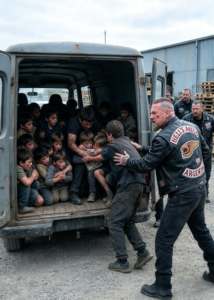
A runaway commercial truck had crashed through the front wall, destroying nearly everything I had spent eleven years building.
My equipment, unfinished furniture, customer orders, and office were buried beneath shattered bricks and twisted metal.
I had stepped outside to collect a delivery less than a minute before the impact.
Still shaking, I photographed the destruction and sent it to our family group chat.
My mother’s response arrived almost immediately.
“You’re insured.
Stop seeking attention.”
Then my younger brother, Michael, replied.
“Clean up your own mess.
Some of us have real problems.”
I stared at their messages.
Neither asked whether I was injured.
Neither offered to come.
I typed one word.
“Okay.”
After speaking with the police and contacting my insurance company, I went home.
At exactly 10 p.m., the local news broadcast security footage of the crash.
The report included a clear image of the truck before it struck my workshop.
Thirty seconds later, my mother called.
“Emily!
Please tell me you haven’t given the police any information!”
“What?”
“That truck!
Did they identify the owner?”
“Why are you asking?”
Michael suddenly joined the call.
“Emily, listen carefully.
Don’t sign anything until we get there.”
I looked at the television again.
The damaged truck belonged to Carter Commercial Transport.
Michael’s company.
Before I could respond, my phone received another notification.
It was an email from my insurance investigator.
“Ms.
Carter, we need to discuss why you’re listed as the registered owner of this vehicle.”
“Sign this, Emily.
We can explain everything later.”
Mom pushed a folder toward me as Michael stood beside my kitchen counter.
I didn’t touch it.
“Why is that truck registered in my name?”
Michael looked at our mother.
She looked away.
“It’s just a complicated business arrangement,” he finally answered.
“What kind of arrangement?”
He sighed impatiently.
“When I started expanding the company, my credit wasn’t strong enough to secure certain equipment loans.”
My stomach tightened.
“So you used my name?”
Mom interrupted.
“We were helping your brother build his future.”
“Without asking me?”
She frowned.
“Don’t make this sound worse than it is.”
I opened the folder.
Inside was a proposed statement claiming that I had authorized Michael to operate the truck and understood the financial arrangements associated with it.
I immediately closed it.
“I’m not signing this.”
Michael slammed his hand against the counter.
“Do you understand how much trouble we’re in?”
“My workshop is destroyed!”
“You have insurance!”
“And what happens when my insurance company discovers that someone fraudulently registered the truck in my name?”
Neither answered.
I asked them to leave.
Mom began crying.
Michael threatened to stop speaking to me.
For once, neither tactic worked.
The following morning, I contacted Rebecca Sloan, a business attorney recommended by one of my longtime customers.
After examining the paperwork, she advised me to dispute the vehicle ownership records and notify the appropriate financial institutions.
Then we requested copies of the relevant financing documents.
What we discovered was horrifying.
The truck was associated with a commercial equipment loan worth approximately $186,000.
My personal information appeared throughout the application.
Several signatures resembled mine, but I had never signed those documents.
Rebecca asked whether Michael had ever had access to my financial records.
I remembered helping him prepare a legitimate business application two years earlier.
At the time, Mom had insisted that family members should support one another.
Apparently, someone had retained copies of my information.
Meanwhile, investigators examining the crash discovered significant concerns involving the truck’s maintenance history.
Its driver had escaped with minor injuries, but the accident could easily have killed someone.
According to preliminary information, previous mechanical concerns had been reported before the vehicle was dispatched.
Michael had continued operating it.
That afternoon, Mom called again.
“Emily, your brother could lose his entire company!”
“He nearly cost me my life.”
“It was an accident!”
“The crash might have been an accident.
Using my identity wasn’t.”
She disconnected.
Rebecca continued reviewing my credit reports and financial records.
Then she discovered two additional commercial equipment financing accounts associated with my name.
Together, the disputed obligations exceeded $420,000.
I felt physically sick.
For years, Michael had mocked my modest woodworking business while boasting about his growing transportation company.
Now I was discovering that his success might have depended on my financial reputation.
Rebecca arranged for the suspected identity fraud to be reported.
That evening, my insurance investigator called.
“Ms.
Carter, we’ve identified another document requiring your attention.”
“What is it?”
“A commercial property authorization connected to your workshop.”
I immediately sat down.
My workshop stood on land I had inherited from my grandfather.
I had never permitted anyone to use that property as security for another person’s business.
The investigator forwarded a copy.
Rebecca examined it carefully.
Then she looked at me.
“Emily, someone attempted to pledge your workshop property as collateral for additional business financing.”
I stared at the signature at the bottom.
It wasn’t Michael’s.
It was my mother’s.
“Mom knew about all of this?”
Rebecca examined the document again.
“Her signature appears as the person claiming authority to represent you.
We need to establish exactly how these documents were prepared and submitted.”
I remembered something that happened shortly after my grandfather died.
Mom had asked me for copies of the workshop’s ownership records, claiming she needed them to organize family estate documents.
I had trusted her completely.
Now I understood why she had been so interested in my property.
Over the following weeks, investigators obtained relevant financial records, business communications, and vehicle registration documents.
The evidence revealed a pattern of deception extending back nearly three years.
Michael’s transportation company had expanded aggressively despite mounting debts.
Whenever legitimate financing became difficult to obtain, he sought other arrangements using information associated with my identity.
Mom had assisted him by providing documents and supporting several unauthorized representations.
The proposed financing involving my workshop had not been completed because the lender required additional ownership verification.
Fortunately, my property remained legally mine.
But the discovery explained their desperation following the crash.
They hadn’t suddenly become concerned about me.
They were terrified that the accident investigation would expose everything.
Rebecca also obtained correspondence showing that Michael had received repeated warnings about the truck’s mechanical condition.
He had postponed necessary maintenance because the company was struggling to meet its financial obligations.
His decision had placed his driver, other motorists, and everyone near my workshop at risk.
When Michael finally agreed to meet with me at Rebecca’s office, he looked exhausted.
“Emily, I never meant for any of this to happen.”
“Which part?”
He frowned.
“The accident.”
“What about the loans?
The signatures?
My property?”
He lowered his head.
“I thought I could repay everything before you found out.”
Mom began crying.
“We were trying to help him succeed.”
I looked directly at her.
“Did you ever wonder what would happen to me if his business failed?”
She remained silent.
“Did you even ask whether I was alive after the crash?”
“Emily, I knew you were okay because you sent the photograph.”
“I sent that photograph because I needed my family.”
Her expression changed.
For several seconds, nobody spoke.
Then Michael asked whether I would withdraw my fraud complaints.
I refused.
“Clean up your own mess, Michael.”
He stared at me.
Those were the exact words he had sent me while I stood outside my ruined workshop.
Months later, the investigation established that several financing documents had been submitted without my authorization.
Michael faced criminal charges related to the fraudulent applications.
Mom faced separate legal proceedings concerning her involvement.
Rebecca worked with the relevant lenders and credit reporting agencies to dispute the unauthorized obligations and correct my financial records.
Meanwhile, my insurance claim progressed.
The commercial vehicle’s insurer and other responsible parties were also involved in resolving the property damage claims.
It wasn’t an overnight recovery.
I lost customers, canceled orders, and spent months working from a temporary rented space.
But something remarkable happened.
People from my community began reaching out.
A retired carpenter offered me equipment.
A former customer helped organize a fundraiser.
Several local businesses offered temporary storage and workspace.
Complete strangers showed me more kindness than my own family had.
Eleven months after the accident, I reopened my workshop outside Columbus, Ohio.
The new building had larger windows, upgraded equipment, and a dedicated area for teaching woodworking classes.
Above the entrance hung a wooden sign my grandfather had carved decades earlier.
“Build something worth keeping.”
On opening day, Mom appeared unexpectedly.
She stood near the doorway, holding a small bouquet.
“I’m proud of you, Emily.”
I thanked her.
Then she asked whether I could help Michael financially while he dealt with his legal problems.
I quietly shook my head.
“Not anymore, Mom.”
She left without another word.
I returned to my workbench, where a young apprentice was waiting for me to teach him how to restore an antique chair.
For the first time in nearly a year, I felt completely at peace.
The runaway truck had destroyed my workshop.
But it had also exposed the people who had been quietly undermining my future.
I could replace equipment, rebuild walls, and repair damaged furniture.
What I couldn’t rebuild was trust with people who had never respected it.
And this time, I wasn’t going to waste another minute trying.