The first thing I remember was the sound of my twin sister crying somewhere beyond the hospital curtain.
My name is Emily Carter.
I’m twenty-four, and my twin sister, Olivia, is the only person who truly understands what we survived.
We were both unconscious when paramedics brought us to Mercy General Hospital in Columbus, Ohio.
Our stepfather, Richard Bennett, had beaten us inside our childhood home.
Our mother, Diane, watched without stopping him.
But when the emergency physician asked what happened, Mom had a different explanation.
“They fell down the basement stairs,” she said. “Both of them.
It was a terrible accident.”
Dr.
Sarah Mitchell looked at her carefully.
“Both women fell down the same staircase?”
Mom nodded.
“Yes.
Emily slipped, and Olivia tried to catch her.”
I was barely conscious, but I heard every word.
Then Dr.
Mitchell pulled back my hospital gown and examined the bruises across my shoulders.
She walked to Olivia’s bed and checked the same areas.
Her expression changed.
“Mrs.
Bennett, please wait outside.”
Mom stiffened.
“I’m their mother.
I have every right to stay.”
“Your daughters are adults.
I need to speak with them privately.”
Mom refused to move.
Dr.
Mitchell turned toward the nurse.
“Please ask security to escort our visitor to the waiting area.”
Once Mom left, the doctor closed the examination-room door.
Then she spoke quietly.
“Emily, Olivia, I need you to listen carefully.
Your injuries are not consistent with the accident your mother described.”
Olivia started trembling.
Dr.
Mitchell continued.
“You both have similar bruising patterns on your upper arms, shoulders, and backs.
Some injuries appear older than others.”
I looked toward my sister.
For eleven years, Richard had controlled our household through threats and violence.
When Dad died, Mom married Richard eighteen months later.
At first, he seemed charming.
Then he began monitoring our phones, controlling our money, and punishing us whenever we questioned him.
Even after we became adults, he used our mother’s financial dependence to pressure us into staying connected to the household.
Three days earlier, Olivia discovered Richard had opened credit accounts using our personal information.
We confronted him that evening.
He exploded.
“You ungrateful little parasites!”
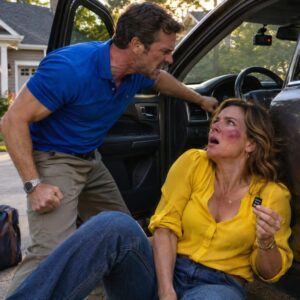
Richard grabbed Olivia by her hair and shoved her against the kitchen counter.
I tried to pull him away.
He struck me across the face.
Mom stood near the refrigerator.
“Mom!
Call the police!” I screamed.
She didn’t move.
Instead, she whispered:
“Please don’t make him angrier.”
Richard continued attacking us until I collapsed.
The last thing I remembered was Olivia screaming my name.
Now, inside the emergency room, Dr.
Mitchell gently held my hand.
“Did someone hurt you?”
I stared at the door.
“If we tell you, he’ll come after us.”
“Hospital security is here.
We can help protect you.”
Olivia finally spoke.
“Our stepfather did this.”
The doctor’s face hardened.
She turned to the nurse.
“Call 911.
Tell dispatch we have two assault victims, and the suspected attacker may be nearby.”
Then Olivia suddenly grabbed my wrist.
“Emily, there’s something else.”
“What?”
She looked toward the door.
“Before I passed out, I heard Mom telling Richard to take our phones and destroy the basement camera.”
Dr.
Mitchell immediately asked:
“What camera?”
Olivia swallowed.
“The one Richard forgot I installed last month.”
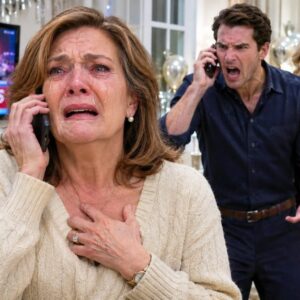
At that exact moment, someone began pounding on the examination-room door.
A man’s furious voice echoed through the hallway.
“OPEN THIS DOOR!
THOSE ARE MY DAUGHTERS!”
It was Richard.
And then my mother shouted something that made every person in the room freeze.
“RICHARD, THEY KNOW ABOUT THE CAMERA!”
Richard’s shouting stopped the moment hospital security appeared.
“Sir, step away from the door.”
“I’m their father!” he shouted.
“You’re not authorized to enter this room.”
Through the narrow glass panel, I watched two security officers position themselves between Richard and our door.
Mom stood behind him, pale and shaking.
Dr.
Mitchell moved closer to our beds.
“You’re safe here.
Police are on their way.”
Olivia squeezed my hand.
“The camera footage,” she whispered. “It’s stored online.”
I stared at her.
“You never told me that.”
“I installed it after Richard threatened us last month.
I wanted proof.”
The camera was mounted inside an old smoke-detector housing in the basement hallway.
It recorded movement near the stairs and automatically uploaded clips to a private account.
Olivia had installed it after checking the recording rules that applied to our home.
It recorded video only.
Dr.
Mitchell asked whether we could access the account.
Olivia nodded.
“My phone’s probably gone, but I know the password.”
A nurse helped her use a hospital tablet.
The footage was still there.
The recording showed Richard dragging Olivia toward the basement stairs after striking her in the kitchen.
I followed, trying to stop him.
He shoved me against the railing.
Mom appeared in the hallway.
She watched Richard hit Olivia again.
Then she stepped aside.
I felt sick.
“She saw everything,” I whispered.
Olivia’s eyes filled with tears.
“She always did.”
Twenty minutes later, Detective James Walker entered our room with Officer Rebecca Hayes.
They interviewed us separately and arranged to preserve the video as evidence.
Detective Walker returned looking deeply concerned.
“We’ve reviewed the footage.
Richard has been detained, and investigators are seeking the remaining recordings.”
“Will Mom be arrested?” Olivia asked.
“Her actions are under investigation.
I can’t promise what prosecutors will decide.”
Then he placed a photograph on the bedside table.
It showed several credit applications bearing our names.
“Did either of you authorize these accounts?”
“No,” I answered.
Olivia shook her head.
Detective Walker continued.
“We’ve also learned Richard attempted to obtain a substantial loan using documents connected to your late father’s estate.”
My stomach tightened.
“Dad left us an inheritance.”
“Do you know who controls it?”
“Mom was supposed to manage it until we turned twenty-five.”
The detective exchanged a glance with Officer Hayes.
That was when everything started making sense.
Richard hadn’t attacked us merely because we’d confronted him about stolen identities.
He was terrified we would discover what had happened to Dad’s money.
Later that afternoon, a hospital social worker helped us contact our father’s longtime attorney, Michael Reynolds.
He arrived carrying a worn leather briefcase.
After confirming our identities, he sat beside Olivia’s bed.
“Girls, I need to tell you something important.”
He opened a folder.
“Your father’s trust contains a provision your mother may not have told you about.”
I leaned forward.
“What provision?”
Michael hesitated.
“Your mother was never supposed to have unrestricted access to that money.”
Olivia looked stunned.
“Then how did Richard get involved?”
Michael pulled out another document.
“Someone submitted paperwork claiming both of you had approved changes to the trust’s administration.”
“We never signed anything,” I said.
“I suspected that.”
He turned the final page toward us.
There were two signatures.
Mine and Olivia’s.
Both forged.
But beneath them was something even worse.
A notarized statement identified our mother as the person who had personally witnessed us signing.
For several seconds, neither Olivia nor I spoke.
I kept staring at Mom’s name on the document.
“She knew,” Olivia whispered.
Michael nodded.
“The document indicates she certified that you both signed voluntarily.
Whether she knowingly participated in fraud is something investigators will need to establish.”
I remembered every birthday Mom had promised things would get better.
Every time she defended Richard.
Every time she told us that keeping the family together mattered more than anything else.
“She chose him,” I said.
Olivia shook her head.
“No.
She chose herself.”
Michael explained that the suspicious paperwork had not successfully transferred control of our inheritance.
The financial institution had flagged inconsistencies and requested additional verification.
Our father’s trust remained intact, but the attempted changes were now part of a criminal investigation.
Over the following weeks, detectives gathered financial records, hospital photographs, and footage from Olivia’s camera.
Richard was charged with offenses connected to the assault.
Additional financial charges followed as investigators uncovered fraudulent credit applications.
Mom was questioned repeatedly.
Eventually, she admitted that Richard had pressured her to cooperate with the false paperwork.
She also admitted witnessing the attack.
Her statement did not erase her responsibility.
Two months later, prosecutors filed charges against her relating to the fraudulent documents.
By then, Olivia and I were living in a small apartment across town.
We had changed our phone numbers, frozen our credit reports, and obtained protective orders against Richard.
Our bruises were fading.
The nightmares weren’t.
One afternoon, Michael called.
“Emily, your mother has requested permission to send you a letter through my office.”
I almost refused.
But Olivia wanted to read it.
The envelope arrived three days later.
Mom wrote that Richard had frightened her for years.
She claimed she’d believed keeping quiet would prevent him from becoming more violent.
Then came the sentence that made my hands shake.
I thought if I helped him with the money, he would finally leave us alone.
Olivia read it twice.
“She knew he was stealing from us.”
“Yes.”
“And she still watched him hurt us.”
I folded the letter.
“We don’t owe her forgiveness.”
At Richard’s eventual sentencing hearing, Olivia and I delivered victim-impact statements.
I stood before the judge and looked directly at the man who had terrorized our family.
“You spent eleven years teaching us that fear was stronger than love.
You were wrong.”
Richard stared at the table.
Olivia stepped beside me.
“We survived because someone finally listened when we told the truth.”
Richard received a prison sentence after pleading guilty to assault and financial offenses.
Mom’s separate case resulted in a conviction, probation, restitution requirements, and mandatory counseling.
The legal outcomes couldn’t restore our childhood.
But they ended Richard’s control over our lives.
Six months after the attack, Olivia and I returned to Mercy General Hospital.
Dr.
Mitchell met us in the lobby.
She smiled when she saw us standing together.
“How are my favorite twins doing?”
Olivia laughed.
“Better than we ever thought possible.”
I handed her a small thank-you card.
“You saved our lives.”
Dr.
Mitchell shook her head.
“You told the truth.
That took courage.”
As we left the hospital, Olivia slipped her arm through mine.
For the first time in years, neither of us looked over our shoulder.
Then Michael called with one final piece of news.
While reviewing Dad’s estate records, he had discovered a sealed letter our father wrote shortly before his death.
It was addressed to both of us, with instructions to deliver it when we turned twenty-five.
Our birthday was the following morning.
Michael had obtained permission from the trustee to give it to us early.
The next day, we opened the letter together.
Dad’s handwriting filled two pages.
He wrote about the lives he hoped we’d build, the importance of protecting each other, and why he’d placed our inheritance beyond anyone’s unrestricted control.
His final words broke us both.
If someone ever makes you believe that love requires you to suffer in silence, remember this: you were born deserving of safety, kindness, and freedom.
Olivia began crying.
So did I.
But this time, we weren’t crying because we were afraid.
We were crying because, after eleven years, we finally understood what our father had tried to protect.
And the greatest inheritance he left us wasn’t money.
It was the chance to choose a different life.