Part 3 – The Box in the Trunk
My father kept his hand around the coffee cup, though the coffee had gone cold.
I held the brass key between my fingers and wondered how many times it had been handled before it reached me.
“You said some of my letters reached you,” I said.
“Yes.”
“Which ones?”
“I don’t remember every one.”
“But you remember the one that came back unopened.”
“I remember the envelope.”
“Why?”
He rubbed a thumb over the cup’s rim.
“Because I knew your handwriting.”
The simple answer made the silence heavier.
I looked toward the window, where people crossed the sidewalk with paper cups and folded umbrellas tucked beneath their arms.
The ordinary morning went on around us while my father and I sat in the middle of a conversation that had been waiting fourteen years.
“Can I see the box?” I asked.
“Of course.”
He stood, and I followed him outside.
The air had turned cool while we were inside, and a light wind stirred the bare branches along the parking lot.
His car was older than I remembered, a dark blue sedan with a small dent above the rear wheel.
He unlocked the trunk and lifted it carefully.
A cardboard storage box sat beneath a folded blanket.
Its corners had softened with age, and one side had been repaired with clear tape.
My father moved the blanket aside.
“I brought it because I thought you should have it,” he said.
“You could have mailed it.”
“I thought it might be better to give it to you myself.”
He paused, then added, “I didn’t know if you’d want to talk after seeing it.”
I watched his face.
“Do you?”
“I want to,” he said. “I’m not sure I’ve earned the right.”
I couldn’t answer that.
He carried the box to the back seat and lowered it onto the upholstery.
The cardboard made a soft, tired sound against the fabric.
“Would you like to open it?” he asked.
“Not here.”
He nodded.
I looked at the box again, imagining all the years it had spent in a closet or storage unit, holding pieces of the daughter he had once known.
“Bring it to the hotel,” I said. “I’ll look at it later.”
He closed the trunk.
“I’ll do that.”
When we returned to the café entrance, he reached for my arm, then stopped before touching it.
“I’m sorry,” he said.
“I heard you.”
“I know that isn’t enough.”
“No,” I replied. “It isn’t.”
He accepted the answer without protest.
That mattered, though I didn’t know what to do with the fact that it mattered.
We parted outside the café.
I drove home with the key in my pocket and the box waiting somewhere behind me.
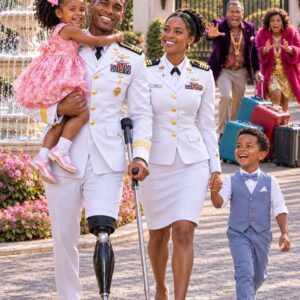
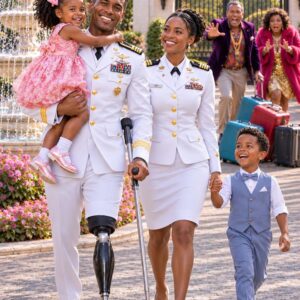
Thomas was in the kitchen when I returned, standing by the counter with a mug in one hand and his cane resting against the cabinet.
He read my expression before I’d taken off my coat.
“He told me he kept my letters,” I said.
Thomas set the mug down.
“Did he?”
“He said he received some of them.”
“What did you think?”
“I don’t know.”
I hung my coat over the back of a chair.
“He said one came back unopened after we got married.”
Thomas’s brow furrowed.
“Unopened?”
“Apparently.”
“Did he say why?”
“No.”
I touched the key through the fabric of my pocket.
“He kept the letters and photographs in a box. I asked him to bring it to the hotel.”
Thomas came closer, moving at his steady pace.
“Do you want to look at them?”
“I think I do.”
“Then we’ll look when you’re ready.”
“I’m afraid I’ll find something that changes what I remember.”
“Memories can change without becoming false,” he said. “You still remember what you lived through.”
I leaned against the counter.
“I keep thinking about the years when we were first married. I used to write to my father because I thought maybe he would answer if I kept trying.”
Thomas’s expression softened.
“I remember.”
“You used to ask whether I wanted to send another.”
“I did.”
“I thought I was being foolish.”
“You were being hopeful.”
The difference between those things had taken me years to understand.
Our twins came into the kitchen arguing over a school project, and I set aside the conversation for the familiar business of lunch bags and missing permission slips.
By late afternoon, my father sent a message.
I’m back at the hotel.
Let me know when you’d like me to bring the box.
I typed, Tomorrow morning, then stared at the words.
The box was only a box, I reminded myself.
It could not reach back through the years and alter what my parents had said or done.
Still, when I went to bed that night, I dreamed of letters piling up on a porch in the rain.
In the morning, my father arrived shortly after nine.
He carried the box in both arms and waited on the porch while I opened the door.
My mother was with him.
I hadn’t expected to see her.
She stood a few steps behind, wearing a beige coat and a composed expression that seemed carefully arranged.
“Good morning,” she said.
“Morning.”
“I thought I should come.”
“Why?”
Her eyes moved briefly to the box.
“Robert shouldn’t have to carry it alone.”
My father looked at her.
“I can carry a box.”
“I know you can.”
The exchange was quiet, but something passed between them that I couldn’t read.
I opened the door wider.
“You can come in for a little while,” I said. “But the box stays with me.”
My mother’s gaze lifted.
“I wasn’t planning to take it.”
“I’m glad.”
My father brought the box inside and set it on the dining table.
The table was one of the first things we had bought after moving into the house, chosen less for its beauty than for the number of chairs it could hold.
The twins had scratched the corner with a metal compass during a science project, and Thomas had once repaired a loose leg with a book wedged beneath it until we could get the tools out.
When my father placed the box at its center, the old cardboard looked out of place among the school papers and polished wood.
Thomas came in from the living room.
“Robert,” he said.
“Thomas.”
They shook hands.
My mother’s attention went to the cane.
She caught herself looking and turned toward the table.
“I didn’t know you kept all those things,” she said.
“I didn’t know he had,” I replied.
My father ran his palm across the top of the box.
“I wasn’t sure what was in there after all these years.”
“You said letters and photographs.”
“That’s what I remember.”
My mother pulled out a chair but didn’t sit.
“Some of those things may not be how you remember them.”
I looked at her.
“Are you asking me not to open the box?”
“No.”
“Then what are you asking?”
She studied my face, and for a moment her expression was almost gentle.
“I’m asking you to be careful about what you decide they mean.”
My father lowered his eyes.
I noticed.
“Let me read them first,” I said.
My mother nodded once.
The twins were upstairs, getting ready for school, so I waited until they had left with Thomas before opening the box.
My parents stayed.
I wasn’t sure whether I wanted them there, but I also didn’t want another secret conversation held somewhere beyond my reach.
I lifted the lid.
Inside were photographs arranged in small envelopes, a handful of birthday cards, and several bundles of letters tied together with faded blue ribbon.
The first photographs showed me in elementary school, missing a front tooth and holding a paper star I had made for Father’s Day.
My father laughed softly when he saw it.
“You made me three of those,” he said.
“You kept them?”
“I kept everything you gave me.”
My mother leaned over his shoulder.
“You used to complain that I kept too much.”
“I never complained about this.”
Their voices carried an ease that unsettled me.
They had built a life together in the years when I had been absent.
They had private references and shared memories that didn’t include me.
Then again, I had built a life without them too.
I untied the first bundle.
The letters were folded carefully, their edges yellowed.
Most were from my years at university.
I recognized my own handwriting, rounder then, the loops in my name oversized and eager.
Some letters described ordinary things: a hard exam, a roommate who left wet towels on the floor, a professor who spoke too quickly.
One told my father about a summer job.
Another mentioned that I had met Thomas.
I remembered writing that one.
At the time, I had left out how quickly I was falling for him.
I’d wanted to give my father room to get used to the idea.
He had written no reply.
I found a later letter, dated shortly after Thomas and I married.
The envelope was unopened, its flap still sealed.
On the front, the address was written in my hand.
A red stamp crossed one corner: RETURN TO SENDER.
Beneath it was a note in blue ink.
He must never know.
My breath stopped.
The handwriting was my mother’s.
Thomas shifted beside me, but he didn’t speak.
My father stared at the envelope as if he had never seen it before.
“Where did you get this?” I asked.
“It was in the box.”
“I know that. Why did it come back?”
“I don’t know.”
“You said it was returned unopened.”
“It was.”
“But it was sent to you.”
“I thought it was.”
My mother sat down slowly.
“Rebecca—”
“Did you write this?”
She looked at the note.
“Yes.”
My father turned toward her.
“Margaret?”
She kept her gaze on the envelope.
“I wrote it a long time ago.”
“What did you mean?” I asked.
“Not what you think.”
“Then tell me what you meant.”
My mother folded her hands in her lap.
“I thought you were vulnerable. You were newly married, making decisions too quickly, and you were willing to throw away every plan you had made for yourself.”
“I had made my plans.”
“Thomas was injured, and you were taking on responsibilities you didn’t understand.”
Thomas remained still beside me.
My mother’s eyes moved toward him, then back to the letter.
“I believed you needed time to see things clearly.”
“You thought I needed time, so you returned my letter to my father?”
“I was trying to protect you from more pain.”
“Whose pain?”
She took a breath.
“Yours.”
I looked at the note again.
He must never know.
It seemed too blunt to belong to a conversation about protection.
My father picked up the envelope with both hands.
“Was I supposed to read this?” he asked.
My mother looked at him.
“I can’t remember.”
“You wrote that I must never know.”
“I was upset.”
“You returned her letter to me.”
“I thought it was better that you didn’t get involved.”
“Why would you think I would be involved?” he asked.
She pressed her lips together.
Neither of them looked at me.
The space between them seemed familiar in a way I couldn’t name.
My father had made a life of stepping back while my mother chose what everyone was allowed to hear.
I had seen that pattern before as a child, though I had never known how much of it had followed me into adulthood.
“Did you know the letter was mine?” I asked my father.
He looked at me.
“I recognized your writing.”
“Then why didn’t you say anything?”
“I did.”
“When?”
“I asked your mother about it.”
“And what did she say?”
“She said you had decided not to send it.”
I stared at him.
“The envelope is addressed to you.”
“I know that.”
“You knew I had written to you.”
“Yes.”
“And you believed her instead of opening it?”
“I thought she had a reason.”
The words came out quietly, but they struck harder than a defense would have.
My mother leaned forward.
“Robert thought you wanted distance.”
“I never told him that.”
“You stopped contacting us.”
“I wrote to him.”
My mother’s gaze sharpened.
“You sent one letter.”
“I sent more than one.”
She turned toward my father.
“Did you tell her you found more?”
“I don’t know whether I found more.”
“You had the box.”
“I didn’t sort them.”
“Robert,” she said, with restrained warning.
He looked at the letters.
“I should have.”
The answer was honest and insufficient.
I felt the old confusion stirring: whether to be angry, whether to wait, whether to search for the version of the truth that might make the hurt easier to carry.
My mother reached for the bundle.
I drew it closer to me.
“Please don’t.”
“I’m not going to take them.”
“I said please don’t.”
Her hand withdrew.
Thomas pulled out a chair and sat beside me.
He didn’t touch the letters or offer to speak for me.
His presence was enough.
I continued sorting through the box.
The photographs came first.
There were pictures of me at school, at a birthday party, and beside my father in the yard of the Raleigh house.
A few showed my mother holding me when I was small.
She looked younger than I had ever known her, with her hair loose around her shoulders and a smile that wasn’t guarded.
I paused over one photograph.
It showed the four of us at a park, my father holding a kite while I laughed beside him.
My mother was looking away from the camera.
I wondered who had taken it.
“What are you looking for?” she asked.
“I don’t know.”
The next envelope held several folded pages and one small photograph of Thomas and me outside the courthouse on our wedding day.
I had forgotten that my father took a picture from across the street before leaving.
He stood in the background, partly hidden by a tree, his face blurred by the distance.
My fingers tightened around the photograph.
“You were there?” I asked.
My father nodded.
“I wanted to see you.”
“You came to the wedding?”
“I stood outside. I didn’t want to disrupt the day.”
“Did Mom know?”
He hesitated.
“Yes.”
I turned to her.
“You knew he was there?”
“I did.”
“And you didn’t tell me.”
“No.”
The answer was immediate, without excuse.
I looked at my father.
“Why didn’t you come in?”
“You were happy.”
“You don’t know that. You never saw my face.”
“I saw enough.”
“You saw me marry the man you thought was wrong for me.”
“I didn’t think that.”
My mother’s head turned sharply toward him.
He continued before she could speak.
“I thought you loved him. I knew you had chosen him. I was afraid I’d make the day harder if I came in.”
“You could have said hello.”
“Yes.”
“You could have stood with me.”
“Yes.”
“Instead, you left.”
He lowered his head.
“I did.”
There was no way to make those choices smaller.
I set the photograph down.
My mother’s voice was careful.
“Your father was trying not to make things worse.”
“He could have asked me what I wanted.”
“I thought you wanted distance,” he said.
“Did I tell you that?”
“No.”
“Did you ask?”
“No.”
He rubbed both hands over his knees.
“I was afraid.”
I waited.
“Your mother was convinced that you would come back once you understood how difficult your life would be,” he said. “I thought if I challenged her, I’d make everything more painful for you.”
“By staying silent, you made the pain last longer.”
“I know.”
My mother drew in a breath.
“I never wanted you to be hurt.”
“I know you didn’t want to feel responsible for my choices,” I said. “That’s not the same thing.”
Her face tightened.
For a moment, I thought she might argue.
Instead, she stared down at the table.
The twins came home from school while we were still going through the box.
They found us around the dining table, surrounded by photographs and old letters.
“Are these all from Mom’s childhood?” one asked.
“Some of them,” I said.
The other leaned over to look at the photograph of me with the kite.
“Grandpa, is that you?”
My father smiled, and the expression seemed to take years off his face.
“It is.”
“You look different.”
“I had more hair.”
The twins laughed.
My mother watched them with a careful, almost yearning attention.
One of the children picked up a photograph of me and my father on the porch of our old house.
“Were you and Mom close when she was little?”
My father looked at me before answering.
“I thought we were.”
The child turned to me.
“Were you?”
I considered the question.
“I loved him,” I said. “We were close sometimes.”
The twins seemed satisfied with that.
They took a few photographs upstairs to look at, and I let them.
When they had gone, my father began gathering the empty envelopes.
My mother stood and went to the kitchen for water.
Through the open doorway, I heard the glass touch the counter.
Then the cupboard door opened.
She was moving around my kitchen as if she remembered the old house and expected her body to follow the same habits.
I watched her pour water into a glass.
“Did you ever want to call me?” I asked.
She stopped with the glass in her hand.
“Yes.”
“Why didn’t you?”
She came back to the table but didn’t sit.
“Your father and I had different ideas about how to handle things.”
“That isn’t an answer.”
“No,” she said. “It isn’t.”
She looked toward the photographs.
“I told myself you were doing well.”
“You didn’t know that.”
“I heard things.”
“From whom?”
“People.”
“Which people?”
She took a sip of water.
“I don’t remember.”
It was the same careful retreat she had made the night before.
My father looked up from the letters.
“Margaret, you told me she was settled and didn’t want us to interfere.”
“I believed that.”
“You never asked her.”
“I didn’t want to reopen a wound.”
“You made the wound.”
Her eyes flashed.
Then she looked at me, and the anger seemed to drain away before it reached her voice.
“I thought I was giving you the chance to have a life without worrying about us.”
“By telling Dad not to contact me?”
“I didn’t tell him not to contact you.”
“Then what did you tell him?”
She set the glass down.
“I said we should wait.”
“How long?”
“I don’t know.”
“Fourteen years?”
Her gaze dropped to the tabletop.
My father’s hand was resting on the stack of letters.
He moved one away from the others.
“I found this in the back,” he said.
It was a small cream-colored envelope, worn at the corners.
My name was written on the front in my father’s hand.
The return address was his.
He turned it over and frowned.
“This isn’t one of yours,” I said.
“No.”
“Who was it for?”
“I was going to send it to you.”
“When?”
“After you got married.”
My mother came around the table.
“Robert.”
He didn’t look at her.
“I wrote to tell Rebecca I wanted to help.”
My breath caught.
“Help with what?”
He held the envelope but didn’t open it.
“With Thomas’s care. I’d heard there were medical costs, and I knew your work had just started to take off.”
Thomas’s face changed, but he remained quiet.
“How much help?” I asked.
“Whatever you needed.”
“Did you send it?”
“I don’t know.”
“You said you wrote it.”
“I must have decided not to mail it.”
“Why?”
His eyes moved to my mother.
She held perfectly still.
My father turned the envelope over in his hands.
“The letter isn’t inside.”
I looked at the open box, the old photographs, and the return-to-sender envelope with my mother’s blue note.
Then I looked at my father.
“What were you trying to tell me?” I asked.
“I can’t remember the exact words.”
“Could you have mailed it?”
“I don’t think so.”
My mother’s face had gone pale.
“I told you I didn’t know what was in that box,” she said.
My father looked at her.
“You knew about the letters.”
“I knew about some of them.”
“Did you return them?”
She didn’t answer.
“Margaret,” I said.
She pressed both hands against the table.
“I was trying to protect you from making a mistake.”
“By sending my letters back?”
“I was trying to keep you from being pulled back into a life you had already chosen to leave.”
“I didn’t leave my father.”
My voice shook, though I hadn’t meant for it to.
“I wrote to him.”
My mother’s eyes shone, but she didn’t cry.
“I thought you would be better off if you stopped looking back.”
“And the letter he wrote me?”
“I don’t know anything about that.”
My father stood slowly.
“I think you do.”
The room became still.
The twins were upstairs, speaking softly through a closed bedroom door.
Outside, a car passed along the street.
My mother looked at the envelope in his hands.
Then she looked at me.
“I didn’t want you to be hurt again,” she said.
The words sounded familiar, but for the first time I could hear what was missing from them.
There was no mention of what I had wanted.
No mention of what I had asked.
Only what she believed she had the right to decide.
I gathered the letters into a neat stack.
“I need to read these alone.”
My father nodded.
“I understand.”
My mother stayed where she was.
“Rebecca, we didn’t come here to dredge up everything from the past.”
“You came because you needed family.”
“Yes.”
“And you expect me to let you into my life without asking what happened in it.”
“I don’t expect that.”
“Then give me the time to find out.”
She looked toward the box.
“I’m sorry you’re upset.”
The apology settled on the table like another thing I hadn’t asked for.
I met her eyes.
“That isn’t the same as being sorry for what you did.”
Her face tightened, but this time she didn’t answer.
My father carried the empty lid back to the side of the table.
“I’ll be at the hotel,” he said. “If you want to talk again, I’ll come.”
I nodded.
My mother followed him to the door.
Before she stepped outside, she turned back.
“I hope you don’t let old paper decide who your family is,” she said.
I looked at the letters in front of me.
“It isn’t the paper I’m worried about.”
She stood there for a moment, then walked out behind my father.
I closed the door after them.
For a long time, I stayed with my hands on the box.
The house felt different around me, as if the old voices had found a way through the walls.
I picked up the envelope my father had written and opened the empty flap.
A faint impression remained on the paper inside, where his pen had pressed through the sheet that was no longer there.
I turned the envelope toward the light.
The handwriting was barely visible, but I could make out a few words along the fold.
I’m proud of you.
Beneath them, in the same blue ink as the note on my returned letter, someone had written a second message.
Not now.
**–END OF PART 3–CLICK “NEXT” AT THE BOTTOM OF THE PAGE TO CONTINUE READING**
* * *
[PREVIOUS: PART 2](https://puretales.idolsgift.com/blog/part-2-the-door-i-wouldn-t-open-027) | [NEXT: PART 4](https://puretales.idolsgift.com/blog/part-4-the-door-i-wouldn-t-open-027)