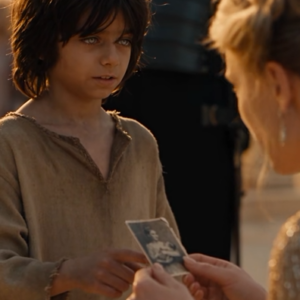
Part 6 – The Park Belonged to Them
The investigator set the second page beside the first, and I stared at them until the difference became clear.
The note that carried Catherine’s name was a forgery.
The signature had been copied carefully, but the writing beneath it was not hers, and the authorization number belonged to a shipment Vincent had approved himself.
For a moment, relief and grief rose together, impossible to separate.
Catherine had not accused me in those words.
But she had been trying to warn me, and I had not heard her.
The investigator explained that Vincent had used the forged authorization to conceal diverted equipment and money, then tried to make the note appear to implicate me if anyone uncovered the scheme.
He had not expected it to be found in the records.
He had not expected the old garage documents to survive.
And he had not expected Daniel, after years of silence, to speak.
“Will the evidence be enough?” I asked.
“It’s substantial,” the investigator replied. “The garage records, the shipment documents, the testimony, and Mr. Hale’s statement all support one another.”
“Did Vincent admit what he did to the car?”
“He did.”
I closed my eyes.
The truth had finally arrived, but it brought no comfort that could restore what was lost.
Only the chance to stop carrying the wrong questions.
When the meeting ended, I took the pages with me to the car.
I did not bring them into the house.
Lucas was in the sitting room with Rose, building a small tower from wooden blocks while she pretended not to notice how carefully he lined them up.
He glanced at my face.
“Did you find out?”
“Yes.”
“Was the note Mom’s?”
“No. The investigator says it was forged.”
Lucas’s hands paused over the blocks.
“So she didn’t write that I should ask you about Vincent?”
“No.”
He lowered his eyes.
“Did she know what he was doing?”
“She had found signs that something was wrong with the shipments. She was trying to understand it.”
“Was she going to tell you?”
“I believe she was.”
I sat beside him.
“I wish I had listened sooner, when she was trying to speak.”
Lucas set one block on another.
“Maybe she would have told you when she was ready.”
“Maybe.”
“Rose says people need time to figure out how to say hard things.”
Rose looked up from the book beside her.
“I did say that,” she admitted. “But I was talking about my dad.”
“Sometimes the same thing can be true in more than one family,” Lucas said.
Rose’s expression softened.
I looked at the two of them and saw, for the first time, that the past had not taken everything from us.
It had taken Catherine.
It had changed Lucas’s body and reshaped every day that followed.
But it had not taken his capacity to reach for someone, or Rose’s willingness to meet him halfway.
The investigation continued over the next several months.
Daniel gave a formal statement, supported by the old receipt and the records recovered from the garage.
The investigators confirmed that he had tried to report the suspicious work before the crash.
They also found evidence that Vincent had diverted shipments through false authorizations and pressured people around him to stay quiet.
Daniel had not been part of the scheme.
The inquiry cleared him of wrongdoing, and the years of uncertainty began, slowly, to lift.
Vincent was charged for his role in the fraud and Catherine’s death.
His cooperation helped investigators trace the diverted property and verify the forged records, but it did not erase his choices.
When the case went to court, I attended every day.
Daniel sat with Rose near the back of the room.
Lucas came when he wanted to and stayed home when the days became too long.
I never asked him to be braver than he felt.
The evidence was presented carefully, without spectacle.
The old work order.
The garage ledger.
Daniel’s account of what he had seen.
Frank’s testimony about Vincent’s late visit and Catherine’s questions.
The shipment records and the forged authorization.
Vincent admitted that he had altered the brakes, intending to frighten Catherine into abandoning her inquiries.
He admitted that he had kept silent after the crash and allowed me to search for another explanation.
He said he had not intended for anyone to die.
The court heard him.
So did we.
When the jury returned its decision, Vincent was convicted.
I felt no triumph.
I felt the weary ache of a door finally closing, and behind it, a grief that had never needed a verdict to be real.
Outside the courthouse, reporters called my name.
I did not stop.
I walked beside Lucas, keeping pace with his chair, while Rose and Daniel followed a few steps behind.
Lucas looked toward the people gathered at the entrance.
“Are they going to ask us questions?”
“They may,” I said.
“Do I have to answer?”
“No.”
He looked at me with quiet surprise.
“You can choose what you want to say,” I told him. “Your story belongs to you.”
He considered that, then turned toward the car.
“Then I don’t want to say anything today.”
“That’s all right.”
The next part of our lives did not become simple just because the court had spoken.
The investigation exposed more of the business than I had hoped.
Some accounts were frozen.
Some companies were closed.
Others were reorganized under independent oversight, with their records opened to investigators and employees given a chance to leave without pressure.
I cooperated fully, even when the questions made it clear that my own choices had helped create the culture in which Vincent believed he could hide what he was doing.
I had not ordered the sabotage.
I had not known about the stolen shipments.
But I had built a world where loyalty was often treated as more important than honesty, and where people learned to be afraid of the questions I might ask.
That part belonged to me.
I had to look at it plainly.
By the time the legal process had settled, the empire I once called my family’s legacy had begun to dismantle.
The change was not one grand gesture.
It was a long series of difficult decisions: winding down operations that relied on intimidation, selling assets, paying debts, cooperating with regulators, and accepting that some people would never trust my explanations.
I did not ask them to.
I had spent years believing that strength meant making sure no one could refuse me.
Now I was learning that accountability meant accepting when someone did.
Daniel found steady work at a legitimate repair shop on the other side of the city.
The owner had read his work history and hired him for his experience, not for his connection to my family.
Daniel told me he preferred it that way.
I understood.
He and Rose moved from the shelter into a small apartment with a kitchen window that looked onto a courtyard.
Rose showed Lucas a photograph of the place, including the yellow curtains Daniel had found at a discount store.
“They’re not actually yellow,” she explained. “They’re more like the color of old lemonade.”
“That sounds yellow,” Lucas said.
“It’s a very specific kind of yellow.”
Lucas asked if she could visit the park more often.
Daniel said yes, as long as Rose checked in with him and came home when they agreed.
I told Daniel that our driver could take her whenever it was useful.
He shook his head.
“Thank you, but we have the bus.”
I nodded.
No explanation was needed.
Rose was not a favor I had arranged.
She was Lucas’s friend.
And Daniel was not someone I needed to rescue in order to earn the right to know them.
When Rose came to the park, she came because she wanted to.
Sometimes she brought a book.
Sometimes she brought a handful of chalk or a deck of cards with one bent corner.
Sometimes she came with no plan at all, and Lucas was happy just to see her walk through the gate.
The security around us changed too.
I did not send it away all at once.
There were still practical concerns and still parts of my life that needed unwinding.
But the guards no longer formed a wall around Lucas.
They stood at a respectful distance, in plain clothes when possible, and let the park feel like a park.
The first afternoon they stayed near the path rather than beside his chair, Lucas looked over his shoulder to make sure they were there.
Then he turned back to Rose.
“They moved,” he said.
“They did,” Rose replied.
“Do you think they’ll move farther next time?”
“Maybe you can ask them.”
Lucas looked toward me.
I gave him a nod.
He spoke with the head guard himself and explained that he wanted to be able to talk with Rose without feeling watched.
The guard listened, then said he would speak with the rest of the team.
It was a small conversation.
It was also the first time Lucas had helped decide what safety would look like for him.
His rehabilitation continued.
Some weeks brought new strength in his arms and shoulders.
Other weeks brought fatigue, frustration, and the familiar ache of wanting his body to do more than it could.
His doctors stayed honest about what they knew and what they did not.
They did not promise that he would walk.
They helped him build endurance, find better ways to transfer, and discover new ways to take part in the activities he loved.
Lucas learned to maneuver his chair across grass and uneven pavement with growing confidence.
He practiced reaching for objects from different angles and figured out how to toss a ball with enough force to send it rolling toward the other children.
When his fingers tired, he adapted the game.
When his arms grew sore, he rested.
He was not required to prove anything to me.
The first time a ball rolled past the edge of his chair, a boy from the playground hurried after it, then stopped and glanced at the guards.
The old fear began to gather in his face.
Lucas raised a hand.
“You can bring it back,” he called.
The boy looked uncertain.
“We’re playing,” Lucas added. “You can join.”
The boy carried the ball over.
His name was Peter, and he had a green cap and a gap between his front teeth.
He asked what the rules were.
Rose answered that the rules were still being invented.
Peter accepted this without complaint.
Soon they were playing a game in which Lucas chose a destination, Rose made up an obstacle, and Peter rolled the ball toward a chalk line they had drawn across the path.
The ball did not always go where they intended.
That became part of the game.
Lucas laughed when it curved the wrong way.
He laughed again when Rose accused the wind of cheating.
I sat on the bench nearby, the afternoon light settling across my hands.
Catherine’s photograph rested in my coat pocket.
I had brought it from home that morning, not because I needed to look at it every minute, but because I wanted her with us in the place where Lucas had begun to return to the world.
I took it out.
In the picture, Catherine’s hair was caught by the wind, and her eyes were bright with laughter.
I remembered her voice more clearly now than I had in the first months after the accident.
Not because the grief had weakened, but because I had stopped trying to keep every memory fixed in the moment of loss.
She had loved the park.
She had loved watching Lucas discover something new.
She had believed that a child’s world should be larger than the things he could not do.
I had forgotten that, beneath all my fear.
Rose glanced over at me.
“Is that Lucas’s mom?”
“Yes.”
“Can I see?”
I handed her the photograph.
She held it carefully, studying Catherine’s smile.
“She looks like she would have liked the kite game,” Rose said.
“I think she would have.”
Rose gave the photograph back and returned to the others.
Lucas had rolled the ball toward Peter, who sent it back with a careful kick.
Rose drew a chalk circle on the pavement.
“New rule,” she called. “If the ball lands inside the circle, it becomes a moon.”
“Why?” Peter asked.
“Because it does.”
“That’s not a rule,” Lucas said. “That’s magic.”
“Magic can be a rule,” Rose replied.
Lucas laughed and turned toward me.
“Dad, you have to play.”
I looked at the guards.
They had settled near the path, far enough away that they no longer seemed to belong to our little circle.
I looked at the bench, the open space, and the ball waiting near Lucas’s wheel.
For years, I had believed that the only useful thing I could do was control what happened next.
Now I understood that sometimes the right thing was to step into the game without taking it over.
I stood and walked toward them.
“What are the rules?” I asked.
Rose handed me a piece of chalk.
“We’re still making them.”
“Then I’ll try not to ruin them.”
“You can start by drawing another circle,” Lucas said.
I knelt and drew it beside hers, uneven and much too large.
Rose declared that mine was a planet.
Peter said it looked more like an egg.
Lucas ruled that an egg could be a planet if it had a moon.
The four of us took our places around the chalk circles, while the ball waited in the middle.
Other children had begun to watch.
Lucas noticed them.
He turned his chair toward the playground and called, “Do you want to join our game?”
Two children approached.
Then a third.
Rose explained the rules, though they changed twice before the game began.
The guards stayed at a distance.
Daniel, who had arrived with a paper cup of coffee, stood beside the path and watched his daughter laugh.
I stood beside my son and listened.
The park was full of ordinary sounds: leaves stirring overhead, sneakers on pavement, children arguing gently about whose turn it was.
Lucas sent the ball rolling toward the chalk planet.
It crossed the circle, slipped past my foot, and continued along the path.
Peter ran after it.
Rose followed, calling that the planet had escaped.
Lucas laughed so brightly that I felt Catherine’s absence and her love in the same breath.
He looked up at me, smiling.
“Next time,” he said, “we need more players.”
“Then we’ll make room,” I answered.
And as the afternoon opened around us, with the guards at a respectful distance and the children gathering close, I understood that the future would not be safe because I controlled every path it might take.
It would be better because we could meet it together.
**–THE END–PLEASE
Share your thoughts or feedback to motivate us to create more stories ♥️
* * *
[PREVIOUS: PART 5](https://puretales.idolsgift.com/blog/part-5-the-girl-the-guards-recognized-028-1)