PART 3: THE NAME MY EX-HUSBAND NEVER BOTHERED TO REMEMBER
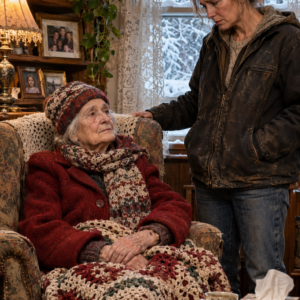
My grandfather held my hand for a long time.
Then he looked toward the photographs beside his chair.
“I kept those pictures because I didn’t know how to ask for new ones.”
I followed his gaze.
There was my mother at twenty.
My parents on their wedding day.
And a small photograph of me as a child, wearing a blue coat and holding a stuffed bear.
I stared at it.
“Where did you get that?”
“Your mother sent it to me when you were four.”
I looked at him.
“She never told me.”
He smiled sadly.
“Perhaps because I never thanked her properly.”
For a moment, I didn’t know what to say.
I’d imagined our first meeting differently.
I expected him to defend his choices.
To explain why my mother had been unreasonable.
To tell me that family responsibilities were more important than personal happiness.
Instead, he sat before me looking like a man who had spent years wondering how to repair something he’d broken.
“I was angry when your mother married your father,” he said.
I waited.
“Not because he was a bad man. I knew almost nothing about him.”
He looked down.
“I was angry because she refused to let me decide what her future should look like.”
I felt something tighten in my chest.
He continued.
“I called it family duty. Tradition. Responsibility.”
His voice grew quieter.
“But what I really wanted was control.”
I stared at him.
Those words sounded painfully familiar.
Tristan had never called his behavior control.
He called it business.
Leadership.
Financial responsibility.
The practical realities of success.
Yet he’d spent years deciding which parts of my life mattered.
Which sacrifices were reasonable.
Which contributions deserved recognition.
And eventually, whether our marriage had any value at all.
I looked at my grandfather.
“Did you ever apologize to her?”
He closed his eyes.
“Not properly.”
I felt tears gather.
“Why?”
He sighed.
“Because every year that passed made the apology harder.”
I understood that more than I wanted to.
He looked at me.
“And now I’m afraid there won’t be enough time.”
For the rest of that afternoon, we talked.
About my mother.
About the years she’d spent in America.
About the photographs he’d received through distant relatives.
About the birthdays he’d missed.
And about the family I’d grown up imagining was little more than a collection of old buildings and painful memories.
I didn’t forgive him immediately.
It wasn’t my place to forgive everything he’d done to my mother.
But I listened.
And I believed that he regretted losing her.
The following morning, he asked whether I’d accompany him to a meeting with the people responsible for several family conservation projects.
I hesitated.
“Grandfather, I’m only visiting for a few days.”
He smiled faintly.
“I know.”
“I’m not here to discuss your finances.”
“Neither am I.”
He reached toward a folder on the table.
“I understand you’ve returned to architectural preservation.”
I nodded.
“Yes.”
“Would you look at something for me?”
I took the folder.
Inside were photographs of an old community hall in a town outside London.
The building had beautiful brick detailing and original timber features.
But years of water damage had left parts of it in poor condition.
There were drawings.
Surveys.
A proposed restoration budget.
And a report recommending changes that seemed unnecessarily destructive.
I forgot my nervousness almost immediately.
I studied the plans.
Then I began asking questions.
Had the roof drainage been fully assessed?
Why were they proposing to remove original timber elements before determining whether they could be repaired?
Had the local preservation authorities reviewed the alterations?
What was the building’s intended use after restoration?
My grandfather watched me.
I became so absorbed in the documents that I barely noticed.
When I finally looked up, he was smiling.
“What?”
He shook his head.
“Nothing.”
“Did I say something wrong?”
“Quite the opposite.”
He leaned back.
“Your mother used to sound exactly like that when she spoke about buildings.”
I laughed softly.
“She still does.”
He looked toward the window.
“I wish I’d listened.”
The meeting lasted almost two hours.
I met the trust’s property adviser and two members of its charitable committee.
They asked for my opinion.
I gave it.
Carefully.
I didn’t pretend to know everything about British preservation law.
I explained which technical questions needed local specialists.
But I could see the underlying issues.
The difference between repairing a historic structure and turning it into a decorative imitation of itself.
The danger of removing original features simply because replacing them appeared easier.
The importance of understanding how a building would serve its community after the work was completed.
People listened.
And when I finished, one of the advisers thanked me.
“That’s extremely useful, Dr. Ashcombe.”
I almost corrected him.
I wasn’t a doctor.
Then I smiled.
“Just Eleanor, please.”
He nodded.
“Then thank you, Eleanor.”
After the meeting, my grandfather asked whether I would stay a little longer.
I hesitated.
“My job is in Chicago.”
“I know.”
“I can’t simply disappear.”
“Of course not.”
He looked at me.
“Would you consider visiting again?”
I stared at him.
He wasn’t demanding.
He wasn’t reminding me of family obligations.
He was asking.
And after fifteen years of being told what I should do for someone else’s ambitions, that difference mattered.
“I’d like that,” I said.
I returned to Chicago four days later.
The first thing I did was call my mother.
I told her about the visit.
About the photographs.
About his apology.
About the way he admitted he’d been wrong.
She listened quietly.
Then she asked, “Did he seem happy to see you?”
I swallowed.
“Very.”
For a long time, she didn’t speak.
Then she said, “I’m glad.”
I could hear the emotion in her voice.
I didn’t press her.
She had her own history with him.
Her own wounds.
And I wasn’t going to become another person telling her what she should forgive.
But something had changed.
We were finally able to discuss my grandfather without the conversation ending in silence.
Over the following months, I returned to England when my work schedule allowed.
At first, the visits were personal.
We had tea.
Looked through photographs.
Talked about my childhood.
He asked about Tristan once.
I told him the broad truth.
That my marriage had ended.
That my husband had fallen in love with someone else.
That I was rebuilding my career.
My grandfather listened.
Then he asked, “Did he make you feel that your work didn’t matter?”
I stared at him.
“How did you know?”
He looked ashamed.
“Because that’s what I did to your mother.”
I felt tears rise.
He continued.
“I believed that because I could provide money and security, I had earned the right to decide what mattered to her.”
I looked away.
“Tristan believed that too.”
My grandfather nodded slowly.
“Then we were both wrong.”
For a long time, we sat without speaking.
Then he said, “Eleanor, never allow someone else’s wealth to convince you that you have no value of your own.”
I looked at him.
“I wish I’d understood that sooner.”
He squeezed my hand.
“So do I.”
As the months passed, my visits became more closely connected to the family’s conservation work.
The Ashcombe family had accumulated property interests over several generations.
Some were private investments.
Others were held by charitable trusts responsible for preserving historic buildings and supporting community use.
My grandfather had spent much of his later life trying to organize those responsibilities properly.
He’d supported restoration projects.
Funded apprenticeships.
Helped maintain historic community buildings.
But the work had become increasingly difficult as his health declined.
The trustees and advisers were capable people.
They didn’t need me to replace them.
But my background in architectural preservation proved useful.
I could evaluate technical recommendations.
Ask practical questions about restoration plans.
Help translate complicated architectural issues into decisions trustees could understand.
And work with specialists to balance preservation with long-term use.
At first, I contributed as an outside adviser.
Then the trust formally engaged me for defined project work.
I made sure the agreements were clear.
My responsibilities.
Compensation where appropriate.
Conflicts of interest.
Approval procedures.
Everything documented.
I had learned too much from my marriage to accept vague promises about family duty.
My grandfather understood.
In fact, he encouraged it.
“Put everything in writing,” he told me.
I laughed.
“That sounds rather formal for family.”
He smiled.
“Trust me. Families are precisely where people should be careful not to confuse love with ownership.”
I never forgot that.
Back in Chicago, my career continued growing.
Rebecca gave me more responsibility.
I began leading preservation assessments.
I helped coordinate restoration plans for old commercial buildings and neighborhood landmarks.
I attended public meetings where residents argued about whether buildings should be saved or replaced.
Sometimes the work was frustrating.
Preservation was rarely simple.
Historic structures cost money to maintain.
Communities had real needs.
Buildings couldn’t survive on sentimental speeches alone.
But I loved the challenge.
And I began noticing something about myself.
I no longer introduced my experience by explaining what I’d done for Tristan’s company.
I spoke about my own training.
My reports.
My projects.
The buildings I’d helped evaluate.
The work I’d done before marriage.
And the work I was doing now.
I had once believed the years beside Tristan were the only achievements worth mentioning.
Now I understood that they had been part of my life.
Not the whole of it.
During my second year of visiting England, my grandfather’s health worsened.
He became tired more easily.
Some days, he could only sit with me for an hour before needing to rest.
But he remained interested in the conservation projects.
Whenever I arrived, he’d ask about the old community hall.
The restoration of a former school building.
A historic workers’ terrace that the trust was helping adapt for affordable housing.
He wanted to know whether the buildings were being cared for properly.
Not whether his name appeared prominently on them.
That surprised me.
The man who had once allowed family pride to destroy his relationship with his daughter had spent much of his later life trying to preserve things other people could use.
I wondered whether it was his way of making amends.
Then, one afternoon, he asked me to sit beside him.
He looked weaker than usual.
A solicitor had visited earlier that morning.
I noticed documents on the side table.
My stomach tightened.
“Is something wrong?”
He smiled sadly.
“Nothing that wasn’t already happening.”
I sat down.
He reached for my hand.
“Eleanor, there are arrangements I want you to understand before I’m gone.”
I swallowed.
“Grandfather…”
“Please.”
I nodded.
He explained that he’d reviewed his estate plans.
A portion of his personal property and financial assets would eventually pass to me.
Other assets were committed to charitable purposes and would remain governed by their trusts.
He wanted me to become involved in long-term stewardship, subject to the proper appointments and the responsibilities that came with them.
I stared at him.
“Why me?”
He looked surprised.
“Because you’ve shown that you care about the work.”
I shook my head.
“I’ve only been visiting for two years.”
He smiled faintly.
“And in those two years, you’ve asked more thoughtful questions about the future of these buildings than many people have asked in twenty.”
I looked down.
“I don’t want you to think I came here for money.”
His expression softened.
“Eleanor, I know why you came.”
He squeezed my hand.
“You came because an old man asked you to see him before he died.”
I started crying.
He waited.
Then he said, “If I leave you resources, they are not payment for your kindness.”
I looked at him.
“They are responsibilities. And opportunities. You may accept them, manage them carefully, or seek advice when you need it.”
He paused.
“But they do not define your worth.”
I couldn’t speak.
He smiled.
“You were worth knowing before I had anything to give you.”
Those words stayed with me.
My grandfather died several months later.
I was in Chicago when the call came.
For a moment, I simply sat at my desk, holding the phone.
Then I began crying.
Not because of any financial arrangement.
Because I’d finally found a grandfather.
And now I’d lost him.
I traveled to England for the funeral.
My mother came too.
She stood beside me in the church, holding a small folded program.
I watched her look toward his coffin.
I didn’t know what she was thinking.
Later, she told me she’d spoken to him by telephone several times during his final months.
He had apologized.
They had argued.
They had cried.
They hadn’t repaired everything.
But they had begun.
“That matters,” she told me.
I took her hand.
“Yes.”
The estate arrangements were handled over the following months.
I received resources far beyond anything I had expected when I first opened the letter in my Rogers Park apartment.
There were financial assets.
An interest in certain family properties.
And responsibilities connected to stewardship and charitable work.
The charitable trust itself wasn’t simply a personal account I could spend however I pleased.
It had trustees, governing documents, and defined purposes.
I respected those boundaries.
I worked with financial advisers.
Solicitors.
Accountants.
Preservation specialists.
And people who had managed the family’s responsibilities long before I arrived.
I didn’t pretend that inheriting wealth automatically made me wise.
I asked questions.
I read documents.
I learned.
And I continued doing the conservation work that had brought my grandfather and me together.
Eventually, the trustees invited me to take on a formal leadership role in the Ashcombe Heritage Trust’s preservation programs.
I accepted.
Not because I wanted a grand title.
Because I cared about the projects.
Over time, I divided my schedule between London and Chicago.
I supported heritage buildings in England.
I continued architectural work in the United States.
And I became involved in collaborations between preservation organizations on both sides of the Atlantic.
Some of those collaborations supported old neighborhood buildings being adapted for new community uses.
Others funded training programs for craftspeople.
A few helped charities restore properties that would otherwise remain empty.
I had access to wealth now.
But I hadn’t stopped working.
If anything, I worked harder.
The difference was that the work felt like mine.
One of the organizations we collaborated with was the Langford Foundation, an American philanthropic organization interested in historic neighborhoods and community redevelopment.
Its chairman was Daniel Langford.
Daniel also served as chairman of Prairie Union Bank, a Chicago financial institution with substantial commercial lending operations.
I knew him first through charitable meetings.
He was thoughtful.
Reserved.
Interested in the practical details of projects.
He didn’t believe that writing a large check was enough to save a historic building.
He wanted to know who would maintain it.
How the community would use it.
And whether the organization responsible had a realistic long-term plan.
I respected that.
Over several meetings, we discussed a potential partnership supporting the restoration and reuse of historic community properties in Chicago.
The Ashcombe Heritage Trust would make a substantial charitable commitment through an approved agreement.
The Langford Foundation would coordinate its own support.
Local organizations would carry out projects under proper oversight.
The bank’s commercial lending decisions remained separate from Daniel’s philanthropic responsibilities.
I appreciated that distinction.
Money had caused enough confusion in my life.
I wanted every financial relationship to be clear.
The planned initiative was still being finalized when a familiar name appeared in a briefing document.
Vale Development Group.
I stared at it.
Tristan’s company.
It wasn’t listed as a charitable recipient.
It appeared in background material identifying major developers involved in Chicago property redevelopment.
And Prairie Union Bank was one of the institutions financing parts of its commercial portfolio.
I felt an old ache.
For four years, I’d managed not to involve myself in Tristan’s professional life.
I didn’t want to change that.
I told the advisers that my former marriage created a potential appearance issue if discussions ever directly involved his company.
They noted it.
Any such matter would be handled through proper disclosure and independent decision-making.
I was satisfied.
Then, several weeks later, a cream-colored envelope arrived at my Chicago office.
My assistant, Miriam Reed, placed it on my desk.
“There’s an invitation for you.”
I looked at the return address.
Vale Development Group.
My stomach tightened.
I opened it.
Inside was an invitation to an exclusive gala at the Ellery Grand Hotel, near Chicago’s Magnificent Mile.
The event would celebrate major redevelopment investments and philanthropic partnerships.
Three hundred guests were expected.
Developers.
Investors.
Bank executives.
Charitable trustees.
City business leaders.
Tristan was one of the principal hosts.
His company’s latest expansion was being celebrated.
And Paige Mercer would be attending as his fiancée.
I read the invitation once.
Then again.
At the bottom, beneath the formal printing, was a handwritten note.
“Come see how far we’ve all come.”
I stared at the words.
For a moment, I was back in our penthouse.
Tristan standing beside the marble kitchen island.
Paige wearing my robe.
His voice telling me he’d paid for everything.
I felt the familiar pressure in my chest.
Miriam watched my face.
“Are you all right?”
I looked up.
“Yes.”
She didn’t look convinced.
I turned the invitation over.
There was a seating confirmation card.
Table nineteen.
I asked Miriam to contact the event office and verify it.
She returned a few minutes later.
“Table nineteen,” she confirmed. “At the back of the ballroom, beside the service corridor.”
I stared at her.
She hesitated.
“That seems unusual, given your role with the Ashcombe Heritage Trust.”
I almost laughed.
Tristan had planned the seating before anyone involved in the event understood that his former wife was connected to one of the charitable commitments being finalized in London.
He still remembered me as the woman who left his penthouse carrying a suitcase.
The woman he described to friends as struggling without his money.
The woman who disappeared from expensive social events because she couldn’t afford to attend.
He had no idea how much my life had changed.
Miriam looked at the invitation.
“Would you like me to decline?”
I thought about it.
For four years, I’d avoided situations where Tristan might attempt to define me.
I had rebuilt my career.
Reconnected with family history.
Taken on responsibilities I never imagined.
I didn’t need his approval.
And I didn’t need to prove anything to him.
Yet something about the invitation bothered me.
Not simply the insult.
The certainty behind it.
Tristan believed he knew who I was.
He believed the woman he’d dismissed had remained exactly where he left her.
And he wanted an audience to witness that belief.
I looked at Miriam.
“Accept it.”
She blinked.
“Are you sure?”
“Yes.”
“And the table?”
I looked down at the number.
Nineteen.
“Leave it exactly as it is.”
Miriam studied me.
Then nodded.
“All right.”
After she left, I sat alone.
The blue bowl still rested on a shelf in my apartment.
I had moved to a more comfortable home after my financial circumstances changed.
But I kept the bowl where I could see it.
Not because I wanted to remember Tristan.
Because I wanted to remember the woman who had walked away with almost nothing and still found a way forward.
I thought about the gala.
The expensive gowns.
The champagne.
The people who once smiled at me because I was married to a successful man.
And I made a decision.
I would go.
I would sit at table nineteen.
I would not demand a better seat.
I would not explain my circumstances to Tristan.
And I would not give him the angry reaction he was clearly hoping to receive.
If he wanted to show three hundred people how far his discarded wife had fallen, he could try.
But I wouldn’t help him by pretending I was ashamed of the life I’d lived.
The week of the gala, the Ashcombe Heritage Trust’s trustees finalized the documentation for the Chicago preservation commitment.
The agreement was substantial.
It represented years of planning and careful consideration.
But it wasn’t money I could casually move from one account to another.
The trustees had approved the purposes.
The recipient organizations had been evaluated.
The commitments were documented.
The announcement would be coordinated with the American partners.
I was proud of the work.
And I was careful to keep it separate from my feelings about Tristan.
My personal history with him had nothing to do with whether historic buildings deserved support.
The evening before the gala, Miriam called.
“London has confirmed the final authorization,” she told me.
“Good.”
“The American partners will receive the formal notice tomorrow.”
I nodded.
“And Daniel Langford?”
“His office has been advised that the call will come before the event.”
I looked toward the invitation resting on my desk.
“Thank you.”
Miriam hesitated.
“Would you like to reconsider the seating?”
I smiled faintly.
“No.”
She sighed.
“I thought you’d say that.”
After we ended the call, I opened my wardrobe.
There were beautiful dresses there now.
Expensive ones.
Clothes I could afford without looking at a bank balance first.
But I didn’t want to arrive at the gala looking as though I’d spent hours planning how to impress Tristan.
I chose a simple black evening gown.
Elegant.
Understated.
Comfortable.
Then I opened a small jewelry box.
Inside were my mother’s diamond earrings.
They weren’t enormous.
They didn’t need to be.
They were the earrings I’d worn on my wedding day.
For years, I couldn’t bear to look at them.
Now I saw them differently.
They belonged to my mother.
To my family history.
To a life that existed before Tristan.
I put them on.
Then I looked in the mirror.
For the first time in years, I didn’t see Mrs. Tristan Vale.
I saw Eleanor Ashcombe.
And I liked the woman looking back at me.
The next evening, a car arrived to take me to the hotel.
It was a Rolls-Royce provided through my travel arrangements.
Four years earlier, I had been worried about paying rent in Rogers Park.
Now a driver was holding the door while I stepped into a luxury car.
The contrast wasn’t lost on me.
But I didn’t mistake the car for proof that I’d become valuable.
I had been valuable when I stood in my tiny apartment with a chipped bowl.
The car was simply transportation.
Halfway to the hotel, Miriam called.
“Eleanor, the London confirmation has gone through.”
“Excellent.”
“The charitable commitment is final, subject to the agreed project conditions.”
I smiled.
“Good.”
“Daniel Langford has been informed.”
There was a brief pause.
Then she added, “His office is asking whether you would prefer to join the principal donor table.”
I looked out at the city lights.
“No.”
Miriam sighed softly.
“Table nineteen?”
“Table nineteen.”
“Very well.”
Then she said something that made me smile.
“Mr. Langford apparently isn’t pleased that you were seated near the service doors.”
I looked at the invitation in my handbag.
“I imagine not.”
The car turned toward the hotel.
Beyond the windows, I could see the lights of Chicago’s downtown towers.
I remembered walking through these streets years earlier beside Tristan.
Back when we couldn’t afford taxis.
Back when we believed success meant never having to worry about money again.
Now I understood that money solved some problems.
But it didn’t create loyalty.
Or character.
Or respect.
The car stopped beneath the hotel’s covered entrance.
A doorman stepped forward.
I could see people gathering inside.
Men in dark suits.
Women in evening gowns.
Cameras flashing.
And just beyond the doors, standing beside Paige Mercer, was Tristan.
He looked confident.
Successful.
Completely comfortable in the life he’d built after leaving me.
I took my evening bag.
Stepped out of the car.
And walked toward the man who had invited me to witness my own humiliation.
He smiled when he saw me.
Not warmly.
With the satisfaction of someone who believed his plan was working.
What he didn’t know was that Daniel Langford had just received a call from London.
And before the first speech, someone was going to approach table nineteen asking for a name Tristan had almost forgotten.