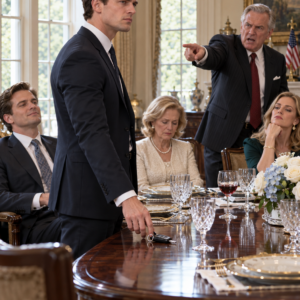
My father told me I was worthless exactly eleven minutes before I became a billionaire.
I was standing outside the graduation auditorium at Stanford University, adjusting my black gown, when my phone vibrated.
It was a text from Dad.
“Don’t expect help.
You’re on your own.”
I stared at those words longer than I should have.
My name is Emily Carter.
I’m twenty-eight years old, and for most of my life, my father, Richard Carter, believed I was his greatest disappointment.
He owned a successful construction company in Dallas, Texas.
My older brother, Brandon, worked there as vice president.
Dad called Brandon his legacy.
He called me his expensive mistake.
When I rejected his offer to join the family business and moved to California to study computer science, he stopped paying my tuition.
“Let’s see how far your little computer dreams get you,” he told me.
What he never knew was that I had already started building something extraordinary.
Six years earlier, I cofounded a cybersecurity company called SentinelGrid with my college friend, Daniel Brooks.
We developed software that helped hospitals and financial institutions detect sophisticated cyberattacks.
By the time I returned to Stanford to finish my graduate degree, SentinelGrid employed nearly two thousand people.
But Dad knew none of that.
I had kept my business life private after years of hearing him dismiss everything I accomplished.
That morning, my family had flown in for graduation.
Not to celebrate me.
Brandon’s wife had a business conference nearby, and Dad decided they might as well attend.
When I approached them outside the auditorium, Dad barely looked up.
“Still haven’t found a real job?” he asked.
“I’m doing fine.”
Brandon laughed.
“That’s what unemployed people always say.”
Mom, Patricia, looked uncomfortable but remained silent.
Then Dad’s phone rang.
He stepped away, returned two minutes later, and announced that Brandon had secured another construction contract.
“That’s what success looks like, Emily.”
I smiled politely.
“Congratulations, Brandon.”
Dad shook his head.
“Maybe someday you’ll learn something from your brother.”
I was about to answer when my own phone rang.
The screen displayed: Michael Reed — CFO.
My stomach tightened.
SentinelGrid had begun trading publicly that morning.
Our investment bankers had spent months preparing the offering, and the first trades were expected while I attended graduation.
I answered.
“Michael?”
His voice exploded through the speaker.
“Emily!
The stock opened way above the offering price!
Our market capitalization just crossed six billion dollars!”
Several people turned toward me.
Michael continued excitedly.
“Your retained shares are worth approximately one point three billion dollars at the current price!”
I froze.
Unfortunately, my phone’s volume was high enough for everyone nearby to hear.
Brandon stopped smiling.
Mom covered her mouth.
Dad stared at me.
“What did he just say?”
I lowered the phone.
“Michael, I’ll call you back.”
But Michael wasn’t finished.
“The board wants you on the investor call, CEO.
Congratulations.
You’re officially a billionaire on paper!”
The courtyard fell strangely quiet.
Dad stepped closer.
“CEO?
Billionaire?
What company?”
I looked directly into his eyes.
“Mine.”
His face drained of color.
“That’s impossible.”
I slipped my phone into my pocket.
“Apparently not.”
Brandon grabbed his phone and searched SentinelGrid.
Within seconds, his expression changed.
“Dad,” he whispered. “She’s telling the truth.”
My father stared at the financial headline on Brandon’s screen.
Then he looked at me.
And instead of congratulating me, he asked the question that revealed exactly what kind of man he was.
“How much of that money belongs to this family?”
I thought my father would apologize.
Instead, he wanted an accounting of my fortune.
“How much of that money belongs to this family?” he repeated.
“None of it, Dad.”
His expression hardened.
“Don’t be ridiculous.
You’re my daughter.”
“And eleven minutes ago, I was on my own.”
Brandon stepped between us.
“Emily, nobody’s trying to take your money.”
I turned his phone toward him.
“Then why are you calculating my shares?”
He quickly locked the screen.
Mom finally spoke.
“Richard, please.
This is her graduation.”
Dad ignored her.
“We’ll discuss this at dinner.”
“No,” I answered. “We won’t.”
For the first time in my life, I walked away without waiting for his permission.
Inside the auditorium, my classmates cheered as the ceremony began.
I should have felt triumphant.
Instead, I kept thinking about the father who had never once asked what my company actually did.
After graduation, Daniel met me outside with a bouquet of white roses.
“You did it, Em.”
“We did it.”
He grinned.
“Your phone’s probably exploding.”
It was.
Reporters, investors, employees, and old classmates had flooded my inbox.
But one message stood out.
It came from my father’s attorney, Steven Wallace.
Richard Carter requests an urgent family meeting concerning SentinelGrid’s ownership history.
I showed Daniel.
He frowned.
“Ownership history?
What does that mean?”
“I have no idea.”
We drove to our Palo Alto office, where Michael was waiting.
He congratulated me, then closed his office door.
“Emily, there’s something you need to see.”
He placed an old investment agreement on the table.
Six years earlier, SentinelGrid had needed emergency funding to survive.
I remembered those months vividly.
Daniel and I had been sleeping in our office, living on instant noodles, and desperately searching for investors.
Eventually, a private investment vehicle called Westbridge Capital provided $250,000.
We repaid the financing under the agreement’s terms two years later.
But Michael had discovered something unusual during the IPO’s final compliance review.
“Westbridge was connected to your father’s construction company.”
I stared at him.
“That’s impossible.”
Michael opened another document.
“Richard Carter authorized the original transfer.”
My mind raced.
Dad had spent years mocking my company.
Why would he secretly finance it?
Daniel leaned forward.
“Maybe he believed in you after all.”
But Michael shook his head.
“There’s more.”
The agreement contained an amendment granting Westbridge a conditional right to acquire additional equity if SentinelGrid missed certain early financial milestones.
The amendment appeared to bear my signature.
I stared at the page.
“I never signed this.”
Michael’s expression turned grave.
“Our attorneys flagged it before the offering.
The alleged right was disclosed as disputed, and the board believes it’s unenforceable.
But someone has recently started demanding recognition of it.”
“Who?”
Michael hesitated.
“Your father’s lawyer.”
My phone rang again.
Dad.
I answered.
“Emily, you need to come home.”
“Why?”
“Because there are things about your company you don’t understand.”
“I understand enough.”
His voice dropped.
“Then you understand I helped build it.”
I felt sick.
“You never told me.”
“I was protecting my investment.”
“By pretending I was a failure?”
Silence.
Then Dad said something that made my blood run cold.
“Ask your brother what happened to the original agreement.”
Before I could respond, Michael opened another file.
It was a scanned email dated six years earlier.
The sender was Brandon Carter.
The recipient was my father’s attorney.
The subject line read:
SentinelGrid — Founder Signature Amendment.
Attached was the disputed document.
And beneath it, Brandon had written:
“Emily has not approved this version.
Dad says to proceed anyway.”
For several seconds, nobody spoke.
I stared at Brandon’s email, feeling as though the floor had disappeared beneath me.
My brother hadn’t merely known about the disputed agreement.
He had helped create it.
“Send everything to our legal team,” I told Michael.
“Already done.”
Daniel looked furious.
“Your father tried to take control of the company you built.”
“Then we’re going to find out exactly how.”
That evening, I called Dad and told him I would meet him in Dallas the following morning.
I brought Daniel and our corporate attorney, Rebecca Hayes.
Dad was waiting in his office with Brandon and Steven Wallace.
He smiled when I entered.
“Finally ready to discuss family business?”
I placed the email on his desk.
“Explain this.”
Brandon’s face went pale.
Dad glanced at the document.
“That was years ago.”
“Did you authorize an amendment using my signature without permission?”
Steven immediately interrupted.
“Richard, don’t answer that.”
But Dad waved him away.
“I invested in her business when nobody else would.”
“You invested through a company I didn’t know you controlled.”
“Because you would’ve refused my help!”
I looked at him.
“Then why attach a document I never signed?”
He said nothing.
Rebecca opened her briefcase.
“Mr.
Carter, SentinelGrid’s records show that the original financing was repaid in full.
The disputed amendment was never approved by its board or authenticated by its founder.
Our forensic review also indicates the signature was copied from an unrelated document.”
Brandon lowered his head.
Dad turned toward him.
“You said it would hold up.”
The room went silent.
Brandon whispered.
“You told me to handle it.”
Dad slammed his palm against the desk.
“Don’t put this on me!”
I stepped backward, stunned.
For years, they had called me helpless.
Now they were blaming each other for trying to steal what I had built.
Rebecca remained calm.
“Our client is preserving all evidence and referring the suspected forgery to the appropriate authorities.
Any ownership claim must be resolved through lawful proceedings.”
Dad’s expression changed.
“Emily, you wouldn’t do that to your own father.”
I remembered every birthday he forgot, every accomplishment he dismissed, and the graduation text still sitting on my phone.
“You did this to your own daughter.”
Mom appeared in the doorway.
She had heard everything.
“Richard,” she said quietly, “tell her the truth.”
Dad stared at her.
Mom walked toward me.
“Emily, I discovered the investment paperwork three years ago.
Richard told me he had helped you secretly because he was proud of you.”
Her eyes filled with tears.
“I believed him.”
“Mom, why didn’t you tell me?”
“Because he said you wanted your business kept private.
I should have asked you myself.”
Dad stood.
“Patricia, that’s enough.”
“No,” she answered. “You’ve spent years humiliating our daughter because she refused to live the life you chose.”
Then she turned to Brandon.
“And you helped him.”
Brandon began crying.
“I was afraid Dad would fire me.”
I looked at my brother.
“You were thirty years old when you sent that email.
You had a choice.”
He couldn’t answer.
Over the following months, the disputed ownership claim collapsed under legal scrutiny.
Brandon admitted to preparing the unauthorized amendment, and the evidence was referred to investigators.
Any criminal consequences remained for the courts to determine.
SentinelGrid continued operating, although our stock price fluctuated after the IPO.
My billionaire status depended on the market value of shares I couldn’t immediately sell, but the company itself was real, profitable, and growing.
I established a scholarship program for students whose families couldn’t support their education.
Mom attended the opening ceremony.
Dad didn’t.
Six months later, he sent me a handwritten letter.
It contained no request for money.
Only seven words:
“I was wrong.
I am sorry, Emily.”
I read it twice.
Then I placed it in a drawer.
Forgiveness, I realized, didn’t have to mean restoring someone’s access to my life.
A week later, I received another message.
This time from Brandon.
“Dad is stepping down from the company.
He wants you to take his place.”
I almost laughed.
After everything, they still thought success meant inheriting Dad’s business.
I typed my response.
“Tell him I already built my own.”
Then I walked into SentinelGrid’s headquarters, where hundreds of employees were working on technology that protected people they would never meet.
Daniel approached me.
“Ready for the board meeting?”
I smiled.
“Absolutely.”
For the first time, I wasn’t trying to prove anything to my father.
And that was worth more than a billion dollars.