My parents left everything to my brother and gave me nothing.
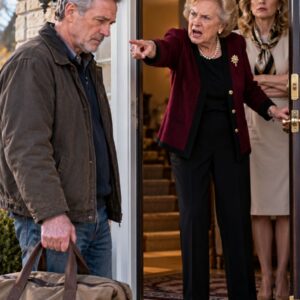
But when they fell ill, he abandoned them, leaving me to step in—until he returned with an eviction notice.
“If you don’t board that plane right now, you are no longer a son to this family,” my mother’s ragged voice coughed through the speaker.
I stood frozen in the middle of my Chicago apartment, my bags half-packed on the floor.
Ten years ago, my parents made their position brutally clear.
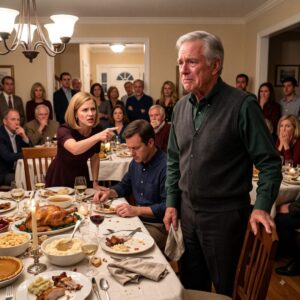
Over a formal Sunday dinner in our Texas home, my father laid down the law: the entire estate—the family home, four hundred acres of prime ranch land, and all property—belonged solely to my older brother, Ethan.
My entire inheritance?
A modest five-thousand-dollar check, locked in a trust, released only on my wedding day.
I accepted their choice, moved away, and built a life from scratch without a single dime of their help.
Then came the late-night call.
Both of my parents had fallen gravely ill with severe respiratory complications.
When my father originally called Ethan to return to Texas and manage their care, Ethan flatly refused. “I’m in the middle of closing a multi-million-dollar tech deal in Miami,” Ethan told them. “I don’t have time to play nurse.”
Desperate, vulnerable, and abandoned by their golden child, my mother called me, weeping, begging me to leave my life behind and come home.
I swallowed my decade-old pride and flew back to Texas the next morning.
For six exhausting weeks, I slept on a cot in the hospital room.
I managed their medications, paid their bills out of my own pocket, and held my mother’s hand through agonizing nights.
Ethan never showed up once.
He didn’t even call.
Yesterday afternoon, my father passed away peacefully in his sleep.
This morning, as my mother and I sat in silence at the dining table, exhausted and grieving, heavy boots crunched on the gravel outside.
The front door burst open.
Ethan walked in, wearing a tailored suit, holding a leather briefcase, and flanked by an attorney I had never seen before.
He didn’t offer a hug.
He didn’t say he was sorry about Dad.
Instead, Ethan slapped a thick stack of legal documents onto the dining table right in front of us.
“Glad you kept Mom alive, little brother,” Ethan smiled coldly. “Now grab your trash and get off my property.
The eviction notice takes effect today.”
I stood speechless as my brother pointed toward the front door, handing me a pen while my mother stared at the floor in terrifying, dead silence.
Was this ruthless betrayal really the end of everything I sacrificed for?
My blood ran cold as I stared at the legal documents sitting on the wooden table.
“An eviction notice?” I whispered, my voice trembling with a mix of exhaustion and fury. “Dad was buried yesterday, Ethan.
Mom is still hooked up to an oxygen tank in the next room, and you’re throwing us out?”
Ethan chuckled, setting his heavy briefcase on the counter. “Correction, brother.
I’m throwing you out.
Mom can stay in the guesthouse out back if she behaves.
But this main house, the land, and every bank account belong to me.
Dad signed the final deed transfer three years ago.
You’ve been trespassing on my private land for six weeks.”
He leaned down, placing both hands on the table, staring right into my eyes. “You were always second best.
You thought playing the dutiful hero for two months would change Dad’s mind?
You got your five thousand dollars on your wedding day—if you ever manage to find someone stupid enough to marry you.
Otherwise, you get nothing.”
My knuckles turned white as I balled my hands into fists.
I looked at my mother, waiting for her to defend me, waiting for her to tell Ethan he had gone too far.
She didn’t look up.
She kept her eyes glued to her lap, her frail shoulders shaking silently.
“Mom, say something,” I begged. “Tell him what you told me on the phone when Dad was dying.”
“She can’t help you,” Ethan sneered, pulling a silver key ring from his pocket and tossing it onto the table. “Because Mom knows the family truth.
Dad didn’t just leave me the property out of favoritism.
He did it because he knew what you really are.”
A sickening chill swept through the room. “What are you talking about?”
“Do you really think Dad’s illness was a sudden surprise?” Ethan’s smile vanished, replaced by something dark and predatory. “Three years ago, Dad discovered a massive financial discrepancy in the family trust.
Hundreds of thousands of dollars vanished overnight.
And the paper trail pointed straight to a dummy corporation registered in your name in Illinois.”
My jaw dropped. “That’s a complete lie!
I never touched a single penny from Dad!”
“The paper trail doesn’t lie,” Ethan declared smoothly.
He turned to his attorney, who pulled a thick manila folder from his leather bag and laid it open.
Inside were bank statements, wire transfers, and forged signatures—my signature—stamped across dozens of illegal transactions.
“Dad locked you out of the inheritance to protect the family from a thief,” Ethan whispered, stepping so close I could smell his expensive cologne. “He was going to put you in prison, but Mom begged him not to.
So they gave you a choice: take your little five-thousand-dollar pity prize and leave, or face federal fraud charges.”
I looked at the forged signatures on the paper.
The handwriting was an exact copy of mine, but the dates stamped on the wire transfers were from five years ago—during a month when I was deployed overseas with the National Guard and had zero internet access.
I looked up at Ethan, realizing the terrifying truth.
He hadn’t just stolen the inheritance; he had framed me half a decade ago to ensure I could never come back.
“You did this,” I gasped, the air lunging from my lungs. “You forged these.”
“Prove it,” Ethan laughed softly. “You have two hours to pack your bags, brother.
If you’re still on this property by noon, my security team will drag you off in handcuffs.”
Ethan turned on his heel and walked toward the master bedroom, leaving his attorney standing guard in the hallway.
I fell back into my chair, my mind spinning into complete darkness.
That was when my mother slowly reached into her cardigan pocket, her trembling hand pulling out a small, rusty steel key.
She slid it across the table toward me, whispering under her breath so the attorney couldn’t hear.
“Go to your father’s old workbench in the barn,” she breathed, her tear-filled eyes locking onto mine with desperation. “Under the floorboards.
Open the iron box before Ethan finds it.”
My heart hammered against my ribs as I grabbed the rusty steel key from the table.
Keeping my eyes fixed on Ethan’s attorney, who was distracted by his phone, I quietly stood up, stepped out the back door, and sprinted toward the old wooden barn at the edge of the property.
The barn smelled of dry hay, motor oil, and dust.
I rushed straight to my father’s ancient workbench in the far corner.
Sweeping aside rusty tools and heavy iron chains, I dropped to my knees and pulled back the loose wooden floorboards.
There, buried under decades of dirt, was a heavy black iron cash box.
My hands shook violently as I fitted the rusty key into the lock.
It turned with a sharp metallic click.
I lifted the heavy lid, expecting to find old family photographs or savings bonds.
Instead, my eyes landed on a leather-bound journal written in my father’s distinct, rigid handwriting, alongside a encrypted silver flash drive and a legal document sealed with a red wax stamp.
I opened the journal to the last entry, dated just two weeks before Dad lost his ability to speak.
“If you are reading this, my son,” the entry began, “it means I am gone, and Ethan has revealed his true face.
Forgive me.
I was a fool.”
Tears blurred my vision as I devoured every line.
My father explained everything.
Three years ago, Ethan hadn’t discovered fraud—Ethan had committed it.
Ethan had run up millions in bad debts through failed offshore investments and used Dad’s signature to leverage the entire ranch as collateral.
When Dad caught him, Ethan threatened to bankrupt the entire family and send the ranch into public foreclosure unless Dad signed over the deed.
To make matters worse, Ethan had fabricated the forged wire transfers in my name to isolate me, ensuring I wouldn’t come back home to investigate the family finances.
Dad had been terrified.
But during the last six months of his life, as his health rapidly declined, he realized Ethan had no intention of saving the family.
When Ethan refused to come home during Dad’s final illness, Dad’s eyes were finally opened.
Working secretly with his true lifelong friend—a retired federal prosecutor from Austin—Dad spent his final conscious weeks gathering ironclad evidence against Ethan.
The document inside the box was not a plea for help; it was an updated, legally binding Last Will and Testament, drafted and notarized just twenty days ago, alongside a formal revocation of the deed transfer based on documented elder abuse and financial coercion.
The encrypted silver flash drive contained recorded audio files of Ethan admitting to the forgery and threatening our parents if they ever contacted the authorities.
At the bottom of the page, my father had written his final words to me:
“You were the son who stayed away because we hurt you, yet you were the only son who came running when we needed love.
Everything belongs to you.
Protect your mother.”
A loud slam echoed through the barn.
“I knew Mom gave you that key,” Ethan’s voice boomed from the barn entrance.
He stepped into the dim light, holding a heavy steel crowbar, his eyes wide with frantic rage.
His suit jacket was off, his tie loosened.
The suave, arrogant businessman was gone, replaced by a desperate monster.
“Hand over the box,” Ethan demanded, stepping closer, raising the crowbar. “You don’t know what you’re messing with.
If those files get out, I lose everything!
My firm, my reputation, my freedom!”
“You framed your own brother, Ethan,” I said, rising slowly to my feet, clutching the leather journal tightly against my chest. “You left Dad to die alone while you tried to steal everything he spent his life building.”
“Dad was weak!” Ethan shouted, lunging forward with the crowbar aimed directly at my head.
I ducked beneath the heavy iron swing, stepping hard into his guard and tackling him into the loose hay.
We crashed onto the floor, struggling furiously for control of the crowbar.
Ethan swung his elbow, catching me hard across the jaw.
Pain exploded in my head, but I held on, pinning his wrists to the wooden floor.
“It’s over, Ethan!” I roared.
Suddenly, bright blue and red police lights flashed through the cracks of the barn walls.
Sirens blared outside, echoing across the open fields.
Ethan froze, his face draining of all color.
Footsteps rushed into the barn. “Police!
Hands where we can see them!
Drop the weapon!”
Two sheriff’s deputies rushed in with weapons drawn, pulling Ethan off me and slamming him against the wooden support beam, snapping handcuffs around his wrists.
Behind the deputies stepped my mother, supported by a tall, elderly man in a gray suit—Dad’s retired prosecutor friend.
“Mom?” I gasped, pushing myself up from the ground.
My mother walked over, tears streaming down her pale cheeks, and wrapped her arms tightly around my neck. “I called Dad’s friend the moment Ethan stepped into the house,” she sobbed. “Your father told me what to do before he passed.
I’m so sorry we made you wait so long for the truth.”
Ethan struggled against the deputies’ grip as he was dragged toward the police cruiser outside. “You can’t do this to me!
I own this land!” he screamed, his voice cracking with panic.
“Not anymore, Ethan,” Dad’s attorney said calmly, holding up the notarized documents from the iron box. “These records prove grand larceny, wire fraud, and severe elder financial abuse.
You won’t be owning a ranch.
You’ll be serving a federal prison sentence.”
Six months later, the Texas sun shone brightly over the four hundred acres of green pasture.
Ethan was officially sentenced to twelve years in federal prison without parole, his financial empire completely dismantled to pay restitution.
Standing on the front porch of the family home, I watched my mother sit peacefully in her rocking chair, breathing the fresh country air without an oxygen mask.
The ranch was legally transferred into my name, fully restored and free of debt.
I reached into my pocket and pulled out a small, old five-thousand-dollar check—the original pity inheritance my parents had set aside for me years ago.
I smiled, tore the check into tiny pieces, and let the Texas wind carry them away across the land that was finally home.