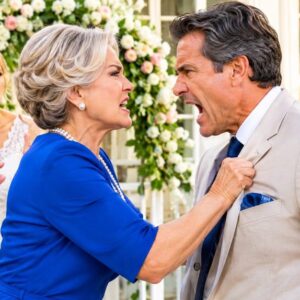
CHAPTER 3 – PART 3 – TAKE YOUR HAND OFF ME—OR LOSE IT
PART 3: THE CABIN THAT BURNED
The abandoned logging camp had no door.
That was the first thing I noticed.
The second was the snow drifting through a hole in the roof.
The third was Wyatt’s silence.
He had barely spoken since we watched his cabin burn.
I could not blame him.
The camp consisted of two collapsed sheds and one bunkhouse leaning toward the creek.
Wyatt pushed through the doorway.
“Inside.”
I followed.
We found an old iron stove.
No pipe.
Three bunks.
One broken chair.
A rusted saw.
Wyatt checked the windows.
I checked the rear wall.
He noticed.
“Still counting.”
“Yes.”
“Good.”
That was the first word he had spoken to me in twenty minutes that was not an instruction.
I set the evidence on a bunk.
“Wyatt.”
He removed his gloves.
“Not now.”
“I need to say—”
“Not now.”
His voice was quiet.
Not angry.
Worse.
I nodded.
We worked.
He cleared the old chimney hole.
I gathered dry interior boards.
We made a small fire in a metal wash basin instead of trusting the stove.
It smoked.
We tolerated it.
Cold seeped through every wall.
For the first time, I noticed Wyatt’s hands shaking.
Not fear.
Rage.
Loss.
His cabin had stood for nine years.
I knew that from his letters.
Built himself.
Roofed twice.
Added the back room last summer.
A quiet life constructed board by board.
Gone in minutes.
Because I had arrived.
I sat opposite him.
“I should have told you before I came.”
“Yes.”
“I was afraid you would refuse.”
“I might have.”
“I know.”
“So you made the decision for me.”
“Yes.”
His jaw tightened.
“I hate that.”
“I know.”
“Do you?”
“Yes.”
“Because that’s what those men do.”
The words struck hard.
I looked up.
“They decide what other people should risk.”
He was right.
My eyes burned.
“I was trying to survive.”
“That explains it.”
He stared at the fire.
“Doesn’t make it fair.”
“No.”
I could have defended myself.
Said I had nowhere else.
Said I had spent months hunted.
Said every person I told could betray me.
All true.
None erased his cabin.
“I’m sorry.”
He looked at me.
Actually looked.
Then sighed.
“I know.”
That was not forgiveness.
It was enough for the moment.
We ate hard bread.
Drank melted snow.
Outside, the storm intensified.
I tried to sleep.
Could not.
Every creak became boots.
Every wind gust became a rider.
Near midnight Wyatt spoke from the opposite wall.
“Who taught you to fight?”
I opened my eyes.
“My brother.”
“You have a brother?”
“Had.”
Silence.
“I’m sorry.”
“He died when I was nineteen.”
“How?”
“Railroad accident.”
“You learned before that?”
“Yes.”
“Why?”
I smiled in the dark.
“Because I was heavy.”
Wyatt shifted.
“That doesn’t explain it.”
“It does if you are a girl growing up with boys who believe size is an invitation.”
I could feel his attention.
“My brother Samuel hated watching me come home crying.”
“What did he teach you?”
“First, that being large does not make me slow.”
Wyatt made a quiet sound.
“Learned that.”
“Second, most men expect women to pull backward when grabbed.”
“And you don’t.”
“I go forward.”
“Clearly.”
“Third, hurt what carries the weight.”
“Instep.”
“Yes.”
“Then jaw.”
“Only if he continues.”
The dark made honesty easier.
“Samuel said I would never outrun every man.”
My throat tightened.
“So he taught me how to make them regret catching me.”
Wyatt was quiet.
“Good brother.”
“The best.”
Wind hit the wall.
I hugged my coat tighter.
After a while Wyatt said, “I did not ask for a pretty bride.”
“I remember.”
“Why did that matter so much?”
I almost pretended to sleep.
Instead I answered.
“Because almost every other did.”
“What did they say?”
“Pleasant-looking.”
He grunted.
“Young and slender.”
Another grunt.
“Not stout.”
His silence changed.
“One man wrote that he required a woman ‘small enough not to eat a rancher out of winter stores.’”
Wyatt cursed.
I laughed softly.
“It was almost creative.”
“It was stupid.”
“It was honest.”
“That doesn’t improve it.”
“No.”
I looked at my hands.
“I knew how men saw me.”
“Do you?”
“Yes.”
“Every man?”
I did not answer.
He continued.
“My letter said nothing about size because I didn’t care.”
“Perhaps.”
“That means you don’t believe me.”
“It means men care after they see what words like heavy mean in person.”
“I saw you in person.”
“And?”
“You threw a drunk into a horse trough.”
“That is not romantic.”
“It was memorable.”
I smiled despite myself.
“Josephine.”
“Yes?”
“I’m angry because you lied.”
“I know.”
“Not because you’re larger than I imagined.”
My throat tightened.
“I imagined you thinner.”
I laughed.
He added quickly, “Because every photograph I’d seen was thin.”
“You had imagined me?”
“Apparently badly.”
“Anything else?”
“Gray dress.”
“My dress is charcoal.”
“Close.”
“Hair down.”
“It becomes inconvenient.”
“Quiet.”
“I am quiet.”
“Woman, you have been shot at for six hours.”
“Exactly.”
He laughed.
A real laugh.
Low.
Unexpected.
It warmed the room more than the fire.
Then a noise came from outside.
We both stopped.
Snow.
Branches.
Again.
Crunch.
Wyatt reached for the rifle.
I reached for my revolver.
A shadow crossed the window.
One man.
He came around the side.
We heard a voice.
“Reed?”
Not Vale’s man from before.
Older.
Familiar to Wyatt perhaps.
He frowned.
“Elias?”
“Unless somebody stole my face.”
Wyatt moved toward the door.
I caught his sleeve.
“Who?”
“Neighbor.”
“How close?”
“Five miles east.”
“Why here?”
“I’ll ask.”
He opened the door with the rifle ready.
An older man entered carrying snow on his shoulders and a shotgun.
He looked at me.
Then Wyatt.
Then the bloody rifle.
Then the ruined bunkhouse.
“I saw your cabin burning.”
Wyatt nodded.
“You bring marshmallows?”
The man stared.
“What?”
“Never mind.”
Elias was fifty-something, narrow-faced and practical.
He listened as Wyatt gave a version of the story that omitted most names.
Three armed men.
Woman being pursued.
Records.
Need to reach Bitter Creek.
Elias looked at me.
“You the mail bride?”
“I was under consideration.”
He blinked.
Wyatt coughed.
Elias said, “He talked about you.”
Wyatt went still.
I turned.
“Did he?”
“No.”
Elias smiled.
“Plenty.”
Wyatt glared.
“Why are you here?”
“Because your roof was on fire.”
“Right.”
Elias became serious.
“I saw riders heading south after.”
“With the trunk?”
“Yes.”
Relief moved through me.
“They think the evidence is inside.”
“For now.”
Elias nodded.
“Won’t last.”
“No.”
Wyatt asked, “Can we use your horses?”
“Got one.”
“Wagon?”
“Trail’s too deep.”
I unfolded the map from the evidence packet.
“There’s another way.”
Both men looked.
“The rail spur.”
Wyatt frowned.
“Abandoned.”
“Not completely.”
“How do you know?”
“The bureau used it.”
His expression hardened.
“For what?”
“To move women without town depots.”
Elias stared.
I pointed.
“Old switch station here.”
Wyatt leaned close.
“That’s eight miles.”
“Then another twelve to Bitter Creek.”
“No.”
“What?”
“Vale’s men will return when the trunk proves empty.”
“Exactly why we move now.”
“In this storm?”
“Yes.”
Wyatt shook his head.
“You can barely see twenty feet.”
“They can’t either.”
Elias looked between us.
“She’s got a point.”
Wyatt glared.
“Not helping.”
I folded the map.
“If we wait until daylight, they can track us.”
“They can track us now.”
“Snow is filling tracks.”
Wyatt did not like it.
That meant he agreed.
We left an hour later.
Elias went east to alert a deputy he trusted.
Wyatt and I went north toward the rail spur.
The snow reached my calves.
Then my knees.
My size became both burden and advantage.
I sank deeper than Wyatt.
But wind had less success moving me.
He offered his hand over steep sections.
The first time I refused.
The second time I accepted.
By dawn we reached the abandoned switch station.
One room.
Coal stove.
Broken telegraph.
And fresh footprints.
Wyatt crouched.
“Not ours.”
My pulse quickened.
“How fresh?”
“Hour.”
“Vale?”
“Maybe.”
We entered carefully.
Empty.
On the floor lay a cigarette stub.
City tobacco.
My stomach tightened.
Wyatt checked the rear.
Then stopped.
“Josephine.”
I joined him.
On the wall someone had pinned a sheet of paper with a knife.
My mail-order .
The original one.
My photograph clipped beside it.
Across my face, someone had written:
DEAD ONCE.
NEXT TIME CERTAIN.
Wyatt tore it down.
I stared.
The threat did not frighten me most.
The handwriting did.
I had seen it daily for four years.
Silas Vale himself had written that message.
“He’s here.”
Wyatt looked toward the trees.
“The man running Crown & Bell?”
“Yes.”
“You said he sends others.”
“He does.”
“Why come personally now?”
I looked at the ledger under my coat.
“Because what I took doesn’t only destroy his business.”
I met Wyatt’s eyes.
“It tells the law who financed it.”
“And?”
“One of those men is coming to Wyoming.”
“Who?”
I swallowed.
“Territorial Judge Horace Bell.”
Wyatt stared.
“Bell.”
“Yes.”
“As in Crown & Bell.”
“Yes.”
“He owns half the agency?”
“No.”
My voice lowered.
“He owns the part that kept it protected.”
Wyatt looked at the threat again.
“When does he arrive?”
I remembered a letter in the trunk.
A schedule.
“Tomorrow.”
“Bitter Creek?”
“Yes.”
“So Vale does not only need the ledger.”
“No.”
“He needs you dead before Bell reaches town.”
“Yes.”
Wyatt’s face became cold.
“What does Bell want in Bitter Creek?”
I wished I did not know.
“To meet the man who bought the agency’s Wyoming route.”
The wind rattled the station windows.
Wyatt stared at me.
“Who?”
I opened my mouth.
Then hoofbeats sounded outside.
Too many.
We were out of time.
CHAPTER 4 – PART 4 – TAKE YOUR HAND OFF ME—OR LOSE IT
PART 4: THE MAN WHO BOUGHT THE WYOMING ROUTE
There were five riders.
We saw them through cracks in the station wall.
Wyatt counted rifles.
I counted horses.
Vale rode in the middle.
The dark-coated man from Bitter Creek rode beside him.
They spread across the snow.
No hurry.
They knew we were trapped.
Wyatt whispered, “Back window?”
“Faces open ground.”
“Cellar?”
“No.”
“Roof?”
“Half collapsed.”
“Wonderful.”
I looked at the old rail bed behind the station.
A shallow cut ran between snowbanks.
“Drainage culvert.”
Wyatt followed my eyes.
“Too small.”
“For you.”
He looked at me.
I looked down at myself.
Heavy coat.
Broad hips.
Thick waist.
Then at the culvert.
“Possibly me too.”
“No.”
“Possibly is enough.”
“Josephine.”
“You take the ledger.”
“No.”
“Wyatt.”
“No.”
The riders stopped.
Vale called from outside.
“Miss Mercer.”
I closed my eyes.
His voice had not changed.
Calm.
Polite.
Educated.
The voice of the man who used to walk between desks at Crown & Bell and compliment clerks for neat penmanship.
“Come out.”
Wyatt whispered, “Is that Vale?”
“Yes.”
Vale continued.
“You have caused an extraordinary inconvenience.”
I almost laughed.
Some men could describe evil as a scheduling problem.
“You burned my cabin,” Wyatt shouted.
Vale paused.
“Mr. Reed, I regret that.”
“No, you don’t.”
“No.”
At least that was honest.
Vale raised his voice.
“Miss Mercer belongs to a matter that predates you.”
I stepped near the window.
“I belong to myself.”
A slight laugh.
“You always did have a dramatic streak.”
Wyatt glanced at me.
I whispered, “I hid it in the letter.”
“Apparently.”
Vale said, “Give me the ledger and you may leave.”
I looked at Wyatt.
He shook his head.
“No.”
I smiled faintly.
“Good.”
“Wasn’t for you. I don’t trust him.”
“That too.”
Vale waited.
Then said, “Josephine, you know what happens if Bell is exposed.”
“Yes.”
“You know how many people lose everything.”
“Criminal people.”
“Important people.”
“Those are not opposites.”
Wyatt almost smiled.
Vale’s voice hardened.
“Your brother understood compromise better.”
The world stopped.
Wyatt looked at me.
I could not breathe.
“What?”
Vale continued.
“Samuel Mercer was warned.”
My hands went cold.
Samuel.
Railroad accident.
Nineteen.
Body crushed beside a switching yard.
I had never questioned it.
Why would I?
“Don’t listen,” Wyatt whispered.
I moved to the window.
“What did you say?”
Vale smiled from horseback.
“He found things that did not concern him.”
My chest tightened until it hurt.
“You’re lying.”
“Am I?”
“Yes.”
“He worked baggage at Denver Union.”
I knew that.
“He noticed women traveling under names that did not match manifests.”
My legs weakened.
“He asked questions.”
No.
“He threatened to report us.”
No.
“The rail yard is dangerous.”
My vision narrowed.
Wyatt caught my elbow.
I pulled away.
“Say it.”
Vale tilted his head.
“Your brother’s death taught you nothing.”
For four years I had believed Samuel died because of a loose coupling and rain.
For four years I had joined Crown & Bell because I needed work after his death.
Had Vale known who I was?
Had they hired me because they wanted to watch me?
My stomach turned.
Wyatt whispered, “Josephine.”
I could barely hear him.
Then something settled inside me.
Not grief.
Not yet.
Cold.
Useful.
“You want me outside?” I shouted.
“Yes.”
“Then come closer.”
Wyatt grabbed my arm.
“What are you doing?”
“Buying distance.”
“From bullets?”
“Trust me.”
He stared.
“This is an astonishing time to ask.”
“Please.”
That changed him.
I had not said please to him before.
He released me.
I opened the station door.
Wyatt stayed behind the wall.
I stepped onto the platform.
Snow fell softly.
Five rifles watched me.
Vale smiled.
I had forgotten how much I hated that smile.
He was around fifty now.
Silver at his temples.
City coat beneath a fur cape.
He looked respectable.
Men like Vale always did.
“Where is the ledger?”
“Safe.”
“Not in the trunk.”
“No.”
“That was clever.”
“Thank you.”
“You learned.”
“From surviving you.”
His smile disappeared.
“Come down.”
“No.”
“I will not ask again.”
“I know.”
I slowly removed my coat.
Wyatt made a sound behind me.
The ledger remained wrapped against my body beneath my outer dress.
Vale’s eyes sharpened.
“Do you have it on you?”
“Maybe.”
His riders shifted.
I needed them looking at me.
All of them.
“What did Samuel find?”
Vale’s expression softened.
False kindness.
“A route ledger.”
“Like mine?”
“Older.”
“Where?”
“He mailed it.”
My heart jumped.
“To whom?”
“He tried.”
“What happened?”
Vale shrugged.
“The mail is unreliable.”
I wanted to kill him.
Not dramatically.
Not blindly.
I wanted one clean shot.
The way I had been taught.
Hurt what carries the weight.
But dead men do not testify.
And I had spent too many years gathering truth to trade it for revenge.
“Did you kill him?”
Vale smiled.
“Prove it.”
There.
The answer.
Behind the station, metal scraped faintly.
Wyatt.
Moving toward the culvert entrance.
Good.
I continued talking.
“Judge Bell arrives tomorrow.”
Vale’s face changed.
Small.
Enough.
“He will be interested to know how careless you became.”
“Bell already knows everything.”
“Not about Samuel.”
“Doesn’t matter.”
“It will to a jury.”
Vale laughed.
“There will be no jury.”
One of the riders looked uncomfortable.
Interesting.
Not all of them knew everything.
I raised my voice.
“Does he know you burned the Denver warehouse?”
The rider on the left looked toward Vale.
Vale noticed.
“Josephine.”
“Does he know you killed your own clerk when he tried to leave?”
Another rider shifted.
I invented nothing.
The letters had named the clerk.
I watched uncertainty spread.
Mercenaries liked money.
They disliked learning employers killed employees.
Vale snapped, “Enough.”
I smiled.
“No.”
His hand moved.
Not toward a gun.
Signal.
The dark-coated rider dismounted.
He started toward me.
I backed into the station.
“Now,” Wyatt shouted.
A rifle fired from behind the rail cut.
One rider’s gun flew from his hand.
I slammed the door.
Gunfire exploded.
Wood splintered.
I crawled toward the rear.
Wyatt appeared through the broken window.
“Move!”
We dropped into the rail cut.
Snow burst around us as bullets struck.
The culvert opening appeared.
Smaller than I remembered.
Wyatt looked at me.
“No.”
“Yes.”
“You’ll get stuck.”
“Thank you for the confidence.”
“That wasn’t—”
“I know.”
He shoved the evidence bundle ahead.
I went next.
The culvert scraped my shoulders.
Then my hips.
I stopped.
Panic struck instantly.
Small spaces.
Warehouse window.
Smoke.
Rope.
I could not breathe.
“Josephine.”
Wyatt’s voice behind me.
“I’m stuck.”
“No.”
“I am.”
“Turn one hip.”
“I cannot.”
“Yes, you can.”
Gunfire cracked outside.
I tried.
Nothing.
My chest tightened.
“I told you.”
“Listen to me.”
Wyatt’s voice became steady.
“You kicked iron out of a burning wall.”
“This is different.”
“You threw a man into a trough.”
“He was easier.”
“You hauled an iron trunk while a wagon fell off a mountain.”
“I made poor choices.”
“Make another.”
Despite terror, I laughed.
The panic loosened.
“Left hip forward,” he said.
I shifted.
Pain scraped along my side.
“Again.”
I exhaled.
Pushed.
My body moved.
An inch.
Then another.
The earth released me.
I crawled.
Cold air hit my face.
I came out laughing and crying.
Wyatt emerged after.
“Never again.”
“Agreed.”
We ran down the drainage line.
Behind us, Vale’s men shouted.
The rail bed bent toward Bitter Creek.
Twelve miles.
Too far on foot.
Then we heard a whistle.
Not train.
Horse.
Elias appeared from the trees with three riders.
One wore a deputy star.
Another carried a long rifle.
Elias grinned.
“Thought you might appreciate neighbors.”
Wyatt almost collapsed with relief.
I did not.
Not yet.
“Vale is behind us.”
The deputy raised his rifle.
“Good.”
“No.”
Everyone looked at me.
“We need him alive.”
Wyatt understood first.
“Bell.”
I nodded.
“If Vale dies here, Judge Bell calls him a rogue employee.”
The deputy frowned.
“Bell?”
“Horace Bell.”
His face changed.
“What about him?”
I held up the ledger.
“He financed Crown & Bell.”
The deputy stared.
“Judge Bell?”
“Yes.”
“Territorial judge?”
“Yes.”
Elias cursed.
Wyatt said, “Can you prove it?”
I looked at the letters.
“Yes.”
“Then we get to town.”
Vale’s men did not pursue.
That worried me.
By late afternoon Bitter Creek appeared below.
Smoke from chimneys.
Stage depot.
Saloon.
Sheriff office.
Safety.
Possibly.
We rode directly to the deputy marshal’s office.
His name was Daniel Price.
He listened.
Read.
Asked questions.
Read again.
By dusk his face had become grim.
“This is enough to hold Vale.”
“If you can find him.”
“And Bell?”
“Bell arrives tomorrow.”
“On what charge?”
“Conspiracy. Fraud. Kidnapping. Possibly murder.”
“Possibly does a great deal of work there.”
“I know.”
Price tapped the ledger.
“Bell’s payments are coded.”
“Yes.”
“His signature?”
“Letters.”
“Those prove he knew women were moved?”
“One does.”
I opened the packet.
Found it.
A short note.
Do not route future Denver applicants through the Bitter Creek spur until the noise settles. H.B.
Price read it twice.
“Noise?”
“A girl escaped a camp near Rawlins.”
“And?”
“She reached a newspaper.”
“What happened?”
“Story disappeared.”
Price stared.
“You think Bell stopped it.”
“I know Crown & Bell paid the editor two days later.”
“Ledger?”
“Yes.”
He sat back.
“This might work.”
Might.
The word frightened me.
Wyatt stood near the wall.
Quiet.
He had been quiet since we reached town.
I looked at him.
He looked away.
The burned cabin stood between us.
So did the lie.
I had saved his life.
Maybe.
I had also destroyed the life he already had.
That night Price arranged rooms at the hotel.
Separate.
Proper.
I almost laughed at the absurdity.
Men had shot at us.
Burned buildings.
Chased us through snow.
Yet society would apparently collapse if a mail-order bride slept near the man who had paid her coach fare.
Wyatt walked me to my door.
“Josephine.”
“Yes?”
“What happens after tomorrow?”
“If Bell is arrested?”
“Yes.”
“I don’t know.”
“Do you still want to marry a mountain man?”
My heart tightened.
I wanted to say yes.
That would have been easy.
Too easy.
“You deserve the truth.”
His mouth hardened.
“That would be new.”
I accepted the blow.
“Yes.”
I touched the door handle.
“I answered because I needed somewhere safe.”
“I know.”
“I did not expect you.”
“What does that mean?”
“It means I thought you would be useful.”
His eyes cooled.
I continued quickly.
“Quiet. Isolated. Strong enough to discourage strangers.”
“That sounds romantic.”
“It wasn’t.”
“I noticed.”
“But then you were kind when nobody was watching.”
His face changed.
“You gave me the blanket.”
“Low standard.”
“You saw my scar and did not ask.”
“Basic manners.”
“You stood between me and armed men when you had every reason to hand me over.”
He said nothing.
“My reasons for coming were selfish.”
I swallowed.
“My reasons for wanting to stay would not be.”
The hallway became very quiet.
Wyatt looked at me for a long moment.
Then said, “Ask me tomorrow.”
“What?”
“After Bell.”
“Ask you what?”
“Whether you can stay.”
My throat tightened.
“That sounds suspiciously like permission.”
“Then ask whether I want you to.”
“And?”
His mouth moved.
“Tomorrow.”
He walked away.
For the first time since I left Denver, I slept without a chair against the door.
I woke before sunrise to screaming in the street.
I ran to the window.
Five mounted men surrounded the marshal’s office.
The dark-coated rider held Elias at gunpoint.
And riding calmly down Main Street behind them was Judge Horace Bell.
CHAPTER 5 – PART 5 – TAKE YOUR HAND OFF ME—OR LOSE IT
PART 5: THE BRIDE WYATT NEVER ASKED FOR
Judge Bell looked exactly like the kind of man people trusted.
That was his greatest weapon.
White hair.
Trim mustache.
Black wool coat.
Silver watch chain.
A face familiar from newspapers and courthouse portraits.
He rode down Bitter Creek’s muddy Main Street while townspeople stepped aside.
Nobody saw a criminal.
They saw authority.
I stood behind the hotel curtain and watched him dismount.
Marshal Price came out of his office.
Bell smiled.
“Daniel.”
Price did not.
“Judge.”
“What is this nonsense about detaining my associates?”
“Which associates?”
Bell’s smile thinned.
“Do not play games.”
Interesting.
Vale was still alive.
And somewhere close.
The dark-coated rider pressed a revolver against Elias’s ribs.
Wyatt appeared below the hotel.
My heart stopped.
He walked into the street without a gun visible.
Bell looked toward him.
“Mr. Reed.”
Wyatt stopped.
“You know me?”
“I make it my business to know property owners along developing routes.”
That answered one question.
Bitter Creek was part of the route.
Wyatt looked toward Elias.
“Let him go.”
Bell smiled.
“Bring Miss Mercer outside.”
Wyatt’s face became still.
“No.”
“She has stolen confidential property.”
“No.”
“Protected criminals by withholding evidence.”
“No.”
“Lied to you.”
Wyatt looked up at my window.
Our eyes met.
Then he looked back at Bell.
“That part’s true.”
Bell’s smile widened.
“It appears we agree on something.”
“No.”
Wyatt’s voice carried through the street.
“You think lying means she belongs to you.”
My chest tightened.
“It doesn’t.”
Bell’s smile disappeared.
I stepped away from the window.
I could hide.
Wait.
Let Price solve it.
Let Wyatt stand between me and another man.
For years I had been running.
Denver.
Cheyenne.
Boarding houses.
Trains.
False names.
A mail-order letter.
A mountain cabin.
There comes a moment when survival becomes another kind of prison if all you ever do is flee.
I put on my coat.
The ledger went beneath it.
The letters inside my bodice.
My revolver at my back.
Then I walked downstairs.
The hotel keeper tried to stop me.
“Miss Mercer—”
“I know.”
“There are armed men outside.”
“I know.”
“You are not exactly difficult to recognize.”
I looked down at my heavy body.
“Unfortunately, no.”
He blinked.
I opened the door.
Cold air struck my face.
Every head turned.
Bell smiled again.
“There she is.”
I stepped into the street.
Wyatt’s eyes burned with anger.
Not at me.
Fear for me.
That was somehow worse.
I stopped fifteen feet from Bell.
“Release Elias.”
“Give me the records.”
“No.”
“Josephine.”
I hated hearing my name in his voice.
“You were always intelligent.”
“Thank you.”
“Not intelligent enough.”
“We disagree.”
He sighed.
“You believe those papers matter.”
“They do.”
“You believe respectable men will accept the testimony of a woman who lied about her identity, stole business records, burned a warehouse—”
“I did not burn it.”
“You survived a fire nobody else saw you escape.”
“I have scars.”
“Scars prove very little.”
His eyes moved over me.
Then he smiled faintly.
“You were always memorable.”
I understood the insult.
Heavy women were memorable when men wanted witnesses to mock them.
I had spent my life wanting to take up less space.
Bell expected shame.
I gave him none.
“Yes.”
I opened my coat slightly.
“Which is unfortunate for you.”
People were gathering.
Miners.
Shopkeepers.
Stagecoach men.
The drunk from yesterday stood with a swollen jaw.
Perfect.
Bell glanced around.
“Enough theater.”
“No.”
I raised my voice.
“You financed Crown & Bell Marriage Bureau.”
Murmurs.
Bell laughed.
“I invested in a respectable matrimonial service.”
“You paid Silas Vale.”
“For administration.”
“You paid newspaper editors.”
“Advertising.”
“You paid Deputy Charles Loomis in Denver.”
His smile changed.
Tiny.
Good.
“For protection.”
Bell’s voice hardened.
“Careful.”
I pulled out the first letter.
“Would you like me to read your words?”
His face went still.
The dark-coated rider shifted.
Marshal Price moved slightly.
I continued.
“Do not route future Denver applicants through Bitter Creek until the noise settles.”
Bell’s hand moved toward his coat.
Wyatt saw.
So did I.
“Next,” I said loudly, “payment recorded three days after a girl escaped the Rawlins camp.”
The crowd changed.
Men stopped whispering.
They listened.
Bell looked toward Price.
“Arrest her.”
Price did not move.
“On what charge?”
“Theft.”
Price said, “I’ve reviewed the records.”
Bell’s face darkened.
“I am ordering you.”
“You are a territorial judge, not my commanding officer.”
Someone laughed.
Bell snapped, “Do you understand who you are challenging?”
Price answered, “Apparently better than yesterday.”
The dark-coated man suddenly grabbed Elias and began backing toward his horse.
Wyatt moved.
Bell shouted, “Stop!”
Everything happened at once.
The rider fired.
Elias dropped.
Wyatt tackled him.
Another man drew on Price.
I pulled my revolver.
Did not shoot.
Too many people.
Bell seized me.
His hand caught my upper arm exactly where the drunk’s had the day before.
For one absurd second, I almost laughed.
Men truly did not learn.
Bell hissed into my ear.
“Give me the ledger.”
I looked at him.
“Take your hand off me.”
His grip tightened.
“You insolent—”
“Or lose it.”
He smiled.
That was his mistake too.
I stamped down.
Hard.
His polished boot did not save him.
My heel crushed his instep.
He gasped.
I drove my elbow backward into his ribs.
He folded.
I turned inside his grip and caught his wrist.
Samuel’s voice lived in my memory.
Go forward.
Never pull where he expects.
I twisted.
Bell cried out.
His revolver fell into the mud.
I kicked it away.
Then I shoved him.
He landed on his knees.
The street went silent around us.
Wyatt had the dark-coated rider pinned facedown.
Price held another man at gunpoint.
Elias sat in the mud clutching a bleeding shoulder but alive.
Bell stared up at me.
Shock mattered more than pain.
He had never imagined a woman like me could put him there.
Too heavy.
Too common.
Too frightened.
Too female.
I opened my coat.
Removed the black ledger.
Held it where everyone could see.
“Judge Horace Bell.”
Price crossed the street.
“You are under arrest pending territorial investigation.”
Bell laughed.
“You cannot arrest me.”
Price looked at the crowd.
“I just did.”
Bell’s face collapsed.
Not literally.
Something inside it.
The certainty.
The belief that respectability was armor.
Gone.
He looked toward me.
“You think this ends anything?”
“No.”
I held the ledger tighter.
“It starts something.”
Vale was captured that afternoon at the old freight shed east of town.
He had been waiting for Bell to secure the ledger.
He never got the chance.
The investigation lasted months.
Longer than anyone wanted.
Messier than newspaper stories later made it sound.
Crown & Bell’s western operations were closed.
Several men were charged with fraud, kidnapping, unlawful confinement, conspiracy, and related crimes.
Some escaped punishment.
Money protects people.
So do connections.
Bell did not escape all of it.
Neither did Vale.
And once newspapers printed the names of missing women from the ledger, families began asking questions no official could easily silence.
I gave testimony in Cheyenne.
Then Denver.
I told them about the warehouse.
The rope.
The records.
The rail routes.
Samuel.
Vale never confessed to killing my brother.
He did not need to.
A former rail employee came forward after reading the reports.
Samuel had been seen arguing with two Crown & Bell men the night he died.
Enough to reopen the case.
Not enough to give me the kind of certainty grief wants.
I learned to live with that.
Truth is not always complete.
Sometimes it is simply larger than the lie.
Wyatt rebuilt his cabin.
That surprised me.
I thought he might sell the land.
Instead, after the first hearings ended, he returned to Bitter Creek and bought lumber.
I found him loading boards.
“You’re rebuilding.”
He looked at me.
“Apparently.”
“Same place?”
“Stone foundation survived.”
“I’m sorry.”
“We’ve discussed that.”
“Not enough.”
“Josephine.”
“Yes?”
“Stop apologizing for Vale burning my house.”
“I brought him there.”
“He chose the match.”
That was Wyatt.
Simple where I complicated everything.
Fair where I expected punishment.
I stood beside the wagon.
Winter sunlight caught the gray in his eyes.
“You said to ask you after Bell.”
His hands stopped.
“I remember.”
“Do you want me to stay?”
He looked toward the boards.
Then toward me.
“Yes.”
My heart beat painfully.
“But.”
Of course there was a but.
“You lied.”
“I know.”
“You brought danger.”
“I know.”
“You broke a man’s jaw five minutes after meeting me.”
“Possibly.”
“He lost a tooth.”
“He had extras.”
Wyatt’s mouth twitched.
I smiled.
Then he became serious.
“I asked for a quiet woman because I thought quiet meant peaceful.”
I waited.
“I wanted someone who would cook, mend things, tend the house, and leave me alone.”
“That sounds deeply romantic.”
“It was terrible.”
“Yes.”
“I know.”
He rubbed his beard.
“My first wife died eight years ago.”
I froze.
He had never mentioned being married.
“You were married?”
“Four years.”
“What happened?”
“Fever.”
“I’m sorry.”
“So am I.”
He looked toward the mountains.
“After she died, I decided wanting people was expensive.”
I understood that sentence.
“So you wrote for a woman who wouldn’t ask much.”
“Yes.”
“Someone you would not have to love.”
His eyes came back to mine.
“Yes.”
It hurt.
Not because he had wanted that before meeting me.
Because I understood it too well.
“I answered because I wanted a man I wouldn’t have to love.”
He nodded.
“Good match.”
“Terrible match.”
“Seems so.”
We stood quietly.
Then Wyatt said, “I don’t want quiet anymore.”
My breath caught.
“I want honest.”
“That seems dangerous with me.”
“You’re improving.”
I laughed.
“I want somebody who notices broken bridges.”
I swallowed.
“Somebody who can use a rifle but does not shoot unless forced.”
My eyes burned.
“Somebody who is built solid enough that wind doesn’t knock her off a mountain.”
I stared.
“Was that a compliment about my weight?”
“Yes.”
“You should practice.”
“Probably.”
His face softened.
“I want the woman who threw a drunk into a trough.”
“That seems unwise.”
“Very.”
“And?”
“And if she still wants a peaceful home, I would like to build one with her.”
I could not speak.
Wyatt waited.
He did not fill silence.
That had been one of the reasons I answered his .
I had mistaken silence for emptiness.
His was not.
His silence made room.
“For the record,” I finally said, “I can cook.”
“Good.”
“I sew badly.”
“Less good.”
“I talk when necessary.”
“I’ve noticed.”
“I take up a considerable amount of bed.”
Wyatt’s face went completely still.
My cheeks burned.
I had not meant it that way.
Then he said, “Cabin’s got room.”
I laughed so hard I had to turn away.
When I looked back, he was smiling.
That was the first time I kissed Wyatt Reed.
Not at an altar.
Not because a contract required it.
Not because he had paid my coach fare.
I kissed him in the mud beside a wagon full of lumber while two stockmen pretended not to watch.
His hands stopped before touching my waist.
Always waiting.
I took one and placed it there.
His palm covered the curve of my side.
No hesitation.
No surprise.
No apology.
For most of my life, my body had entered rooms before I did.
People saw heavy before they saw Josephine.
Women offered diets I had not requested.
Men offered jokes.
Dressmakers offered sighs.
Vale’s guards had seen a broad woman and assumed she was slow.
Bell had seen a frightened clerk and assumed she was weak.
Wyatt looked at me and eventually saw the whole inconvenient collection.
Heavy.
Difficult.
Quiet until I was not.
Afraid.
Capable.
Dishonest once.
Honest afterward.
Scarred.
Angry.
Soft in places.
Dangerous in others.
Mine.
We married in spring.
Small ceremony.
Bitter Creek church.
Elias stood beside Wyatt with his injured shoulder finally healed.
Marshal Price attended.
The stagecoach driver attended.
Even the drunk from the trough appeared outside.
He did not come close.
Smart man.
I wore dark green.
Not because it made me look thinner.
I had stopped dressing for that.
Wyatt built the new cabin with two doors.
Three windows facing the trail.
A proper cellar.
Strong shutters.
And one additional feature.
A small room beside the kitchen with shelves and a desk.
“What is this?”
“Office.”
“For whom?”
He looked at me.
“You.”
I touched the desk.
“For what?”
“Whatever you decide.”
I almost cried.
“Wyatt.”
“You kept records four years.”
“I hated those records.”
“Then keep better ones.”
So I did.
I began helping women who wrote west through legitimate marriage s.
Not choosing husbands.
Not arranging matches.
Checking.
Names.
Property.
References.
Widow status.
Criminal complaints.
Whether the man actually owned the ranch he claimed to own.
Whether he had neighbors.
Whether the “large farmhouse” was a shack behind a saloon.
Wyatt said I had turned suspicion into a profession.
He was correct.
I also wrote women the things s left out.
Ask whether there is a second door.
Ask how far the nearest neighbor lives.
Keep enough money to leave.
Tell someone where you are going.
Do not let gratitude become a cage.
Never mistake marriage for ownership.
And if a man tells you he wants a quiet woman, ask exactly what he means.
Years later, Wyatt found my first letter in a drawer.
He brought it to the supper table.
“Oh no.”
He sat.
“What?”
“Destroy that.”
He opened it.
“I am of a quiet disposition.”
“Wyatt.”
“I require little.”
“Stop.”
“And speak less.”
I threw a biscuit at him.
He caught it.
“Violence again.”
“You married me knowing the risk.”
“True.”
Our daughter laughed from beside him.
Yes.
Daughter.
A broad little girl with my cheeks, Wyatt’s gray eyes, and absolutely no interest in behaving quietly.
When she was six, she pushed a boy into a creek for pulling her braid.
Wyatt brought her home.
I folded my arms.
“Did you warn him first?”
She nodded.
“What did you say?”
“Take your hand off me.”
Wyatt looked at me.
I covered my face.
He began laughing.
I tried not to.
Failed.
Later that night, after our daughter slept, Wyatt and I sat outside the cabin.
The mountains were black against the stars.
His hand rested over mine.
“You know,” he said, “I really did expect somebody quiet.”
“You received somebody quiet.”
He looked at me.
“You elbowed a territorial judge.”
“He had his hand on me.”
“Of course.”
“I warned him.”
“Of course.”
We sat together.
After a while he said, “Would you still answer my ?”
I thought about it.
The stagecoach.
The trough.
The mountain road.
The gunshots.
His burning cabin.
The rail station.
Bell in the mud.
The years after.
“Yes.”
Wyatt looked surprised.
“Even knowing all of it?”
“Yes.”
“Why?”
I leaned against him.
“Because I was running toward safety.”
“That is not exactly flattering.”
“I’m not finished.”
He waited.
I smiled.
“I thought safety was a place where nobody could find me.”
His hand tightened around mine.
“I was wrong.”
“What is it?”
“A place where being found does not mean being owned.”
Wyatt said nothing.
He understood.
I looked at our cabin.
Two doors.
Three windows.
A cellar.
A child sleeping inside.
My office beside the kitchen.
My revolver in the drawer.
My name on my own accounts.
My husband beside me.
I had spent years believing freedom meant becoming difficult to catch.
There was truth in that.
But only part.
Real freedom was being able to stay without becoming trapped.
To love without being possessed.
To be protected without being controlled.
To be heavy without apologizing for the space my body occupied.
To be frightened without surrendering.
To tell the truth after fear had once taught me to lie.
Wyatt had asked for a woman who tended the stove and left him alone with his silence.
I had wanted a man who provided a cabin and asked no dangerous questions.
Neither of us received what we ordered.
Thank God.
He received a heavyset woman who broke jaws, carried evidence, checked escape routes, and occasionally threw biscuits.
I received a mountain man who knew when to stand in front of me and, more importantly, when to step aside and let me fight for myself.
That was the difference.
Wyatt never saved me by making me helpless.
He saved me by refusing to use my fear against me.
And I never saved him by becoming the obedient bride he requested.
I saved him from the quiet life he had mistaken for peace.
The first day we met, he looked at my letter and said, “I didn’t send for a fighter.”
He was right.
He had not.
But sometimes life sends us exactly what we did not have the courage to ask for.
And sometimes the woman a man expects to rescue arrives carrying enough evidence to destroy a criminal empire, enough scars to know the price of survival, and enough weight behind her boot to make very foolish men reconsider where they put their hands.
The end