At my dad’s retirement dinner, he announced that my brother would inherit the $4.8 million construction company I’d spent 12 years building. “Your brother has children of our own blood,” he said, glaring at my wife’s daughter.
Everyone applauded.
I calmly stood up and replied, “Then let him sign the contracts.” On Monday, I withdrew my master license from the company.
Six months later…
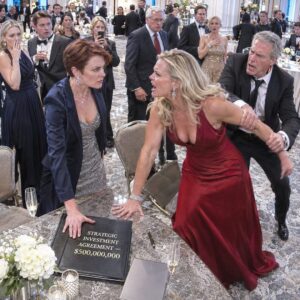
My father raised his champagne glass in front of forty relatives and announced that my younger brother, Jason, would inherit the $4.8 million construction company I had spent twelve years building.
For a moment, I thought I had misheard him.
I had worked sixty-hour weeks, negotiated contracts, supervised construction sites, and nearly sacrificed my marriage to keep that company profitable.
Jason, meanwhile, had never managed a single major project. “Your brother has children of our own blood,” Dad explained, glaring at my fourteen-year-old stepdaughter, Emma. “A family business should stay with real family.” Everyone applauded.
Emma lowered her head.
My wife, Sarah, reached for her hand, struggling to hold back tears.
I looked around the table, expecting someone to challenge him.
Nobody did.
Jason grinned and raised his glass. “Don’t worry, Michael.
I’ll make sure you still have a job.” Several relatives laughed.
I slowly stood up, straightened my shirt, and looked directly at my father. “Then let him sign the contracts.” Dad frowned. “What is that supposed to mean?” I didn’t answer.
I took Sarah and Emma home.
That night, Emma knocked on our bedroom door. “Would Grandpa have given you the company if Mom hadn’t married you?” Her question broke something inside me.
I hugged her tightly. “You are my daughter, Emma.
No construction company will ever change that.” After she went to bed, I called my attorney and explained everything.
On Monday morning, I submitted my resignation and formally withdrew my master contractor credential from its qualifying role with the company.
I followed the required procedures and arranged an orderly transition for existing projects.
My father had apparently forgotten that the company’s operations depended heavily on my professional qualifications, experience, and personal reputation.
Jason had none of those things.
By lunchtime, Dad had called seventeen times.
When I finally answered, he was screaming. “You can’t do this!
We have millions of dollars in contracts!” I calmly replied, “You have a new owner.
Let him handle them.” Jason immediately began searching for another qualified professional, but his lack of experience and the company’s existing obligations complicated the process.
Six months later, my father appeared outside my house.
His expensive suit was wrinkled, his hands were shaking, and Jason stood behind him looking utterly defeated.
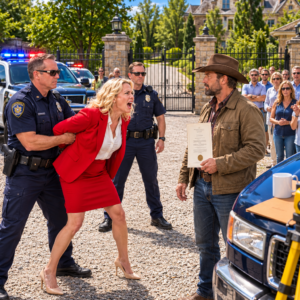
Dad handed me a financial statement showing that the company was facing a devastating cash crisis. “Michael, please,” he whispered. “We need you to come back.” I glanced at the document, then looked him directly in the eyes. “Before we discuss business, there’s someone you owe an apology to.”
My father stared at me as though I had insulted him. “An apology?
Michael, we’re talking about a company that employs thirty-seven people.
This isn’t the time for personal grudges.” I stepped onto the porch and closed the front door behind me. “You publicly humiliated a fourteen-year-old girl because she wasn’t biologically related to you.
You gave away twelve years of my work and expected me to keep carrying the responsibility.
And now you’re telling me this isn’t personal?” Jason interrupted impatiently. “Can we stop discussing Emma?
She’s not even involved in the business.” I looked at him. “That’s exactly why neither of you understands what happened.”
The six months following my resignation had been difficult for everyone.
My father originally established Whitaker Construction outside Nashville, Tennessee, but when I joined the company twelve years earlier, it was struggling to survive.
It had seven employees, outdated equipment, unpaid invoices, and a reputation for missing deadlines.
I invested years into developing reliable relationships with suppliers, improving project management, obtaining professional credentials, and establishing financial controls.
Eventually, the business grew into a respected regional contractor valued at approximately $4.8 million.
Dad owned the company, but I had become the person responsible for much of its daily success.
Jason had always enjoyed the benefits without accepting the responsibility.
He drove a company truck, received a generous salary, and frequently disappeared during working hours.
Dad excused everything because Jason had two biological sons who would supposedly carry on the family name.
Whenever I complained, Dad reminded me that family members were supposed to support one another.
Apparently, that principle only applied when I was the one making sacrifices.
After resigning, I accepted a position with a commercial construction firm that had previously tried to recruit me.
I carefully honored my contractual obligations and did not take confidential records or solicit my former employer’s clients.
For the first time in years, I received compensation that reflected my responsibilities.
More importantly, I was home in time for dinner.
I attended Emma’s basketball games, helped her with homework, and took Sarah on weekend trips.
I discovered how much of my family’s life I had missed while trying to earn my father’s approval.
Meanwhile, Jason hired an outside qualifying professional and attempted to keep the business operating.
However, retaining a qualified contractor was only one part of the problem.
Several experienced supervisors resigned after Jason changed their compensation arrangements.
Suppliers tightened their credit terms after invoices went unpaid.
Two major clients terminated contracts following repeated delays and documented performance failures.
Instead of addressing these problems, Jason continued spending company money on expensive vehicles and unnecessary office renovations.
Then came the discovery that frightened my father most.
An independent accountant reviewing the company’s finances identified substantial questionable expenditures, including payments toward Jason’s personal expenses.
Dad had transferred control without establishing effective oversight.
By the time he understood the severity of the situation, the business was struggling to cover payroll and meet its obligations.
Standing on my porch, Dad finally admitted that Jason had made serious mistakes. “We need someone who understands the company,” he said. “Someone the employees trust.” I asked whether he intended to return ownership to me.
He hesitated. “Jason would remain the owner, naturally.
But you would have complete operational responsibility, and we’d increase your salary.”
I almost laughed.
Six months of financial disaster had taught him nothing.
He still expected me to rebuild a company that would ultimately belong to my brother. “Absolutely not,” I replied.
Jason’s expression hardened. “You’re willing to destroy Dad’s legacy because of some stupid comment about your stepdaughter?” Before I could respond, the front door opened.
Emma stood there holding an envelope.
Her eyes were red. “Grandpa,” she said quietly, “I think you should have this.” Dad took the envelope, opened it, and immediately began crying.
Inside the envelope was a handmade Father’s Day card Emma had created for my dad several years earlier.
She had drawn a picture of the two of them standing beside a construction truck.
Beneath it, in her childish handwriting, were the words, “To the best grandpa in the world.
Thank you for making me part of your family.” She had never given it to him because he had canceled their Father’s Day lunch at the last minute to attend Jason’s son’s baseball game.
Emma had kept the card in her bedroom ever since.
“I used to think you didn’t like me because I wasn’t good enough,” Emma told him. “But Dad says being a family means choosing to love each other.
I don’t think I should have to prove that I deserve to belong.” My father looked at the card, then at Emma.
For once, he seemed unable to defend himself.
Jason broke the silence. “Seriously?
We’re about to lose everything, and we’re discussing a greeting card?” Sarah stepped forward. “Get off our property, Jason.” He looked at Dad, expecting support, but Dad remained silent.
Eventually, Jason returned to his truck and slammed the door.
My father stayed behind.
He sat on our porch for nearly an hour, holding Emma’s card.
Finally, he looked at her and said, “I’m sorry.
You never deserved what I said at that dinner.” Emma nodded but didn’t immediately hug him.
I was proud of her for understanding that an apology didn’t automatically erase years of hurt.
Dad turned toward me. “I thought preserving the family name was the most important thing.
Somewhere along the way, I forgot what family actually meant.”
I told him I was willing to consider helping the business, but not under the arrangement he had proposed.
Any involvement would require an independent financial review, a realistic recovery plan, appropriate ownership rights, and the removal of Jason from operational control.
Dad agreed to discuss those conditions with his advisors.
Jason, however, refused.
He accused us of conspiring to steal his inheritance and threatened legal action if Dad attempted to reverse the transfer.
Ultimately, the company entered a formal restructuring process.
Its creditors and owners negotiated the sale of certain equipment and business assets to cover outstanding obligations.
I refused to take responsibility for liabilities created after my departure.
Instead, with independent legal and financial advice, I eventually established my own construction firm.
We purchased some of the available equipment through a properly documented sale and hired several former Whitaker employees who independently applied for positions.
My father lost much of the wealth he had expected to enjoy during retirement.
Jason lost control of the business he had once proudly claimed as his birthright.
I didn’t celebrate either outcome.
Too many hardworking employees had suffered because of their decisions.
My focus was on creating a company where competence, honesty, and dedication mattered more than someone’s last name.
Eighteen months after that disastrous retirement dinner, my new company secured its largest commercial construction contract.
We celebrated with a modest gathering at our office.
Sarah stood beside me, smiling proudly, while Emma helped distribute refreshments to our employees.
My father attended as a guest.
He had spent the previous year trying to repair his relationship with Emma, attending her school events and remembering birthdays without being reminded.
Their relationship wasn’t perfect, but he was finally making an effort.
During the celebration, Dad noticed a framed photograph on my desk.
It showed Sarah, Emma, and me standing outside our new office.
Beside it was another photograph of our employees.
He smiled sadly. “You’ve built something special here, Michael.” I shook his hand. “I had good people helping me.”
Later that evening, Emma asked whether I would ever want her to work for the company. “Only if that’s what you genuinely want,” I told her. “You don’t owe me your future, and you certainly don’t have to earn your place in this family.” She hugged me and whispered, “I love you, Dad.”
At that moment, I realized I had inherited something far more valuable than the company my father had denied me.
I had earned the trust of a daughter who had chosen to call me her father.
My brother had inherited a $4.8 million business because he shared our family’s blood.
But blood had never taught him how to build, how to lead, or how to love.
Those were things no inheritance could give him.