

Prehistoric Giant Unearthed: Mammoth Skeleton Found Near Mount Etna
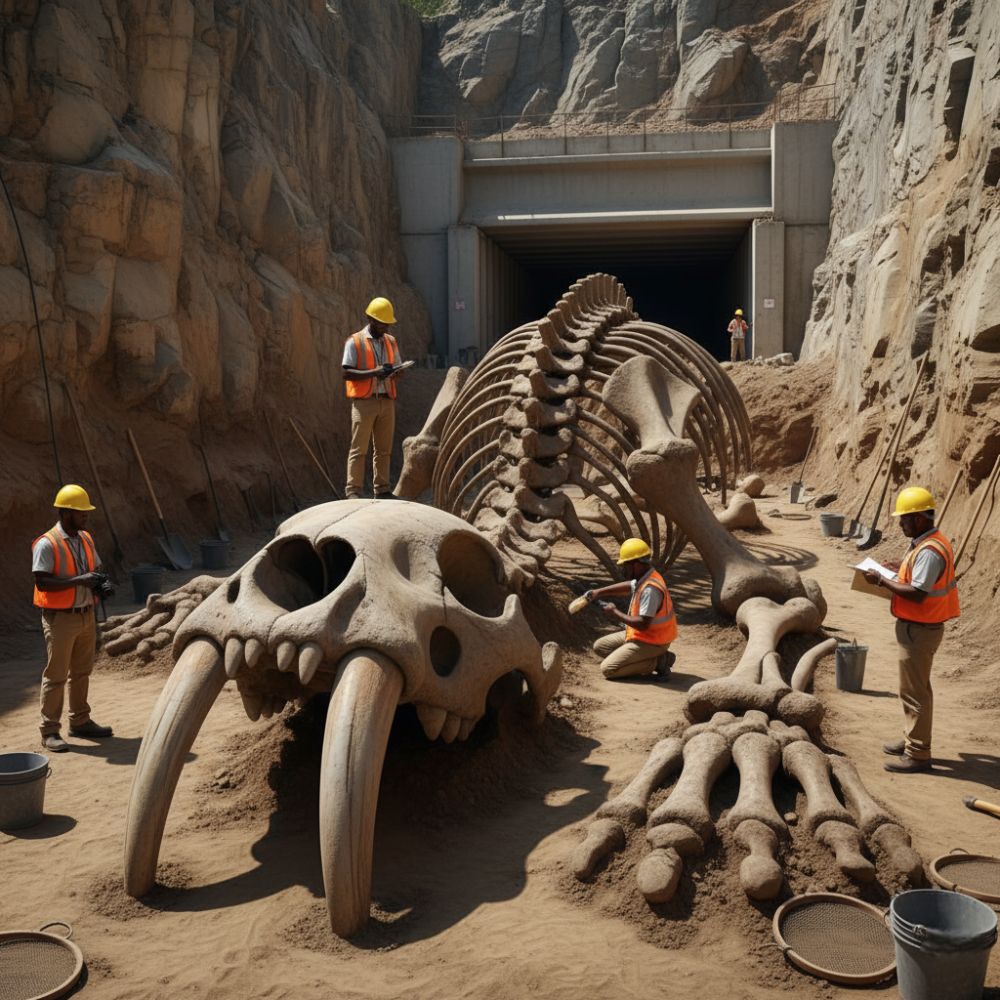
The volcanic slopes of Mount Etna, a timeless sentinel over Sicily, had witnessed millennia of human history and geological drama. Yet, even Etna held secrets beneath its ancient ash and rock, secrets that Dr. Elena Rossi, a paleontologist with a keen eye for the improbable, was about to unearth. Her team had been mapping geological strata for a new infrastructure project near the volcano’s eastern base when an excavator operator hit something far too soft to be bedrock.
What began as a routine investigation quickly spiraled into the discovery of a lifetime. Deep within a newly cut trench, just beyond the entrance to what looked like an old quarry tunnel, lay the unmistakable form of a colossal skeleton. Its immense skull, with dagger-like canines protruding from its jaws, suggested a creature of formidable power. This was no ordinary find; this was a saber-toothed behemoth, perfectly preserved in the volcanic sediment.
“It’s incredible,” Elena breathed, her voice echoing in the vast excavation. “A Smilodon populator, or a closely related species, here in Sicily. The scale… it’s unlike anything we’ve ever seen in the Mediterranean basin.”
The team, a mix of paleontologists, geologists, and eager local workers, moved with meticulous care. Each rib, each vertebra, each monstrous limb bone was slowly, painstakingly exposed from the hardened earth. The sheer size of the beast implied a predator at the very top of its prehistoric food chain, likely roaming the ancient plains of Sicily when it was perhaps still connected to the mainland or during periods of lower sea levels, allowing for migration. The tunnel nearby, a relic of more recent human endeavor, seemed to shrink in comparison to the ancient leviathan it now inadvertently revealed.
As days turned into weeks, the outline of the entire skeleton emerged, presenting a breathtaking tableau of a vanished era. Dating estimates pointed to the Late Pleistocene, a period of dramatic climatic shifts and megafauna. The implications were profound: the find not only pushed the known geographical boundaries for such a colossal predator but also opened new avenues for understanding prehistoric ecosystems and migrations across ancient Europe.
Word of the “Etna Saber-Tooth” spread like wildfire. Locals flocked to catch a glimpse of the giant, a tangible link to a world they could only imagine. For Elena and her team, it was more than just bones; it was a window into a powerful, dangerous, and utterly captivating past, brought to light by the silent, ever-watchful presence of Mount Etna.