

Unearthing Ancient Power: Chariot Burial Site Discovered in Northern Greece
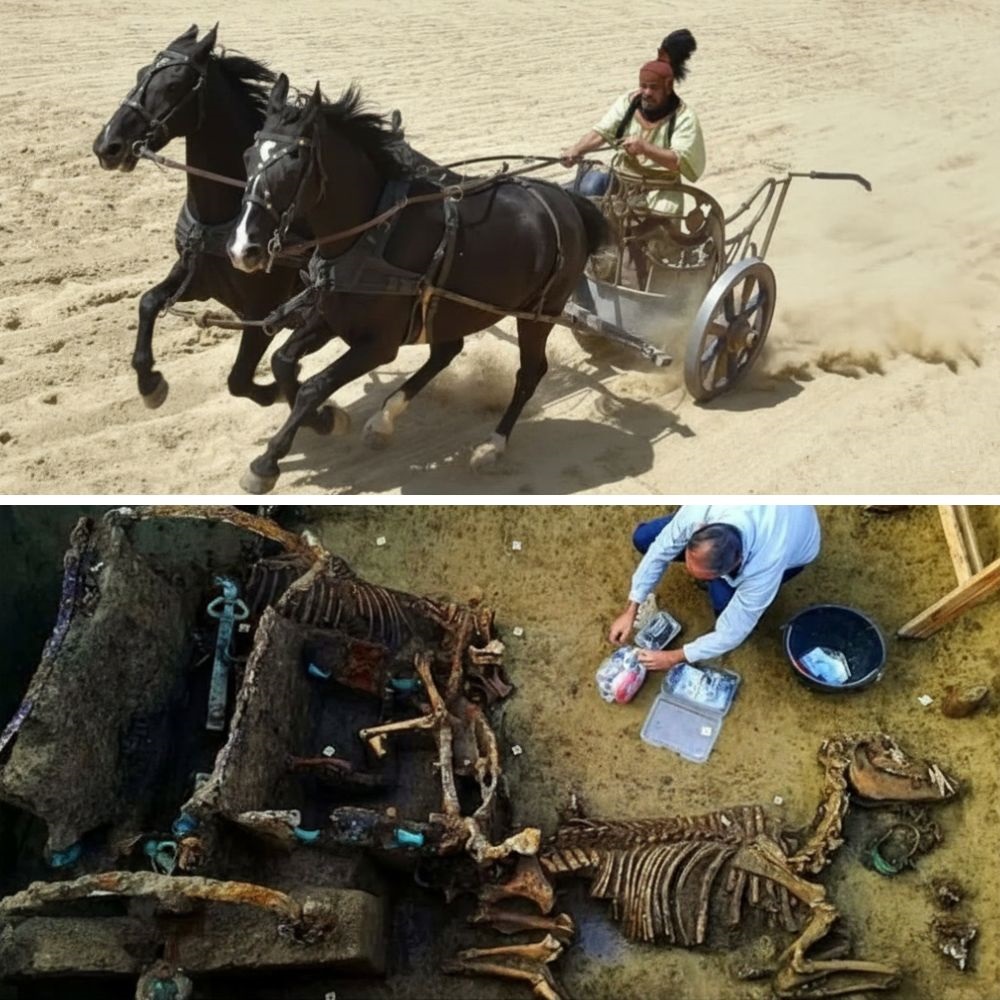
The morning mist clung to the foothills of Mount Olympus, a legendary sentinel over the ancient lands of Macedonia. Dr. Elara Vance, a seasoned archaeologist with the Hellenic Ministry of Culture, meticulously brushed away centuries of soil, her breath catching in her throat. Below her lay not just bones, but a silent testament to a forgotten era of power and prestige: the remarkably preserved remains of a chariot, horses, and what appeared to be the grave goods of a warrior or noble.
The site, nestled near the modern-day village of Vergina—itself renowned for the discovery of the Royal Tombs of Aigai, the first capital of ancient Macedon—had yielded sporadic finds over the years. But nothing prepared the team for the sheer scale and richness of this new discovery. “We knew this region held secrets,” Elara murmured to her lead assistant, Stavros, his face caked in dust and awe. “But this… this is beyond anything.”
The initial excavation, shown in the first image, revealed the skeletal remains of two horses, still harnessed to the fragmented wooden frame of a four-wheeled chariot. Nearby, the human skeleton, adorned with bronze and iron artifacts—including what appeared to be a ceremonial helmet and spearhead—lay amidst a scatter of intricate pottery and corroded metal ornaments. Radiocarbon dating would later place the burial firmly in the Early Iron Age, a period of burgeoning city-states and fierce rivalries in ancient Greece.
For weeks, the team worked under the relentless Greek sun, each brushstroke a revelation. The chariot, though decayed, bore traces of sophisticated craftsmanship, hinting at the wealth and status of its owner. It wasn’t just a mode of transport; it was a symbol, a mobile throne that spoke of battles fought and victories won. The horses, powerful and swift, were clearly bred for purpose, likely for racing or warfare, reflecting the image in the second panel of a charioteer in action, a vivid echo from the past.
As the story of the Vergina chariot burial site spread, it ignited imaginations globally. It offered more than just artifacts; it provided a tangible link to a world where chariots thundered across battlefields and racetracks, where heroes and kings vied for glory. The discovery didn’t just unearth ancient power; it allowed us, for a fleeting moment, to feel the dust of their passage and hear the echoes of their ancient roar. The secrets of Northern Greece, it seemed, were far from exhausted.