

The Lost Legionary of Vindolanda: A Winter’s Tale Unearthed
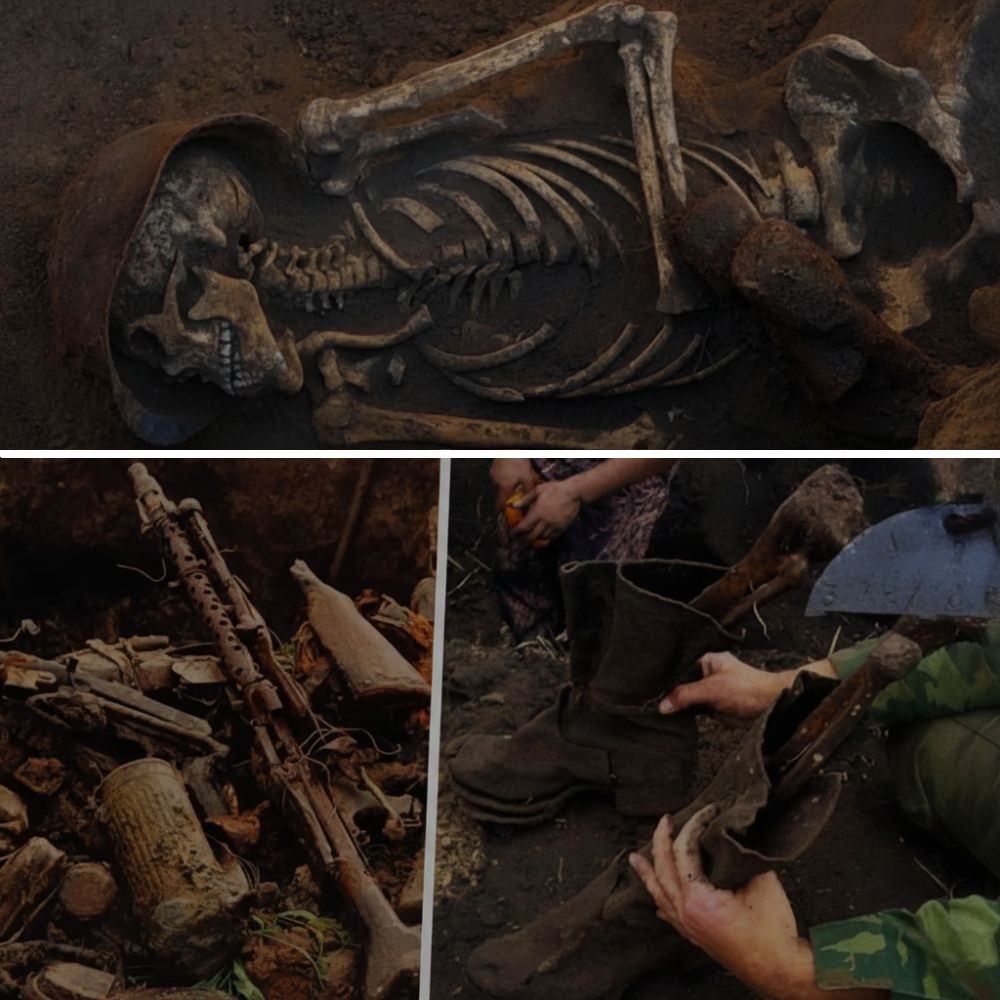
The chill wind whipped across the barren fields, mirroring the bite of a Roman winter. Dr. Aris Thorne, a seasoned archaeologist known for his relentless pursuit of truth beneath the earth, shivered as he squinted at the unearthed skeleton. “He lays as he fell,” Aris murmured, the beam from his headlamp cutting through the encroaching dusk, illuminating the skeletal remains that still bore the imprint of a soldier’s posture.
For weeks, his team had braved the biting winds and the ceaseless drizzle of Vindolanda, a Roman fort near Hadrian’s Wall, a place steeped in the echoes of a bygone empire. This particular trench had been a stubborn one, yielding little until the tell-tale glint of corroded metal had spurred them on.
“Look at this,” exclaimed Sarah, a young intern with mud streaking her eager face, as she carefully brushed away the soil from the lower section of the skeleton. She held up a pair of heavy, hob-nailed boots, remarkably preserved in the anaerobic conditions of the peat-rich soil. Still nestled within one boot was what appeared to be the remains of a man’s shin bone, frozen in time.
Further excavation revealed a treasure trove of personal effects: a corroded gladius, its wooden scabbard long disintegrated, a pile of spent slingshot pellets, and a waterlogged leather pouch. But it was the discovery of a meticulously crafted writing tablet, its wax still faintly visible, that sent a ripple of excitement through the team. These were the famous Vindolanda Tablets, letters and documents offering intimate glimpses into the daily lives of Roman soldiers and their families.
Aris carefully photographed the scene, his mind already piecing together the narrative. This legionary, perhaps caught in an unexpected ambush or succumbing to the harsh conditions of a winter campaign, had been laid to rest hastily. The position of his body suggested a sudden demise, perhaps even a struggle, his last moments spent gripping his weapon.
“Imagine the winter nights here,” Aris pondered aloud, “the biting cold, the isolation. These men faced unimaginable hardships.” He gestured towards the dark outline of the distant Roman Wall, a stark silhouette against the perpetually grey sky.
Back in the warmth of the makeshift lab, the team painstakingly began the conservation process. The writing tablet, once deciphered, might reveal the soldier’s name, his unit, even a final message to his loved ones far away in the sunnier climes of Rome. The boots, once cleaned, would speak volumes about the practicalities of military life on the frontier.
As the first snowflakes began to fall, dusting the archaeological site in a pristine white, Aris looked at the carefully excavated remains, now resting safely in the lab. This unnamed soldier, unearthed after two millennia, was no longer just a skeleton. He was a testament to human resilience, a silent narrator of Roman Britain, his story now ready to be retold by the archaeologists who had braved the winter to find him. His final resting place at Vindolanda, under the watchful gaze of Hadrian’s Wall, had finally yielded its secrets.